Prosecutors and Police Disagree Due to Ambiguous Legal Concepts... Secondary Harm Increases
Excessive Law Application Lowers Investigation Focus
"Stalking Definition Must Be Corrected"

[Asia Economy Reporter Oh Gyumin] In February, a woman in her 40s, Ms. A, rang the doorbell of a celebrity's house. Feeling uneasy, the celebrity reported it to the police. The celebrities were singer and actor Jung Jihoon (Rain) and Kim Taehee. The police arrested Ms. A in flagrante delicto but did not forward the case to the prosecution in April.
The police judged that the ‘crime’ that occurred before the Stalking Punishment Act was enacted in October last year could not be grouped with the February incident as the same crime. In other words, they considered that the continuity and repetitiveness required to establish stalking crime were not met. However, the Jung couple expressed anxiety to the extent of making 17 emergency calls (112) about Ms. A’s behavior since March last year. The prosecution judged that although the February incident was a single case, Ms. A had caused anxiety with the same motive and method before October last year, and requested reinvestigation and referral. Eventually, the police forwarded Ms. A’s case to the prosecution without detention on the 22nd of last month.
Since the enforcement of the Stalking Punishment Act in October last year, there have been many cases where victims suffer secondary damage due to different interpretations of stalking crimes by the prosecution and police. There are also cases of excessive criminal punishment due to broad interpretations of the law. There are calls to clearly define stalking crimes so that authorities can focus investigative efforts and prioritize victim protection.
Under the Stalking Punishment Act, ‘stalking behavior’ is defined as “causing anxiety or fear to the other party or their cohabitant or family without justifiable reason against the other party’s will.” Specifically, this includes ▲approaching, following, or blocking the path ▲waiting or watching at the residence ▲leaving objects at the residence ▲sending text messages. For these acts to be considered stalking crimes, the requirements of ‘continuity and repetitiveness’ must be met.
Ambiguity in the Interpretation of 'Stalking Crime'... Causing Additional Harm
Due to unclear standards for interpreting these requirements, cases like the Jung couple’s victimization have occurred. On the 26th of last month, a man in his 30s, Mr. A, was arrested on charges including special threats. He is accused of threatening his estranged wife with a weapon at a cafe located in Michuhol-gu, Incheon, on the 23rd of the same month, suspecting her infidelity.
According to police investigation, Mr. A was arrested in flagrante delicto after knocking on the in-laws’ door several times two days prior. This corresponds to stalking behavior under the Stalking Punishment Act and has repetitiveness, making it potentially a ‘stalking crime.’ Seung Jae-hyun, a research fellow at the Korea Institute of Criminology and Justice Policy, said, “The legal interpretation of habituality is that even if it happens once, if habituality manifests with a certain tendency, it is considered habitual.”
However, the police judged that continuity under the Stalking Punishment Act was not established, and eventually, Mr. A threatened his wife with a weapon.
Broad Application of the Stalking Punishment Act... "Concept Definition Must Be Clear"
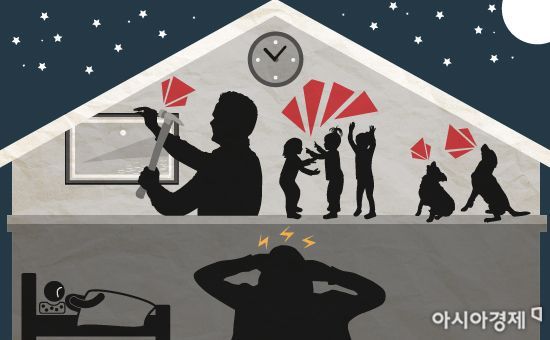
There have been cases where charges of violating the Stalking Punishment Act were applied alongside other crimes that could have been sufficiently punished. According to the Supreme Court judgment viewing service, in the past year, there have been three trials where noise between floors was the motive for applying charges of violating the Stalking Punishment Act. All were convicted, and in two of these cases, other charges such as assault and threats were also applied.
There has also been controversy over applying the Stalking Punishment Act to journalistic activities. Recently, Minister of Justice Han Dong-hoon filed a complaint alleging stalking against a person affiliated with the YouTube channel ‘Citizen Media The Tamza.’ The ‘The Tamza’ side reportedly claimed that they were observing the minister on his way home for the purpose of verifying tips and news coverage. In November last year, the Bundang Police Station in Gyeonggi Province issued a warning to five reporters who were covering near the residence of Kim Hye-kyung, wife of Democratic Party leader Lee Jae-myung, citing possible violations of the Stalking Punishment Act. Similarly, they expressed regret at the time, stating it was ‘on-site coverage to ascertain the truth.’
Research fellow Seung said, “Stalking crimes are crimes that can be precursors to murder, but it may be difficult to see noise between floors or reporters’ ‘staking out’ behavior as precursors to murder,” adding, “It is necessary to avoid punishing crimes that can be punished in other ways as stalking and to clearly correct the definition of stalking crimes.”
© The Asia Business Daily(www.asiae.co.kr). All rights reserved.
![Clutching a Stolen Dior Bag, Saying "I Hate Being Poor but Real"... The Grotesque Con of a "Human Knockoff" [Slate]](https://cwcontent.asiae.co.kr/asiaresize/183/2026021902243444107_1771435474.jpg)
















