Nobel Foundation Announces Selection Results on the Afternoon of the 3rd
Pioneering Archaeogenetics Using DNA Analysis Technology
Clarifying Relationships Between Neanderthals and Modern Humans
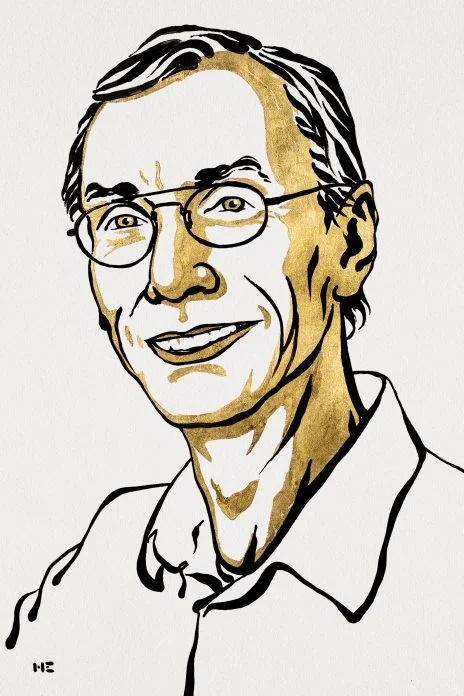
[Asia Economy Reporter Kim Bong-su] This year's Nobel Prize in Physiology or Medicine was awarded to Svante P??bo (67), a Swedish archaeogeneticist who uncovered the evolutionary history of humanity using genetic analysis technology.
On the afternoon of the 3rd (Korean time), the Nobel Foundation announced that the Karolinska Institute, which oversees the Physiology or Medicine Prize, had selected P??bo as the 2022 laureate. Born in Stockholm, Sweden in 1955, P??bo earned his Ph.D. in Immunology from Uppsala University in Sweden in 1986. He was appointed professor at the University of Munich, Germany in 1990, and has served as director of the Max Planck Institute for Evolutionary Anthropology since 1999. He also lectures at the Okinawa Institute of Science and Technology in Japan.
From his graduate school days, P??bo mastered the then cutting-edge genome analysis technology (DNA sequencing) on his own and is well known as a pioneer of archaeogenetics. Notably, he published papers revealing that ancient extinct species such as Neanderthals and Denisovans share some genetic similarities with modern humans, Homo sapiens, and that these genetic factors influence the occurrence of chronic diseases such as obesity and diabetes.
Professor Kim Sung-soo of Kyung Hee University School of Medicine explained at a briefing hosted by the Korean Federation of Science and Technology Societies, "He is a scholar who has published countless remarkable research results on the evolutionary process using DNA sequencing technology and recently received the Breakthrough Prize in the United States," adding, "It seems he was recognized for opening a new chapter in human evolutionary research."
Professor Hong Sung-tae of Seoul National University College of Medicine also said, "I thought it would be difficult to receive a Nobel Prize in the field of archaeogenetics because it is not practical, but it should be seen as recognition of the academic depth," and added, "He gained attention by publishing a paper in 2020 explaining that Europeans were particularly vulnerable to COVID-19 due to genetic traits inherited from Neanderthals."
© The Asia Business Daily(www.asiae.co.kr). All rights reserved.
![Clutching a Stolen Dior Bag, Saying "I Hate Being Poor but Real"... The Grotesque Con of a "Human Knockoff" [Slate]](https://cwcontent.asiae.co.kr/asiaresize/183/2026021902243444107_1771435474.jpg)















