Lee Returns as Ministerial Nominee After a Decade
Maintains Principle of "Autonomy and Accountability" for Educational Stakeholders
Emphasizes University Deregulation
Push for Competitive Education Policies Raises Concerns Over "Educational Polarization"
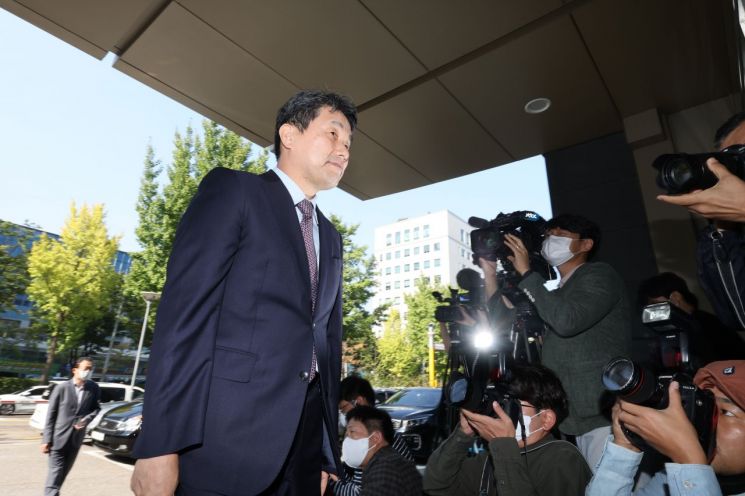 Lee Juho, candidate for Deputy Prime Minister for Social Affairs and Minister of Education, is arriving at the Education Facility Safety Institute in Yeouido, Seoul on the 30th. (Photo by Yonhap News)
[Asia Economy, reporter Han Jinju] Lee Juho, who has been nominated as Minister of Education for the first time in ten years, has criticized the Ministry of Education's practice of treating universities as subordinate institutions and signaled a sweeping education reform. Regarding his previous tenure, when he implemented competition-focused education policies, he stated, "My principle of emphasizing autonomy and accountability remains unchanged."
On the 30th, as he arrived at the Education Facility Safety Institute in Yeouido, Seoul, Lee said, "Among advanced countries, there is no other nation that treats universities as subordinate institutions like ours. Universities should serve as the central institutions that give hope to young people and act as hubs for their regions."
Lee clarified, "I'm not advocating for the abolition of the Ministry of Education. The argument for abolishing the ministry is different from the call to grant universities more autonomy." Previously, through the K-Policy Platform, he had proposed transferring higher education affairs to the Prime Minister's Office and establishing a so-called 'Ministry of Science and Technology Innovation Strategy,' and had published reports calling for the abolition or downsizing of the Ministry of Education.
He emphasized the keywords "autonomy and accountability," suggesting his intention to strengthen competitive education. Lee stated, "Allowing the greatest possible autonomy and freedom for educational stakeholders is the best way to foster desirable development in education. I worked for policies of autonomy and accountability during my tenure, and that principle has not changed since."
Through his role as Deputy Prime Minister for Social Affairs, he also expressed his commitment to addressing educational gaps such as basic academic skills and advancing the integration of early childhood care and education, which has been a national agenda. He said, "After the pandemic, the gap between social classes has widened, and the limited functions of the Ministry of Education alone are not enough to close educational gaps. Creative policy development and implementation efforts are needed. The government's role is also crucial in integrating early childhood care and education to address these disparities. There are still many areas where inter-ministerial coordination is lacking, and I intend to work hard on this."
Lee previously served as Vice Minister of Education, Science and Technology in 2009, and as Minister from 2010 to 2013, shaping the broad framework of education policy under the Lee Myung-bak administration. In line with the Yoon Suk-yeol administration, which has called for education reform since its inauguration, he is expected to pursue education policies that emphasize competition, starting with deregulation of universities.
Lee has also served as a professor at the KDI School of Public Policy and Management and as head of the KDI Center for Education Reform. Since 2004, he has been a member of the National Assembly for the Grand National Party, secretary of the Social, Education, and Culture Subcommittee of the transition team, and Senior Secretary for Education, Science, and Culture at the Presidential Office during the Lee Myung-bak administration. After two previous ministerial nominees failed to pass confirmation, the government spent more than 50 days searching for a candidate who could pass the hearing, eventually bringing back a figure from the Lee Myung-bak administration. This has led to criticism that there was a lack of suitable candidates.
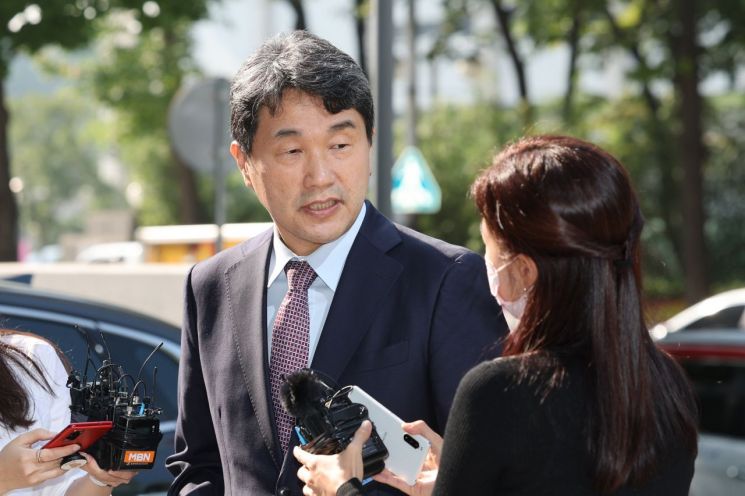 Lee Juho, the nominee for Deputy Prime Minister for Social Affairs and Minister of Education, is answering reporters' questions as he arrives at the confirmation hearing preparation office set up at the Korea Educational Facilities Safety Institute in Yeouido, Seoul, on the morning of the 30th.
 (Photo by Yonhap News)
With Lee's return, the revival of the "autonomy and competition" education policies from a decade ago is anticipated. As Minister under the Lee Myung-bak administration, Lee promoted the "High School Diversification 300" project, which aimed to introduce 300 diversified high schools, including boarding public schools, Meister high schools, and independent private high schools. During the five years of the Lee Myung-bak administration, 34 independent private high schools were designated. With the announcement of a new high school system scheduled for the end of this year, the possibility of maintaining independent private high schools and foreign language high schools has increased. When running as a preliminary candidate for Seoul Superintendent of Education, Lee also expressed his position that independent private high schools should be retained.
Lee implemented nationwide academic achievement assessments and disclosed evaluation results, including school-specific grades. He also introduced teacher evaluation systems, pushed for legislation to record school violence perpetrators in student records, and promoted legal amendments to allow schools to enforce dress codes, hairstyle restrictions, and personal belongings inspections.
Teachers' organizations have called for Lee's nomination to be withdrawn, arguing that he pursued education policies emphasizing economic logic such as competition and ranking. The Korean Teachers and Education Workers Union (KTU) commented, "The expansion of independent private high schools under the guise of high school diversification led to controversy over elite schools and accelerated polarization among schools, forcing general high schools to become second- or third-tier institutions and worsening the 'slumification' of general high schools. Appointing someone who pushed for competitive education and did not hesitate to undermine educational autonomy at the local level as Minister of Education will result in the regression of numerous education policies."
The Korean Federation of Teachers' Associations (KFTA) stated, "There are mixed evaluations of the previous minister's policies, and it is urgent to appoint a minister who can take charge of pressing issues such as education reform. However, there are concerns in the field about his lack of experience in early childhood, elementary, and secondary education. We hope he will clearly present his plans and vision for the development and support of these sectors during the confirmation hearing."
© The Asia Business Daily(www.asiae.co.kr). All rights reserved.
![Clutching a Stolen Dior Bag, Saying "I Hate Being Poor but Real"... The Grotesque Con of a "Human Knockoff" [Slate]](https://cwcontent.asiae.co.kr/asiaresize/183/2026021902243444107_1771435474.jpg)
















