Return of 'Baekja Cheonghwa Kim Gyeongon Tomb' and 'Baekja Cheolhwa Lee Seongrip Tomb'
On the 28th, Kim Gangwon, a representative residing in Japan, donated to the original owner's clan
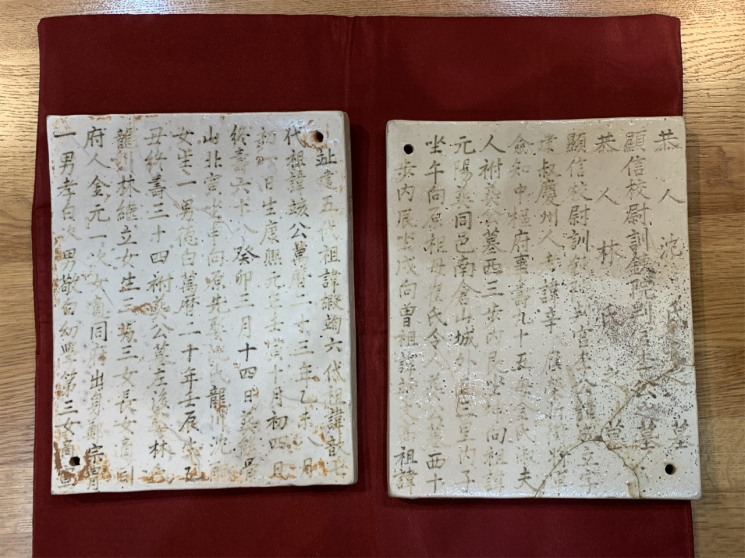
[Asia Economy Yeongnam Reporting Headquarters Reporter Kim Gwiyeol] On the morning of the 28th, the Gyeongbuk Province and the Cultural Heritage Administration held a donation and consignment ceremony for two repatriated cultural heritage tombstones related to Gyeongbuk at the Korea National Institute of Korean Studies, following the recent return of two Gyeongbuk-related artifacts from the Japanese cultural heritage distribution market.
This donation and consignment ceremony began when the exact time of export of the two repatriated tombstones was unknown, but the donor, CEO Kim Gangwon (resident in Japan), expressed his intention to donate through the Overseas Cultural Heritage Foundation under the Cultural Heritage Administration after purchasing them from the Japanese cultural heritage distribution market.
CEO Kim expressed his intention to donate to the Uiseong Kim clan and the Gyeongju Lee clan, the original owners, and the clans expressed their intention to consign the repatriated artifacts to the Korea Overseas Cultural Heritage Research Institute and the Korea National Institute of Korean Studies for academic research and preservation, making this event possible.
Tombstones (墓誌) are stones or ceramic plaques buried with the deceased that record the life, character, and family relationships of the deceased, and they hold important value not only for individuals but also for historical research of the era.
The returned "White Porcelain Blue-and-White Kim Gyeongon Tombstone" is the tombstone of Kim Gyeongon (金景溫, 1692-1734, bon-gwan Uiseong), who passed the Jin-sa examination in the 2nd year of King Yeongjo's reign (1726) with first place, and was made in 1755.
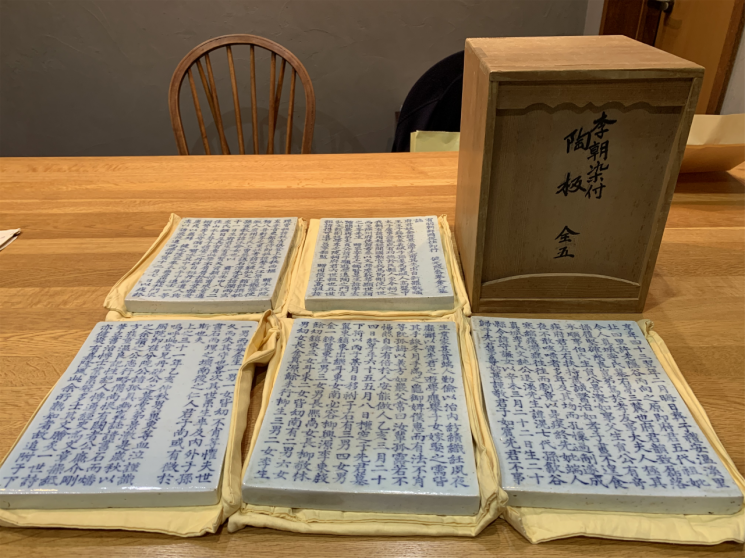
The tombstone is completely preserved in five panels, neatly written in regular script using blue pigment on a white clay plate, and has high historical value due to clear records of the production process.
The "White Porcelain Iron-painted Lee Seongnip Tombstone" is the tombstone of Lee Seongnip (李成立, 1595-1662, bon-gwan Gyeongju), who was active as a military officer during the Joseon Dynasty, and his burial site is located in Cheolsan, Pyeongan Province.
It is evaluated as a meaningful material for examining the social history such as the intermarriage and funeral culture of frontier military officers in the late 17th century.
Donor CEO Kim said, "The tombstones I purchased should naturally return to Korea, and I hope to donate them to the clans without any compensation or conditions."
In response, the clans repeatedly expressed their gratitude to the donor for returning their artifacts and also deeply thanked the Korea Overseas Cultural Heritage Research Institute for their joint efforts during the repatriation process.
Lee Dal-hee, Deputy Governor of Economy of Gyeongbuk Province, said, "Through this repatriation achievement, I hope that our society shares and empathizes with the value of cultural heritage and that such results can continue."
© The Asia Business Daily(www.asiae.co.kr). All rights reserved.
![Clutching a Stolen Dior Bag, Saying "I Hate Being Poor but Real"... The Grotesque Con of a "Human Knockoff" [Slate]](https://cwcontent.asiae.co.kr/asiaresize/183/2026021902243444107_1771435474.jpg)
















