Biogen and Eisai Joint Development
Can 'Aduhelm' Overcome Its Trauma?
27% Improvement Compared to Placebo
All Secondary Endpoints Met
However, Side Effect Concerns Persist
Occurred in 21%, Less Than Aduhelm's 41%
FDA Approval Possible as Early as January Next Year
[Asia Economy Reporter Chunhee Lee] The dream of conquering dementia, which seemed to have failed, has been revived. The development of dementia treatments, which appeared to be set back after the market failure of Aduhelm (active ingredient aducanumab), the first dementia treatment approved by the U.S. Food and Drug Administration (FDA), has received a new green light. The protagonists are Biogen and Eisai, who experienced the setback of Aduhelm.
On the 27th (local time), Biogen announced that the global Phase 3 clinical trial results of 'Lecanemab,' an Alzheimer's dementia treatment co-developed with Eisai, "showed a statistically significant clinical reduction rate," achieving the primary endpoint. This clinical trial was conducted on 1,795 patients with early Alzheimer's dementia in the U.S., Europe, Japan, and China.
The primary efficacy endpoint of this trial was set as the change in Clinical Dementia Rating-Sum of Boxes (CDR-SB) from baseline after 18 months. CDR-SB is one of the main indicators used to assess the severity of dementia. It evaluates cognitive and functional performance in six areas: memory, orientation, judgment and problem solving, community affairs, home and hobbies, and personal care.
According to Biogen, in this Phase 3 trial, Lecanemab showed a 27% improvement in CDR-SB compared to the placebo group. Statistically significant changes in CDR-SB from baseline appeared as early as six months. Additionally, secondary efficacy endpoints such as amyloid positron emission tomography (PET), Alzheimer's Disease Assessment Scale-Cognitive Subscale 14 (ADAS-cog14), and Alzheimer's Disease Composite Score (ADCOMS) were all met, the company explained.
Concerns Over Side Effects Continue
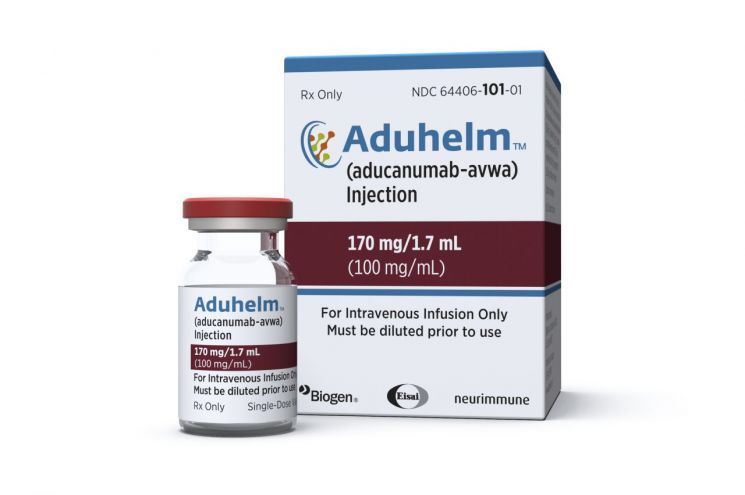
With this, Biogen and Eisai are expected to overcome the trauma of Aduhelm, which was once hailed as the first FDA-approved dementia treatment but ultimately failed. Aduhelm received the world's first conditional FDA approval for a dementia treatment in June last year, but in December, the European Medicines Agency (EMA) rejected its approval due to difficulties in confirming clinical improvement and concerns over side effects such as 'amyloid-related imaging abnormalities (ARIA)'.
However, concerns about side effects have not been completely alleviated for Lecanemab either. ARIA was significantly observed during the clinical process of Lecanemab as well. ARIA refers to abnormal signals detected in brain MRI scans during drug use, such as brain edema or microbleeds. It is divided into ARIA-E, which shows cerebral vasogenic edema and extravasation, and ARIA-H, which shows microbleeds and hemosiderosis. Aduhelm raised serious concerns as ARIA was reported in as many as 41% of treated patients.
Lecanemab recorded a relatively high ARIA incidence rate, though lower than Aduhelm. For ARIA-E, 12.5% was confirmed in the treatment group compared to 1.7% in the placebo group. ARIA-H was about twice as high in the treatment group at 17.0%, compared to 8.7% in the placebo group. The total ARIA incidence rate was 21.3% in the treatment group and 9.3% in the placebo group. The probability of developing related syndromes was also higher: ARIA-E occurred in 2.8% of the treatment group versus 0.0% in the placebo group, and ARIA-H in 0.7% versus 0.2%, respectively. However, Biogen stated that "overall, the ARIA incidence profile of Lecanemab was within the expected range."
FDA Approval Possible as Early as Next Year
Eisai, the co-developer, plans to present the clinical results at the international Alzheimer's clinical trial conference (CTAD) in San Francisco this November. They also revealed plans to apply for formal approval in the U.S., Europe, and Japan by March next year, the end of the current fiscal year. Currently, Lecanemab received a Biologics License Application (BLA) acceptance from the FDA in July and has been designated for priority review. The Prescription Drug User Fee Act (PDUFA) review deadline is set for January 6 next year. In Japan, related data for early approval has been submitted to the Pharmaceuticals and Medical Devices Agency (PMDA) since March.
Haruo Naito, CEO of Eisai, said, "Alzheimer's dementia is not only a major challenge for patients and their families but also negatively impacts society through reduced productivity and increased social costs. Alleviating this burden will have a positive social impact. We believe that Lecanemab will open new horizons in the diagnosis and treatment of Alzheimer's dementia and further stimulate innovation in new therapies."
Michel Vounatsos, CEO of Biogen, also stated, "If approved, Lecanemab could potentially slow the progression of Alzheimer's disease and provide clinically meaningful benefits in cognition and function, giving hope to patients and their families. We believe that diverse approaches and treatment options are necessary to defeat Alzheimer's, and we look forward to ongoing discussions with patients, scientists, and the medical community."
© The Asia Business Daily(www.asiae.co.kr). All rights reserved.