Became an Export Hero Amid High Oil Prices
But Calls for Excess Profit Tax Imposition
Concerns Over Negative Refining Margin and Poor Performance
Dark Outlook for Second Half Increases Burden
[Asia Economy Reporter Oh Hyung-gil] This year, oil refiners have earned $35 billion, approximately 48 trillion won, from petroleum product exports. Last month, diesel export revenue surpassed passenger car export revenue by $30 million, ranking second in export items after semiconductors.
Although they have become export powerhouses earning hundreds of billions of dollars, refiners are 'anxious.' Due to the 'three highs' phenomenon of high inflation, high interest rates, and high exchange rates, concerns about a global economic recession have led to a sharp decline in international oil prices and refining margins, raising the possibility of losses by the end of the year.
There is also pressure from growing global demands to impose a 'windfall tax' on energy companies' excess profits. In Korea, bills to levy a windfall tax have been proposed in the National Assembly. Although major companies based on crude oil drilling and domestic refiners who buy crude oil, refine it, and resell it fundamentally have different profit structures, these calls remain unheard echoes.
Refiners Become Export Powerhouses... "Rather Than Support, No Help Expected"
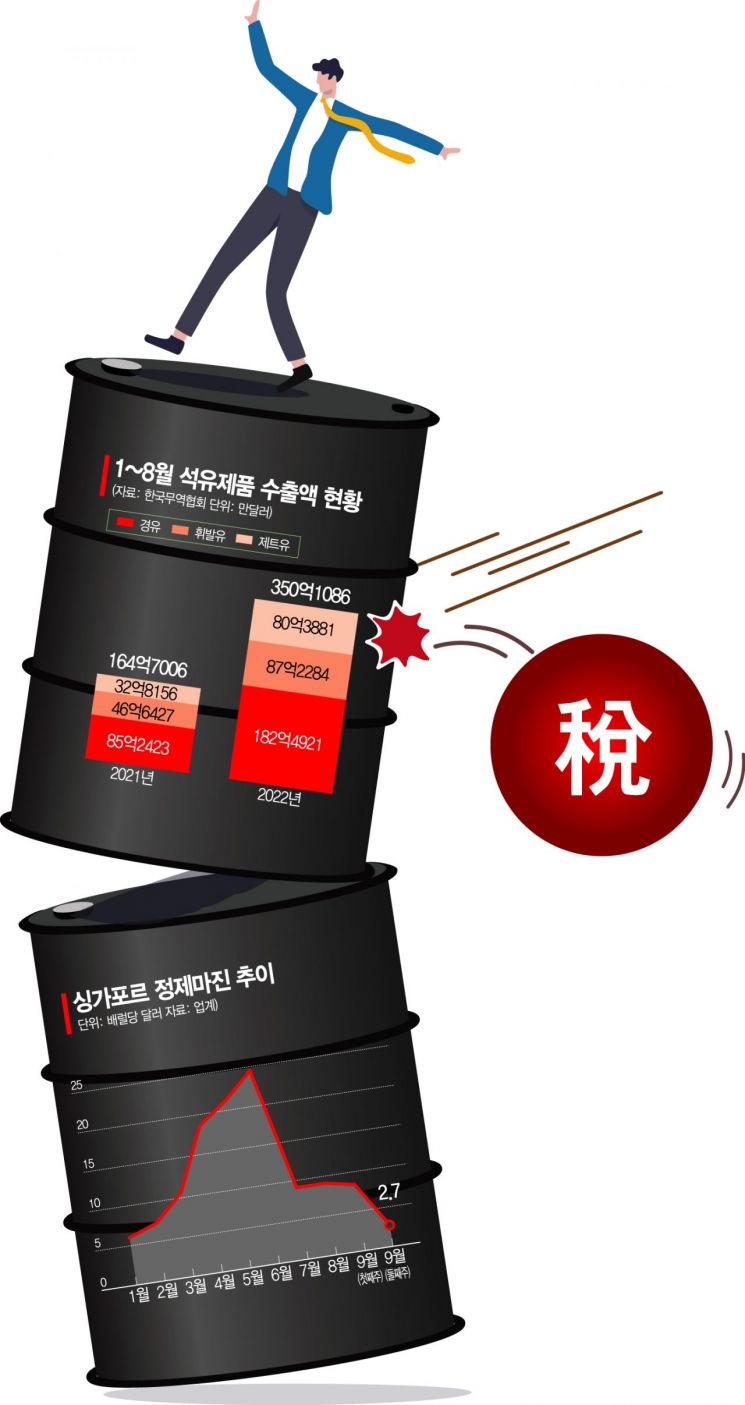
According to the Korea International Trade Association on the 21st, from January to August, exports of three items?diesel, gasoline, and jet fuel (kerosene)?amounted to $35.01086 billion. This is more than double the $16.47006 billion recorded during the same period last year.
Diesel export revenue surged 114.0% year-on-year to $18.24921 billion, gasoline increased by 87.0% to $8.72284 billion, and jet fuel also rose sharply by 144.9% to $8.03881 billion, supported by post-COVID demand expansion. Exports of naphtha, base oils, and lubricants are also growing.
The high oil price boom was catalyzed by the Russia-Ukraine war. It was a combined result of increased global demand for petroleum products, rising export unit prices due to high oil prices, and expanded refining margins.
However, with international oil prices repeatedly declining recently and refining margins plunging, the second half performance has become uncertain. The Singapore refining margin, which approached $30 per barrel in the first half, sharply dropped from $7.28 per barrel on the 13th to -$2.95 per barrel on the 16th. It turned negative for the first time in two years since September 2020. A negative refining margin, which is the difference between petroleum product selling prices and crude oil procurement costs, means operating the refinery results in losses.
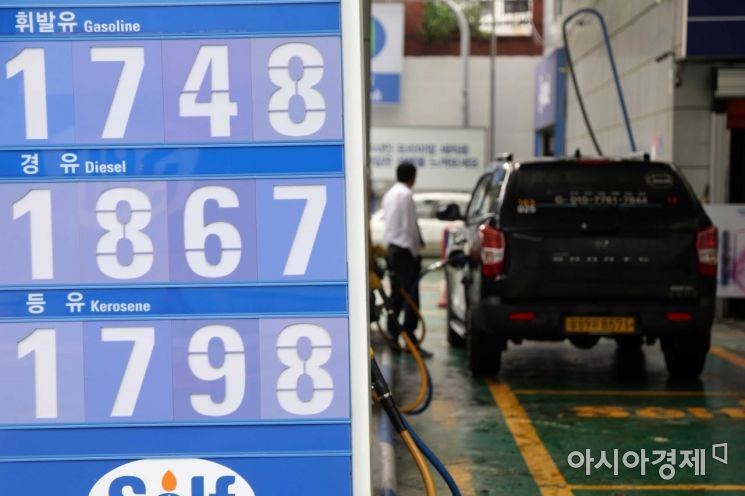 The diesel price at domestic gas stations, which had been falling for eight consecutive weeks, has turned to an upward trend. The weekly gasoline price continued a slight decline for the ninth week. According to the Korea National Oil Corporation's oil price information system, Opinet, the average gasoline selling price at gas stations nationwide in the fifth week of August (August 28 to September 1) was 1,740.3 KRW per liter, down 3.5 KRW from the previous week, while diesel was 1,844.6 KRW per liter, up 1 KRW from the previous week. A gas station in downtown Seoul on the 4th. Photo by Moon Honam munonam@
Recently, China's move to expand petroleum product export quotas is also pulling down refining margins. The China Petroleum and Chemical Industry Federation is demanding an increase in export quotas by 15 million tons, arguing that increasing petroleum product exports can contribute to stimulating the Chinese economy.
International oil prices are also weakening amid a strong dollar trend. On the 20th (local time) at the New York Mercantile Exchange, the October West Texas Intermediate (WTI) crude oil price closed at $84.45 per barrel, down $1.28 (1.49%) from the previous day. Concerns over tightening by global central banks seem to be reflected in oil prices.
High exchange rates are also a burden. Since refiners pay for crude oil purchases converted at the current exchange rate after a certain point in time, an increase in exchange rates causes foreign exchange losses. An industry insider said, "With exchange rates soaring and refining margins falling, it is a double hardship. Considering when refining margins turned negative last year, performance deterioration is a natural progression."
International Community Accelerates 'Windfall Tax' Introduction... What About Korea?
Although there is concern about losses in the second half, voices calling for additional taxes on energy companies that have 'windfall' profits due to unexpected high oil prices are emerging worldwide.
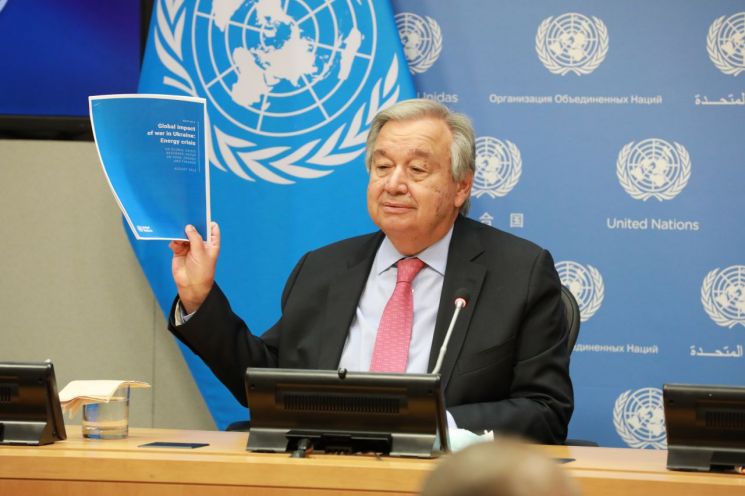
On the 20th (local time), UN Secretary-General Ant?nio Guterres stated at the UN General Assembly held in New York, "While the planet is burning and household budgets are shrinking, the fossil fuel industry has sat on billions of dollars in subsidies and windfall profits," and urged "all developed countries to impose taxes on the windfall profits of fossil fuel companies."
The European Union (EU) is preparing to collect a windfall tax amounting to 195 trillion won from power generation and energy companies. The EU Commission recently finalized plans to push legislation imposing taxes on excess profits of oil and natural gas companies. In the United States, a bill has been introduced and is under discussion in Congress to impose a 42% tax rate (an additional 21% surtax) on large energy companies with profit margins exceeding 10%.
In Korea, bills to introduce a windfall tax have also been proposed. Lee Sung-man of the Democratic Party proposed an amendment to the Corporate Tax Act targeting refiners last month, and Yong Hye-in of the Basic Income Party proposed a bill to impose an excess profit tax on refiners and banks.
Former People Power Party floor leader Kwon Seong-dong pointed out in June, "Refiners should not fatten themselves alone in a high oil price situation," indicating that not only the opposition but also the ruling party does not oppose the introduction of a windfall tax.
Even if not a windfall tax, there are calls to fulfill social responsibility through fund creation. Baek Jong-ho, a research fellow at Hana Financial Management Research Institute, said, "There are controversies over the taxable subjects, tax base, and rates of a windfall tax, and it does not fit domestic circumstances, so the likelihood of realization is low," adding, "It is highly likely that social demands will shift toward fund contributions or enhanced social contributions."
© The Asia Business Daily(www.asiae.co.kr). All rights reserved.
![Clutching a Stolen Dior Bag, Saying "I Hate Being Poor but Real"... The Grotesque Con of a "Human Knockoff" [Slate]](https://cwcontent.asiae.co.kr/asiaresize/183/2026021902243444107_1771435474.jpg)

















