Korean Research Institute of Bioscience and Biotechnology Dr. Kim Mirang and Dr. Kim Seonyeong Joint Research Team
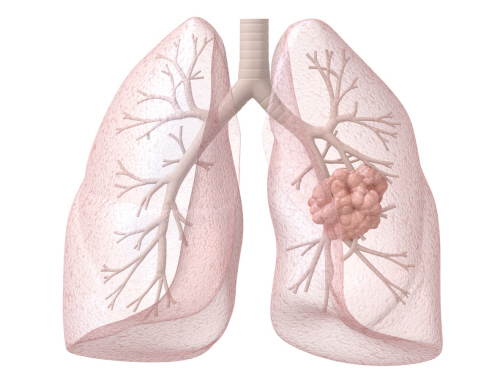 ▲Lung cancer. [Photo by Asia Economy DB]
[Asia Economy Reporter Kim Bong-su] Domestic researchers have identified the cause of drug resistance in lung cancer patients and discovered a new therapeutic target.
The Korea Research Institute of Bioscience and Biotechnology announced on the 15th that the joint research team of Dr. Kim Mirang and Dr. Kim Sun-young used single-cell genomic analysis technology to elucidate the mechanism of drug resistance in anaplastic lymphoma kinase (ALK)-positive non-small cell lung cancer patients and found clues to control it. It is expected that this can be utilized as a new treatment strategy to eliminate drug-resistant cancer cells in the future.
Lung cancer accounts for 22.7% of all cancer deaths and has the highest mortality rate. It is classified into small cell lung cancer and non-small cell lung cancer based on the size and shape of cancer cells. Cancer cells that appear small under a microscope are called small cell lung cancer, while those that are not small are called non-small cell lung cancer, which accounts for 80-85% of all lung cancer patients. About 5% of non-small cell lung cancers are ALK-positive non-small cell lung cancers caused by mutations in the ALK gene, mainly found in younger patients under their 50s or non-smoking lung cancer patients. Targeted anticancer drugs show excellent therapeutic effects, but continuous administration leads to drug resistance, causing recurrence and making subsequent treatment more difficult. Secondary mutations have been highlighted as a cause, but more than half of the mechanisms remain unknown.
However, recent advances in genomic analysis technology have made it possible to analyze gene expression in individual cells, enabling research to distinguish rare cancer cells that cause drug resistance. The research team analyzed gene expression changes in drug-resistant cells using single-cell genomic technology and identified the cause of resistance. Cytidine deaminase (CDA) is an enzyme that increases cancer cell proliferation and mobility, causing metastasis. When targeted anticancer drugs are administered, CDA in cancer cells is activated, allowing the cells to evade the drugs, proliferate, and develop drug resistance. Based on this, the research team confirmed that using a CDA inhibitor can selectively induce death in drug-resistant cancer cells.
Dr. Kim Mirang stated, "Although many verification processes and extensive research on safety and efficacy are needed before these results can be applied clinically, I hope this can contribute even slightly to increasing the survival rate of cancer patients."
This study was published online on the 23rd of last month in the international journal of the Korean Society for Molecular and Cellular Biology, 'Experimental and Molecular Medicine (IF 12.178)'.
© The Asia Business Daily(www.asiae.co.kr). All rights reserved.
![Clutching a Stolen Dior Bag, Saying "I Hate Being Poor but Real"... The Grotesque Con of a "Human Knockoff" [Slate]](https://cwcontent.asiae.co.kr/asiaresize/183/2026021902243444107_1771435474.jpg)














