Semiconductor Industry with High Carbon and Waste Emissions and Electricity Usage
Samsung Electronics and SK Hynix Efforts to Reduce Greenhouse Gases and Recycle Waste
"Process Gas Reduction is the Barometer for Achieving Carbon Neutrality," Experts Diagnose
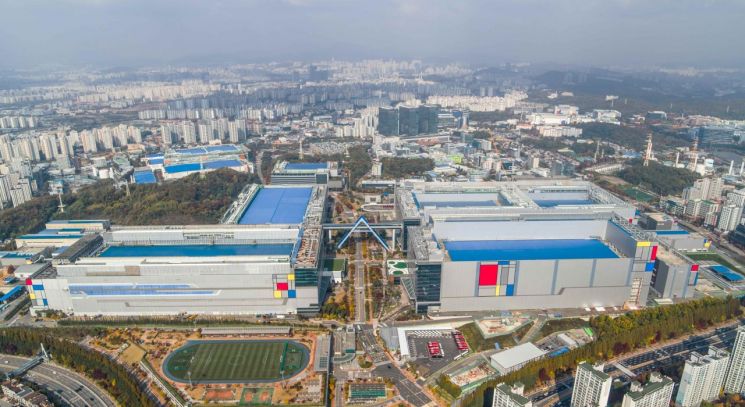
[Asia Economy Reporter Kim Pyeonghwa] As the importance of Environmental, Social, and Governance (ESG) management spreads across all industries, eco-friendly keywords are emerging in the semiconductor industry as well. Due to the high carbon and waste emissions and electricity consumption, semiconductor companies are actively taking steps to reduce these. Experts advise that reduction strategies should focus on fluorine compounds to cut greenhouse gases.
Samsung Electronics is focusing on reducing waste generated during semiconductor manufacturing processes. A representative example is the joint development with Hyundai Steel of a technology to reuse wastewater sludge (sediment) as a by-product of fluorite needed in the steelmaking process. Samsung Electronics announced that, through such efforts, its waste recycling rate reached 97.5% as of July. The company aims to achieve a 100% waste recycling rate across all business sites by 2025.
To reduce greenhouse gases, Samsung Electronics is also committed to using renewable energy. The company uses 100% renewable energy at its semiconductor sites overseas, including in the United States, China, and Europe. Recently, it added a self-developed process gas treatment facility to its domestic sites, expecting to reduce greenhouse gas emissions by 190,000 tons.
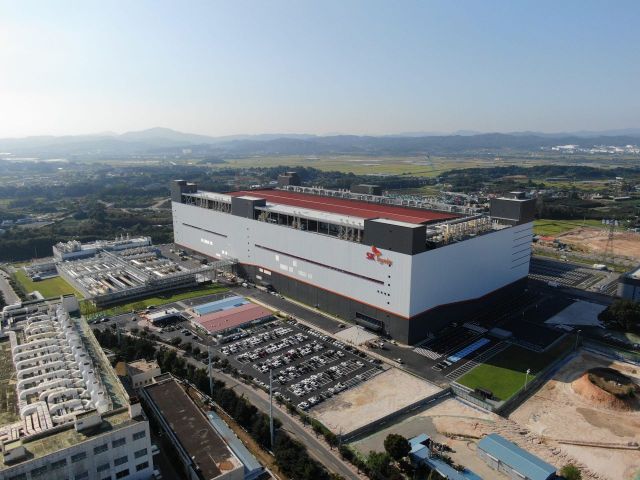
SK Hynix aims to achieve net zero (zero carbon emissions) and RE100 (100% renewable energy use) by 2050. To this end, it installed solar power facilities at its Icheon campus in Gyeonggi Province last year. It also reduced greenhouse gas emissions by about 90% using eco-friendly scrubbers that remove process gases, which are the cause of greenhouse gases during semiconductor manufacturing.
Last year, SK Hynix recorded a total waste recycling rate of 98%. It developed technology to reprocess wafers internally, minimizing polishing and reducing waste. It also succeeded in reducing waste sulfuric acid by adjusting tank valves that handle waste sulfuric acid generated during semiconductor processes. As a result, waste sulfuric acid generated at the Icheon site last year decreased by 12% compared to the previous year.
Although both companies continue their efforts, challenges remain significant. In Samsung Electronics' case, the domestic renewable energy infrastructure is insufficient, leading to slower renewable energy conversion at domestic sites compared to overseas. SK Hynix, which announces social value (SV) performance at the group level, recorded negative environmental results last year due to increased resource consumption and greenhouse gas emissions following a rise in semiconductor production. It is also expected that as semiconductor processes become finer and stacking expands, energy consumption and process gas usage per unit area will increase, adding to the challenges.
The Korea Institute for Industrial Economics and Trade (KIET) sees a need to focus on reducing process gases in this situation. Process gases are gases used in semiconductor manufacturing processes that pollute the Earth's atmosphere and cause the greenhouse effect. Since various greenhouse gases are used in semiconductor processes, reducing them should be a top priority to achieve carbon neutrality. In particular, since fluorine compounds, which are greenhouse gases, are mainly used in processes such as semiconductor etching and deposition, reducing these is essential.
Nam Sangwook, Associate Research Fellow at KIET, advised in the February report titled "Carbon Neutrality Promotion Strategy and Policy Tasks for the Semiconductor and Display Industry," that "the only way to achieve carbon neutrality is to devise measures to minimize emissions of gases ultimately used," and added, "Long-term efforts are needed to develop gas replacement technologies below 200 GWP, which corresponds to 1% of the current process gas GWP (greenhouse gas emission coefficient) used, to achieve carbon neutrality."
Overseas semiconductor companies have also set their own eco-friendly goals. U.S. Intel aims to achieve net zero by 2040. By 2030, it plans to use 100% renewable power at its global sites as a first milestone. Taiwan's TSMC joined RE100 in 2020 and plans to increase its renewable energy usage to 40% by 2030.
© The Asia Business Daily(www.asiae.co.kr). All rights reserved.


















