If You Have Suspected Symptoms Like Fever, Cough, or Pharyngitis, Get Tested and Treated First
Check Information on Hospitals, Clinics, and Pharmacies Open During Holidays on the Website and App
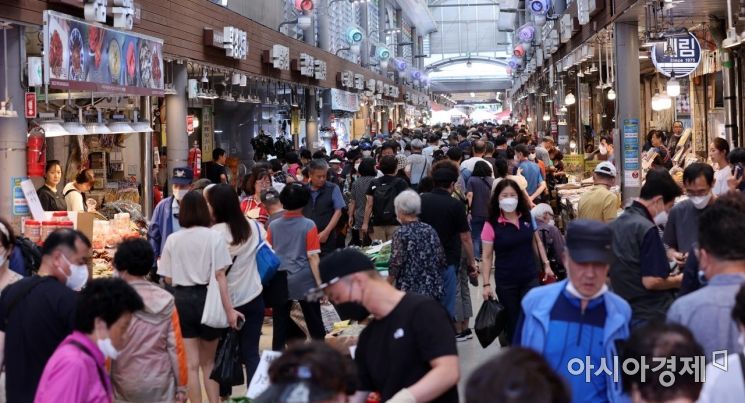 On the 8th, a day before the Chuseok holiday, citizens are purchasing ritual items and other goods at Gyeongdong Market in Dongdaemun-gu, Seoul. Photo by Hyunmin Kim kimhyun81@
[Asia Economy Reporter Jo In-kyung] Although the Chuseok holiday has begun, people with suspected COVID-19 symptoms should refrain from going out or visiting their hometowns. The health authorities especially recommend postponing family gatherings if elderly parents have not completed their basic vaccination, and to keep meetings as 'small and brief' as possible.
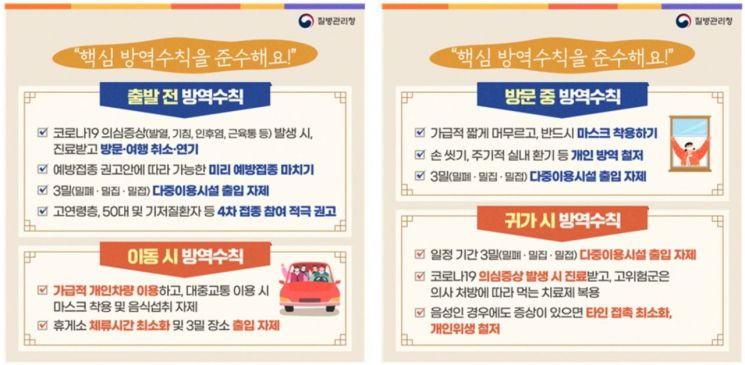
The Central Disaster and Safety Countermeasures Headquarters reiterated on the 9th that the public should strictly follow key quarantine rules from before departing for their hometowns during the holiday period until returning to daily life.
First, if you have suspected COVID-19 symptoms such as fever, cough, or sore throat, postpone your visit to your hometown and get tested and treated first. Elderly people, those in their 50s, and individuals with underlying conditions should receive COVID-19 vaccinations and avoid using multi-use facilities as much as possible.
Always wear a mask on buses or trains, and avoid talking or eating as much as possible. Although social distancing measures have been lifted and indoor eating on public transportation is now allowed, if eating is unavoidable, keep it brief and focus on simple food and beverages.
When meeting family, especially the elderly, wear a medical mask indoors and ventilate the room regularly. Wash hands frequently and serve food individually.
During the holiday period, COVID-19 self-test kits can be purchased at pharmacies and convenience stores, and professional rapid antigen tests (RAT) can be taken at one-stop medical institutions. Information on pharmacies open during the holiday can be found on the Emergency Medical Portal, and one-stop medical institutions can be searched on portal sites such as Naver and Daum, or checked on the COVID-19 website and Emergency Medical Portal.
People aged 60 or older, those who test positive on self-test kits (with kit in hand), suspected COVID-19 cases (with doctor's note), cohabitants of confirmed cases, or those entering from abroad can receive PCR tests at screening clinics or temporary screening centers. Additionally, from the 9th to the 12th during the four-day holiday, anyone who wishes can receive free PCR testing at nine highway rest area temporary screening centers located in Anseong, Icheon, Hwaseong, and Yongin in Gyeonggi Province; Baekyangsa, Hampyeongcheonji, Boseong Green Tea, and Seomjingang in Jeollanam-do; and Tongdosa in Gyeongsangnam-do.
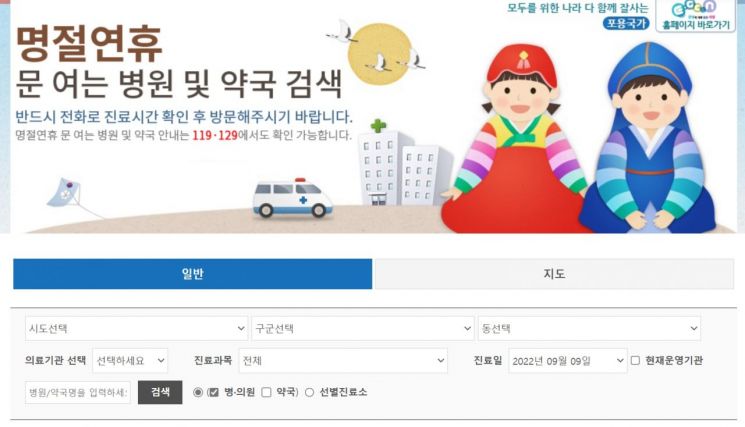
If symptoms worsen during home treatment, patients can receive face-to-face or non-face-to-face medical care at one-stop medical institutions, or consult symptoms and receive non-face-to-face care at medical consultation centers. To minimize contact and prevent infection, face-to-face consultations should be scheduled by phone before visiting. Contact information for medical consultation centers can be found in home treatment guidance texts, on the Health Insurance Review & Assessment Service website, the COVID-19 website, and the Emergency Medical Portal. Contact details for administrative guidance centers are available in home treatment guidance texts and on local government websites.
If you need to visit hospitals, clinics, pharmacies, or emergency rooms open during the holiday for symptoms other than COVID-19, you can check through the Emergency Medical Portal and the Emergency Medical Information app. In emergencies such as loss of consciousness, difficulty breathing, or when emergency care is needed for pediatric, childbirth, or dialysis patients, the fastest response is to call 119 immediately.
If you have suspected COVID-19 symptoms before returning to school, work, or other workplaces after the holiday, get tested and treated in advance. Even if the test result is negative, if symptoms persist, minimize contact with others and strictly maintain personal hygiene.
The Central Disaster and Safety Countermeasures Headquarters stated, "For the public to have a healthy and safe Chuseok holiday, it is important to practice daily quarantine measures together," and urged, "Please follow lifestyle quarantine rules such as wearing masks, washing hands, and ventilating rooms well, and if you have symptoms, get tested and treated for COVID-19 first."
© The Asia Business Daily(www.asiae.co.kr). All rights reserved.
![Clutching a Stolen Dior Bag, Saying "I Hate Being Poor but Real"... The Grotesque Con of a "Human Knockoff" [Slate]](https://cwcontent.asiae.co.kr/asiaresize/183/2026021902243444107_1771435474.jpg)

















