Chuseok Holiday Government Joint Special Traffic Measures
Focused Crackdown on Drunk and Reckless Driving Using Drones and Undercover Patrol Cars
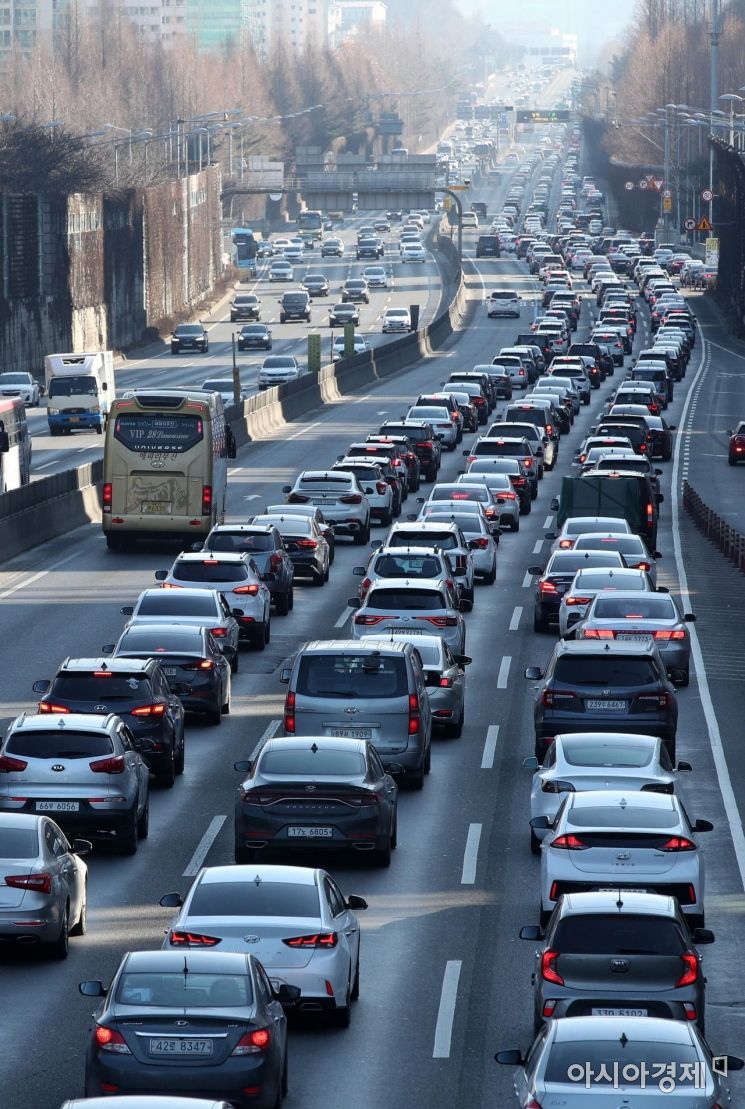 The view of the southbound lanes (right side) of the Gyeongbu Expressway from Jamwon IC, Seocho-gu, Seoul during the last Lunar New Year holiday
During this Chuseok holiday period, it is expected to take up to 9 hours and 50 minutes to travel the Seoul~Busan section on the highway. The government will waive toll fees for all vehicles during the holiday and will intensively crack down on traffic violations using drones and undercover patrol cars. Additionally, temporary screening clinics will be operated at major highway rest areas.
On the 7th, the Ministry of Land, Infrastructure and Transport announced that it has designated the five days from the 8th to the 12th as the "Chuseok Holiday Special Traffic Measures Period" and will establish and implement a "Government Joint Special Traffic Plan" in cooperation with related agencies to provide a safe journey home and back from COVID-19 and traffic accidents.
◆ Highway Toll Fee Waiver... Free Vehicle Inspections Conducted
To alleviate the transportation cost burden for citizens visiting their hometowns, the toll fee waiver on highways during holidays, which was suspended since Lunar New Year 2020, will be resumed, and automobile manufacturers will conduct free vehicle inspections.
From 0:00 on September 9 (Friday) to 24:00 on September 12 (Monday), toll fees will be waived for all vehicles using highways managed by the Korea Expressway Corporation and 21 private highways including the Incheon Airport Expressway, with the usage method remaining the same as usual.
In the Seoul area, to improve the convenience of citizens returning home by using late-night trains and buses, the last bus and subway times in Seoul will be extended on Chuseok day (September 10) and the following day (September 11).
Some local governments such as Busan, Gwangju, and Ulsan also plan to extend the last bus times, and detailed information can be obtained through the respective local government websites or by contacting the relevant authorities.
Temporary screening clinics capable of conducting PCR tests will be operated temporarily at nine major highway rest areas to support convenient diagnostic testing during travel.
◆ Expansion of Public Transportation Capacity Including Express Buses and Railways
During the special traffic measures period, buses, railways, airplanes, and coastal passenger ships will increase their services.
Express buses will deploy 342 reserve vehicles (including vehicles under joint transportation agreements), increasing the number of trips by an average of 1,026 per day (from 4,468 to 5,494 trips), expanding transport capacity by 23%. Intercity buses have secured 591 reserve vehicles to be deployed immediately if necessary.
Railways will increase a total of 122 trips (from 4,096 to 4,218), supplying an additional 102,000 seats daily, which is 20,000 more than usual. KTX will provide an additional 72,000 seats, and SRT will supply an additional 18,000 seats.
Domestic flights will increase by a total of 225 flights (from 3,095 to 3,320), supplying an additional 50,000 seats daily, which is 10,000 more than usual.
Coastal passenger ships will increase by a total of 367 trips (from 3,859 to 4,226), expanding capacity to accommodate 150,000 more passengers than usual.
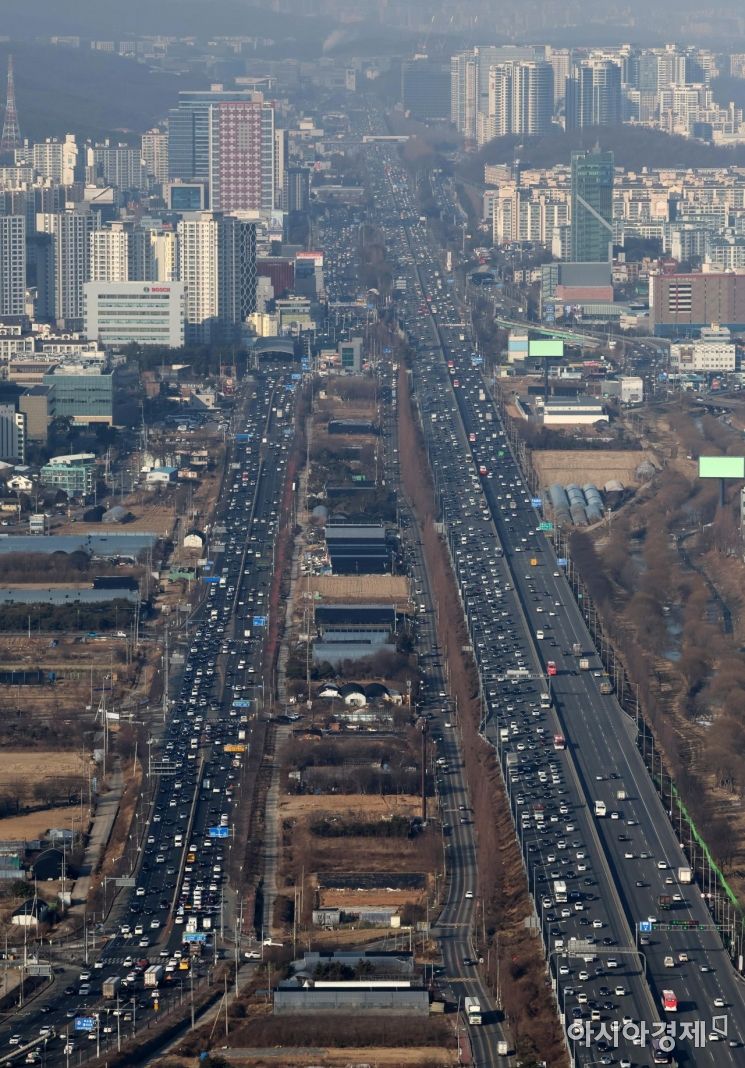
◆ Seoul~Busan 9 Hours 50 Minutes... Homebound Traffic Peaks on September 9 Morning, Seoul-bound Traffic Peaks on September 11 and 12 Afternoon
According to the Korea Transport Institute, a total of 30.17 million people, averaging 6.03 million per day, are expected to travel during this special traffic measures period. Among them, 90.6% are expected to use private cars.
Homebound traffic is expected to concentrate on the morning of the day before Chuseok (September 9, Friday), while return traffic is expected to peak in the afternoons of the day after Chuseok (September 11, Sunday) and two days after Chuseok (September 12, Monday). Traffic congestion is anticipated to be severe on Chuseok day (September 10, Saturday) and the following day (September 11, Sunday), when homebound, return, and travelers all converge.
This Chuseok is predicted to have a shorter homebound period, resulting in longer travel times for homebound trips compared to return trips.
For private car users, the maximum highway travel times are expected to be 5 hours 50 minutes from Seoul to Daejeon, 9 hours 50 minutes from Seoul to Busan, 8 hours 55 minutes from Seoul to Gwangju, 9 hours 55 minutes from Seoul to Mokpo, and 6 hours 5 minutes from Seoul to Gangneung for homebound trips,
and 4 hours 40 minutes from Daejeon to Seoul, 8 hours 50 minutes from Busan to Seoul, 7 hours from Gwangju to Seoul, 7 hours 15 minutes from Mokpo to Seoul, and about 5 hours 20 minutes from Gangneung to Seoul for return trips.
In addition, strict enforcement against drunk driving, failure to wear seat belts, and other violations will be conducted around highway interchanges and rest areas. At 21 locations with concentrated traffic, including Jukjeon Rest Area, drones equipped with surveillance cameras (50 units) and undercover patrol cars will be coordinated to focus on cracking down on major traffic violations such as speeding and reckless driving.
Kim Su-sang, Director of the Transportation and Logistics Office at the Ministry of Land, Infrastructure and Transport, said, "For those traveling by private car, please check traffic information in advance before departure, avoid peak congestion times, and drive safely."
© The Asia Business Daily(www.asiae.co.kr). All rights reserved.


















