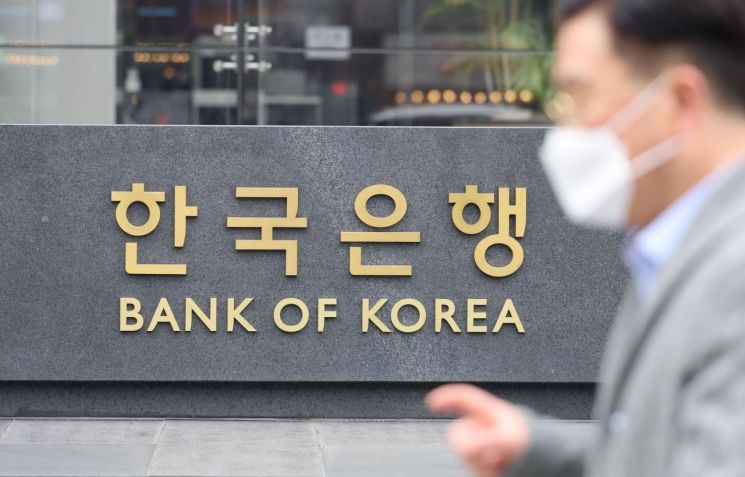
The Bank of Korea stated that even if the inflation rate peaks in the second half of the year and then declines, it is expected to continue a higher rate of increase compared to past surges.
In its BOK Issue Note titled "Reviewing the Sustainability of High Inflation" released on the 7th, the Bank explained, "After assessing the risks of major inflation drivers, it is necessary to be cautious about the possibility that the high inflation trend may persist longer than expected due to factors such as a rebound in raw material prices and continued price pressures from the demand side."
The Bank of Korea expects that inflation rates in major countries, including the United States, will peak in the second half of this year due to recent declines in international raw material prices, a tightening monetary policy stance, and increased downward pressure on the economy, and then gradually slow down. However, due to significant uncertainties, there is also a possibility that the high inflation trend will be maintained.
Regarding international raw material prices, the Bank judged that supply-side uncertainties such as Russia's reduction in energy supply and poor crop yields caused by abnormal weather remain latent, indicating a persistent possibility of rebounds in oil and food prices.
Although food prices have shifted to a downward trend earlier than in 2008, upward risks such as fertilizer price increases due to strong natural gas prices and concerns over renewed export suspensions from Ukraine still remain.
The Bank pointed out that the persistence of inflation can vary depending on the central bank's policy response. As seen in the U.S. case from the 1970s to early 1980s, inadequate inflation responses by central banks can influence demand-side price pressures and economic agents' inflation expectations, raising concerns about sustained and high inflation.
Considering demand-side price pressures and other factors, the Bank expects the recent inflation surge to last longer compared to past surges.
The Bank emphasized, "In particular, as a high inflation rate of 5 to 6% is expected to continue for a considerable period, and inflation expectations remain at a high level of around 4%, continuous policy responses are necessary to stabilize inflation expectations."
It further explained, "While factors such as the implementation of carbon neutrality and supply chain restructuring may contribute to raising trend inflation, structural downward price pressures such as digitalization of the economy and productivity improvements after the pandemic also persist, making it uncertain at this time whether trend inflation will rise."
© The Asia Business Daily(www.asiae.co.kr). All rights reserved.
![Clutching a Stolen Dior Bag, Saying "I Hate Being Poor but Real"... The Grotesque Con of a "Human Knockoff" [Slate]](https://cwcontent.asiae.co.kr/asiaresize/183/2026021902243444107_1771435474.jpg)















