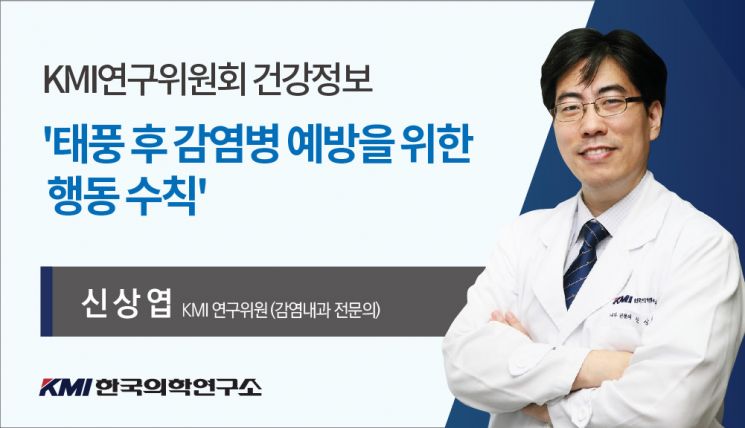
[Asia Economy Reporter Lee Gwan-joo] The Research Committee of KMI Korea Medical Institute provided health information containing behavioral guidelines for preventing infectious diseases after typhoons on the 6th.
The infectious diseases that require special attention after typhoons include ▲waterborne and foodborne infectious diseases (such as hepatitis A, bacterial dysentery, typhoid fever, pathogenic Escherichia coli infections, etc.) ▲leptospirosis, tetanus, contact dermatitis ▲mosquito-borne infectious diseases (such as malaria, Japanese encephalitis, etc.).
First, waterborne and foodborne infectious diseases occur when contaminated water or food, polluted by sewage after a typhoon, is touched by hand or ingested. It is important to wash hands frequently with soap under running water for more than 30 seconds, avoid eating food that has come into contact with water or has not been refrigerated, and drink boiled water or safe water such as bottled water.
Leptospirosis, tetanus, and contact dermatitis occur through skin exposure or wounds during flood recovery work. Waterproof protective clothing, boots, and rubber gloves should be worn, and skin exposed to water must be washed thoroughly with clean water and soap. Especially, if a large wound occurs during work or symptoms such as fever appear after work, medical treatment should be sought immediately.
Additionally, after a typhoon, small puddles form where mosquito larvae called janggu-beolle (Culex larvae) proliferate, spreading mosquito-borne infectious diseases. During flood recovery, remove risk factors where water can accumulate and mosquitoes can breed, such as empty bottles and discarded tires, and wear long sleeves and long pants to minimize skin exposure during outdoor work. It is also necessary to use mosquito repellents and avoid outdoor activities from sunset to sunrise when mosquitoes are most active.
Senior Research Fellow Shin Sang-yeop (Infectious Disease Specialist) emphasized, "As the typhoon passes, the surrounding environment changes and damage recovery may be necessary. What must be remembered at this time is that all water exposed outdoors after a typhoon should be considered contaminated with sewage." He added, "To prevent infectious diseases, it is very important to stay close to clean water and keep a distance from contaminated water."
© The Asia Business Daily(www.asiae.co.kr). All rights reserved.
![Clutching a Stolen Dior Bag, Saying "I Hate Being Poor but Real"... The Grotesque Con of a "Human Knockoff" [Slate]](https://cwcontent.asiae.co.kr/asiaresize/183/2026021902243444107_1771435474.jpg)
















