[Seoul District News] Gwangjin-gu Junggok 2-dong Community Center, Cooperation Among District, Local Residents, Volunteers, and Related Organizations for 10t Garbage Cleanup of Elderly Living Alone & Establishment of 'Gwangjin-gu Hoarding Suspected Household Support Ordinance' to Strengthen Community Support and Social Safety Net ... Nowon-gu, Junggye 2·3-dong Designated as Dementia Safe Villages, Creating Dementia-Friendly Environment
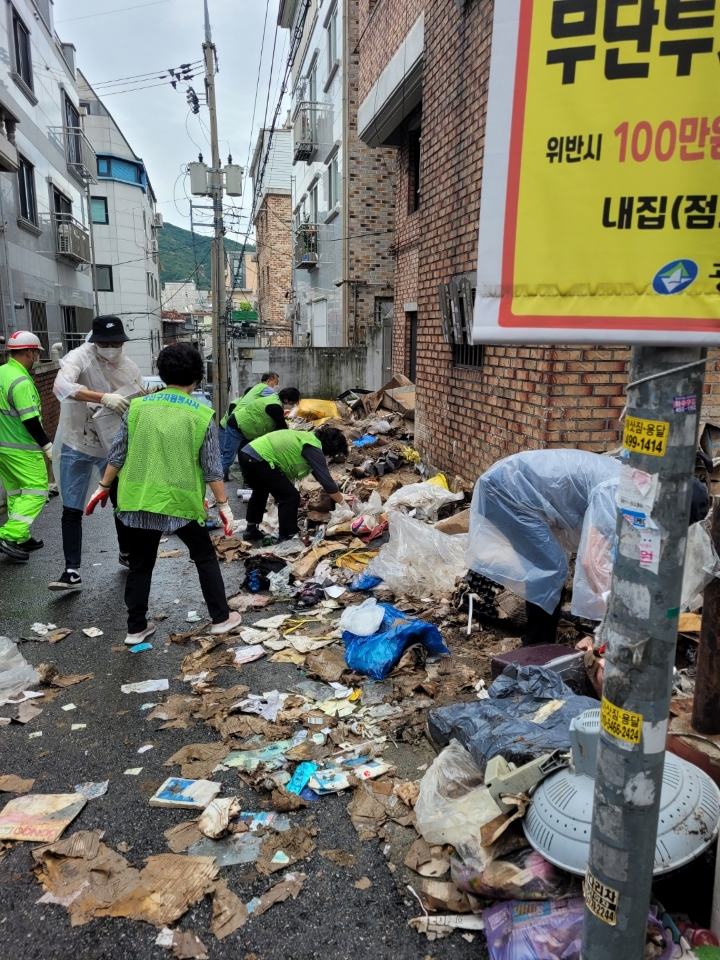
[Asia Economy Reporter Park Jong-il] Gwangjin-gu (District Mayor Kim Kyung-ho) led a thorough cleanup of 10 tons of garbage in a senior citizen's residence suspected of hoarding, working together with residents to bring a socially isolated resident back into the community.
On August 29, about 40 people, armed with cleaning tools and disinfecting equipment, gathered in front of a multi-family house in Junggok-dong, Gwangjin-gu, where various insects and foul odors were rampant due to long-accumulated waste paper, scrap, and garbage.
A person in their 70s, suspected of having hoarding disorder, lived alone here, filling the house with collected items and piling garbage on the stairs and outside the house. This caused inconvenience to neighbors and posed a significant walking hazard for the resident due to the garbage blocking the entrance and stairs.
"I don't need help! This is not trash, it's my property!"
The accumulation of waste paper began in 2018. The district had previously attempted to remove the waste paper twice, conducted visits and consultations, and tried to manage the situation through family members living separately, but the resident showed strong resistance to cleaning due to the nature of hoarding disorder.
The district convened a task force including neighboring residents, Junggok 2-dong Community Service Center, the cleaning department, volunteer teams, and the Mental Health Promotion Center to hold meetings and repeatedly persuade the resident.
Finally, in early August, after persistent efforts, the resident who had refused waste disposal and psychological counseling opened up and agreed to the garbage removal, paving the way for a solution.
Gwangjin-gu proceeded with the cleaning swiftly and systematically.
Neighbors, volunteers, community center staff, and district cleaning officials moved various types of garbage. The total amount of garbage collected that day was 10 tons, equivalent to six truckloads, including rotten and foul-smelling waste, scrap paper, and old metal.
The cleanup was completed only after thorough water cleaning and disinfection.
Considering the frequent recurrence characteristic of hoarding disorder, the district plans to provide psychological treatment and continuous counseling to the resident, along with regular visits and conversations by visiting nurses for health checks and environmental patrols to actively and consistently prevent re-accumulation.
Gwangjin-gu is currently in the process of legislative notice for the Seoul Metropolitan Government Gwangjin-gu Ordinance on Support for Households Suspected of Hoarding. This recognizes hoarding-related garbage houses not just as individual problems but as social issues, taking proactive measures.
Kim Kyung-ho, Mayor of Gwangjin-gu, said, "This case was solvable thanks to close communication and cooperation among local residents and various institutions. We will establish a legal basis for support by enacting related ordinances and continue to actively identify and assist residents in need, strengthening the social safety net."
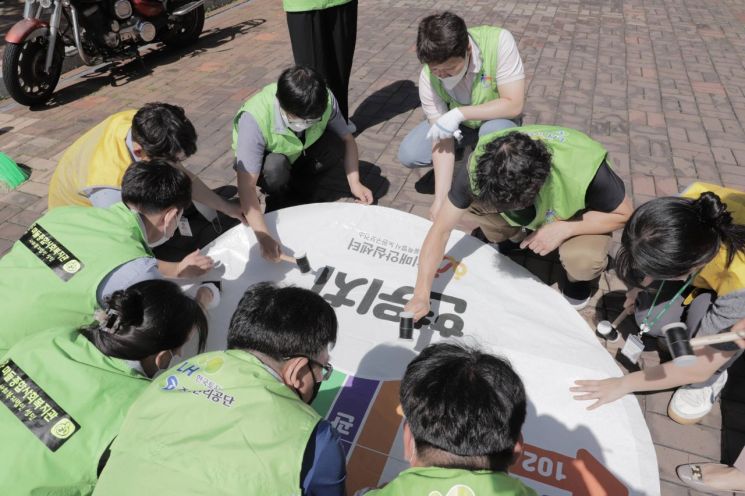
Nowon-gu (District Mayor Oh Seung-rok) is promoting various practical measures to prevent dementia within the community.
The district plans to select the area with the highest elderly population as a pilot region and develop concrete action plans for dementia prevention.
The pilot areas are Junggye 2 and 3-dong. Among Nowon-gu's 19 administrative neighborhoods, these have the highest elderly population ratio. Particularly, Junggye 1 Complex has about 860 residents, 67% of whom are seniors aged 65 or older. Most are long-term residents, and with rapid aging, the number of seniors suffering from dementia is increasing, necessitating systematic management for dementia prevention.
The dementia prevention program consists of five components. First, way-finding signs indicating major facilities and locations were installed on the floors at the entrances of each building within the apartment complex to help seniors move easily inside the complex. Ten types of stickers with dementia prevention guidelines were also attached to the walking paths in the apartment park, encouraging not only seniors but also general residents to naturally learn and practice dementia prevention while strolling.
Second, a bulletin board for the Subjective Memory Complaints Questionnaire (SMCQ) self-assessment was created in the apartment park. The board, consisting of 14 questions, helps with self-diagnosis of dementia. Additionally, boards displaying three sets of dementia prevention rules?3 books (exercise, diet, reading), 3 no's (moderate drinking, no smoking, brain injury prevention), and 3 acts (health checkups, communication, early dementia detection)?were installed to encourage daily dementia prevention practices.
Third, activities to improve dementia awareness through safety net establishment. Last year, Junggye 2 and 3-dong were designated as ‘Dementia Safe Villages’ where dementia patients and their families can live happily. To provide accurate information about dementia, a total of 13 dementia awareness campaigns were held at places frequently used by seniors, such as Junggye 1 Complex apartments and nearby Junggye Neighborhood Park. The district also created the ‘Danghyeoncheon Memory Path’ dementia-safe park along Danghyeoncheon Stream to foster a dementia-friendly culture and environment.
Furthermore, direct outreach services were conducted at apartments, welfare centers, and related institutions, providing early dementia screening for about 600 seniors. For registered dementia patients, district-assigned nurses provide various dementia support services including medication management, home nursing, hygiene supplies support, and treatment cost assistance.
Local related organizations also participate. Junggye 2 and 3-dong Community Service Centers, Housing Management Corporation Junggye 1 Complex LH Housing Happiness Support Center, Madeul Comprehensive Social Welfare Center, Danghyeon Police Substation, and senior centers have formed the ‘Dementia Safe Village Operation Committee.’
The community service centers, pharmacies, hair salons, and convenience stores have signed dementia-safe guardian agreements and are working to create a dementia-friendly environment through dementia education on how to respond when dementia patients are identified.
Going forward, the district plans to expand the designation of dementia-safe apartments by conducting resident response and satisfaction surveys to make Nowon-gu a happy environment for dementia patients and their families.
Oh Seung-rok, Mayor of Nowon-gu, said, "Dementia is a disease that is harder on families than the patients themselves. We will strive to actively support patients and families so they can continue to live happily and safely where they have lived through various prevention and management projects."
© The Asia Business Daily(www.asiae.co.kr). All rights reserved.
![Clutching a Stolen Dior Bag, Saying "I Hate Being Poor but Real"... The Grotesque Con of a "Human Knockoff" [Slate]](https://cwcontent.asiae.co.kr/asiaresize/183/2026021902243444107_1771435474.jpg)
















