Total Fertility Rate of 0.81 Last Year... Lowest Ever Again
Emergence of 'Gold Kids' Who Open Their Wallets Generously for Their Children
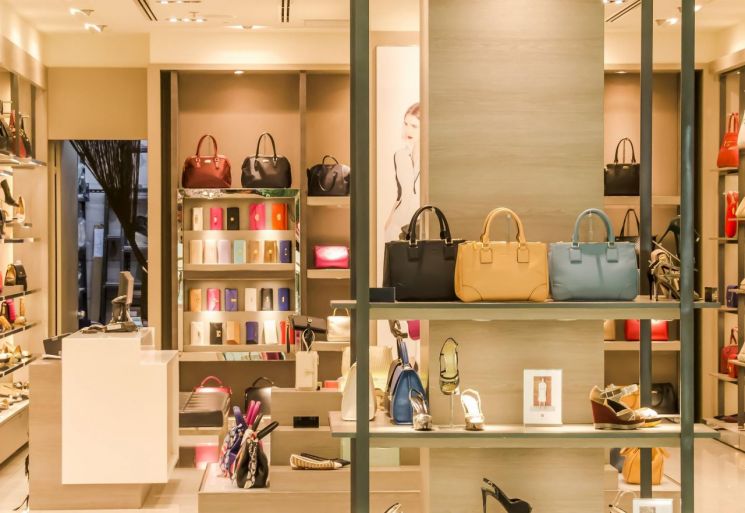
[Asia Economy Reporter Heo Midam] Recently, the children's clothing market is expanding. Although the birth rate is decreasing at an unprecedented rapid pace, more parents are investing generously in their only child. In particular, as families with a single child increase, not only parents but also grandparents and other relatives are opening their wallets generously for the child. As a result, the domestic premium children's clothing market is also enjoying a boom.
According to the '2021 Birth Statistics' released by Statistics Korea last month, the number of births last year was 260,600, a decrease of 11,800 (4.3%) compared to the previous year. The 'total fertility rate,' which is the expected number of children a woman will have in her lifetime, also hit a record low of 0.81, the lowest since related statistics began in 1970. Among the 38 member countries of the Organisation for Economic Co-operation and Development (OECD), South Korea is the only country with a total fertility rate below 1.
While the decline in birth rate accelerates, the size of the children's clothing market is growing. According to the Korea Federation of Textile Industries, the domestic children's clothing market recorded 1.0648 trillion won last year, an increase of 16.8% compared to the previous year. Meanwhile, the overall fashion market grew by 7.5% during the same period.
Especially among young parents, demand for kids' luxury brands is high. This appears to be a phenomenon emerging from the 'Gold Kids' trend, where parents cherish their single child due to the unprecedented low birth rate. Moreover, the so-called 'Ten pocket' phenomenon, where not only parents but also grandparents, aunts, uncles, and other relatives spend generously on the child, has further increased the demand for luxury brands. As a result, global luxury brands such as Fendi, Moncler, and Burberry have already entered the infant and children's clothing market.
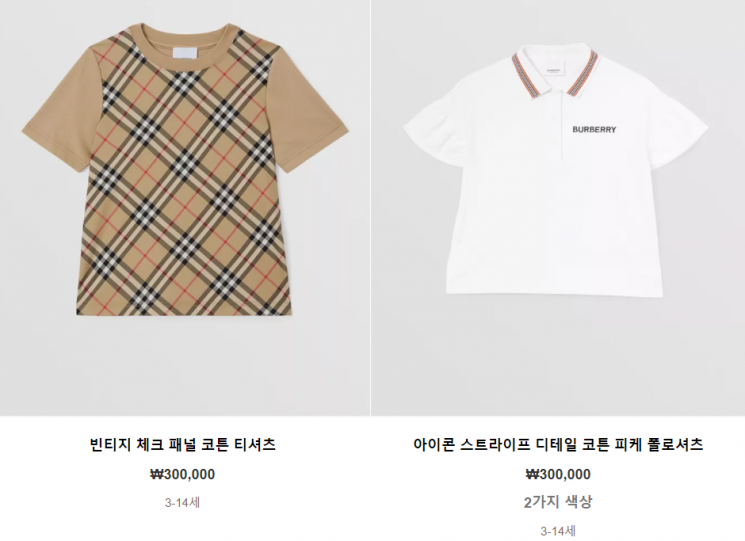
These luxury kids' products are as expensive as adult products but remain popular. In Burberry's case, children's T-shirts featuring the company's logo or patterns start at 300,000 won, and baby gift sets consisting of hats and jumpsuits reach up to 760,000 won. Also, Burberry's bear-shaped doll made of wool material is sold for 760,000 won.
Despite the high prices, families boldly open their wallets for their only child. Posts related to kids' luxury brands are also appearing on online communities such as mom cafes. One netizen said, "These days, I often see children wearing luxury brands. While children grow quickly and it seems unnecessary to buy expensive luxury items, I understand parents' desire to give only the best to their children," adding, "Even luxury items I can't have, I think I could buy for my child."
Meanwhile, as the popularity of luxury kids' products rises, department stores are also opening related stores one after another. Shinsegae Department Store Gangnam branch opened 'Baby Dior' for the first time in Korea last March, followed by stores like 'Givenchy Kids' and 'Fendi Kids.' Lotte Department Store also operates a luxury kids' select shop called 'CuiCui.'
Shinsegae Department Store reported a 32.4% increase in sales of imported children's products, including premium brands, last year, and Lotte Department Store's luxury children's clothing sales grew by 60% in March and April compared to the same period last year.
© The Asia Business Daily(www.asiae.co.kr). All rights reserved.
![Clutching a Stolen Dior Bag, Saying "I Hate Being Poor but Real"... The Grotesque Con of a "Human Knockoff" [Slate]](https://cwcontent.asiae.co.kr/asiaresize/183/2026021902243444107_1771435474.jpg)
















