Day 1 PCR Test After Entry Remains Unchanged
Vaccination 4-6 Months After Completing Primary Series
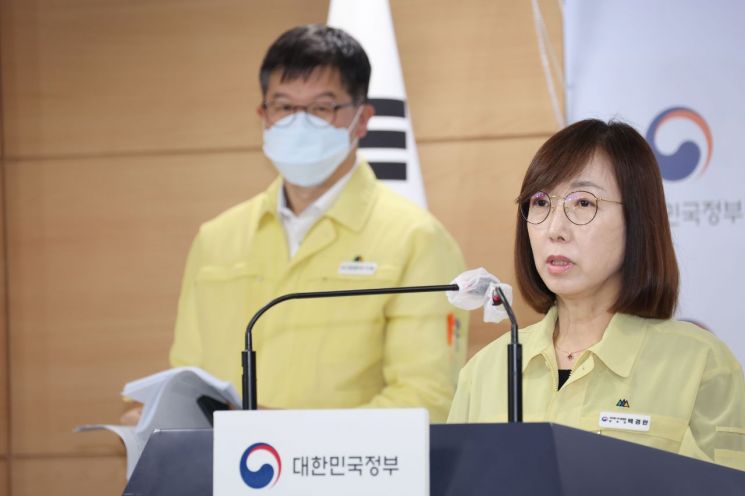
[Asia Economy Reporter Jo In-kyung] From the 3rd of next month, the obligation to submit a negative COVID-19 test certificate before entry will be lifted for both domestic and foreign nationals arriving from overseas. The updated vaccine targeting the COVID-19 Omicron variant will be administered first to high-risk groups such as seniors aged 60 and over, immunocompromised individuals, and patients, residents, and workers in nursing hospitals and facilities as soon as it is introduced domestically this fall.
The Central Disaster and Safety Countermeasures Headquarters announced on the 31st that it received a report from the Korea Disease Control and Prevention Agency (KDCA) on the 'Improvement Plan for Overseas Entry Testing Policy' and discussed the matter accordingly.
The government judged that conditions have been created to resume normal overseas entry as the summer COVID-19 resurgence, which spread since July, has recently shifted to a decline. Considering the inconvenience to travelers, it decided to stop pre-entry testing. However, the PCR test on the first day after entry will be maintained as is to enable early detection of confirmed cases and monitoring of incoming variants. All entrants will be encouraged to promptly register their test results in the quarantine information pre-entry system (Q-code).
The weekly number of new COVID-19 cases increased from 681,131 in the first week of this month to 852,659 in the second week and 893,093 in the third week, but decreased to 760,952 in the fourth week.
Baek Kyung-ran, Commissioner of the KDCA and head of the Central Disaster and Safety Countermeasures Headquarters, explained, "Recently, issues have been raised regarding the effectiveness of local pre-entry testing abroad and difficulties faced by our nationals staying overseas when confirmed positive. Considering the protection of nationals returning during the Chuseok holiday, it was decided to implement this before Chuseok." She added, "If the situation changes, such as the emergence of concerning variants with high fatality rates overseas, we will promptly strengthen entry management, including reintroducing pre-entry PCR testing."
Updated Vaccine, Priority for Seniors and Nursing Hospitals
The basic direction of the '2022-2023 Winter COVID-19 Vaccination Plan' to prepare for the winter resurgence was also announced. The government plans to introduce Pfizer and Moderna mRNA bivalent vaccines in the fourth quarter for winter vaccinations. Commissioner Baek stated, "Unlike influenza, COVID-19 does not yet show a clear seasonal trend, but we intend to establish vaccination plans by timing using vaccines developed to match circulating variants as much as possible."
The vaccination target will be adults aged 18 and over, with priority given to vulnerable groups. Accordingly, seniors aged 60 and above, immunocompromised individuals, and patients, residents, and workers in nursing hospitals and facilities are the first priority, followed by people in their 50s, those with underlying conditions, healthcare workers, conscripts, and those in group facilities such as correctional institutions as the second priority.
The vaccination interval will be recommended at 4 to 6 months after the last vaccination or confirmed infection date, considering the World Health Organization (WHO) guidelines for booster doses. The updated vaccines are known to have higher neutralizing antibody titers against the currently circulating Omicron subvariants compared to existing vaccines.
Commissioner Baek emphasized, "The timing of vaccination is more important than neutralizing ability," adding, "The vaccine you get now is the most effective vaccine to prevent current infections, hospitalizations, and deaths." She also said, "Vaccination will begin with the BA.1-based bivalent vaccine expected to be introduced first due to development and approval schedules. Depending on the progress of product approval, BA.4 and BA.5-based vaccines will also be introduced promptly, and preparations such as training for vaccination institutions and medical personnel and revising implementation standards will be made to enable immediate vaccination."
Those who have not yet completed their primary vaccination or are recommended for a fourth dose but have not received it should prioritize completing the primary series and the fourth dose. For those who have avoided mRNA vaccines due to concerns about adverse reactions, Novavax or the domestically produced vaccine Skycovione, which will start on September 1, can be chosen.
Commissioner Baek stated, "The suspension of submitting negative test certificates upon entry is part of the recovery of daily life and an effort to simplify entry procedures in line with other countries. However, this should not lower vigilance against COVID-19. Just as we overcame the summer resurgence without uniform distancing measures such as time or gathering restrictions, please continue to maintain a safe daily life by following quarantine rules."
© The Asia Business Daily(www.asiae.co.kr). All rights reserved.
![Clutching a Stolen Dior Bag, Saying "I Hate Being Poor but Real"... The Grotesque Con of a "Human Knockoff" [Slate]](https://cwcontent.asiae.co.kr/asiaresize/183/2026021902243444107_1771435474.jpg)















