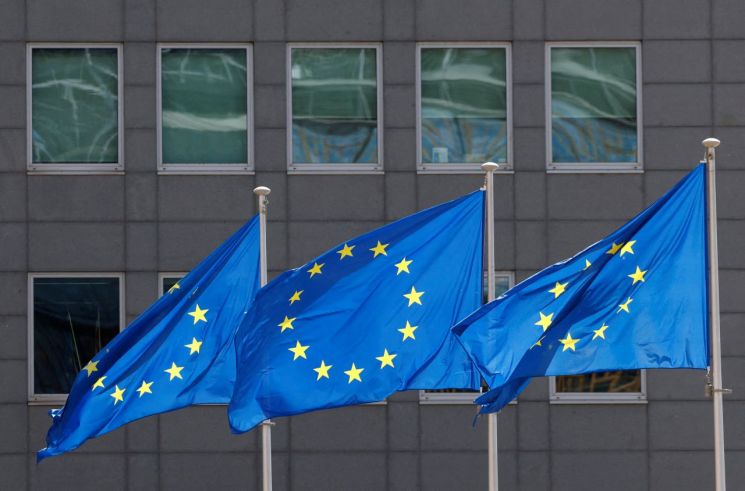
[Asia Economy Reporter Hyunwoo Lee] Major foreign media outlets reported that the European Union (EU) is planning to consider measures to restrict visa issuance to Russian citizens in order to block their entry into EU countries. While some countries have already stopped issuing visas to Russians, it is understood that EU member states have begun discussing this issue because, under the Schengen Agreement?which allows open borders among all member states?it is difficult to see the effect of halting visa issuance unless all members participate.
According to Bloomberg and major foreign media on the 28th (local time), the EU foreign ministers' meeting scheduled to be held in Prague, Czech Republic, on the 30th is expected to review plans to restrict visa issuance to Russian citizens. Since Russia's invasion of Ukraine, neighboring countries have demanded restrictions on visa issuance to Russians, but controversy has continued due to the lack of a unified opinion within the EU.
The controversy intensified especially after Ukrainian President Volodymyr Zelensky requested the EU to stop issuing visas to Russians. In an interview with the Washington Post (WP) earlier this month, President Zelensky urged the West to collectively halt visa issuance to Russians, stating, "Russians should live only in their own world until they change their philosophy."
Previously, some EU member states had restricted or completely stopped issuing visas to Russians. Estonia has been regulating Russian entry by canceling already issued visas, and Finland announced plans to reduce the issuance of tourist visas to Russians to one-tenth of the current level. Czech Republic and Poland declared the suspension of visa issuance to Russian tourists immediately after the outbreak of the war.
These countries argue that due to the Schengen Agreement, which allows free movement within EU member states, even if some countries stop issuing visas, Russians can enter by circumventing through other countries, so all member states must participate in restricting visa issuance.
On the other hand, the U.S. government previously rejected the idea of halting visa issuance, stating that it could block escape routes for individuals resisting the repression of Russian President Vladimir Putin. The German government also expressed opposition, noting that some Russians opposing the Putin regime are leaving their homeland, and it is expected that the debate over pros and cons will continue.
© The Asia Business Daily(www.asiae.co.kr). All rights reserved.
![Clutching a Stolen Dior Bag, Saying "I Hate Being Poor but Real"... The Grotesque Con of a "Human Knockoff" [Slate]](https://cwcontent.asiae.co.kr/asiaresize/183/2026021902243444107_1771435474.jpg)
















