Expert: "Vulnerable Groups Face Barriers to Accessing Institutional Support"
"Supplementing Welfare Workforce and Social Attention Are Necessary"
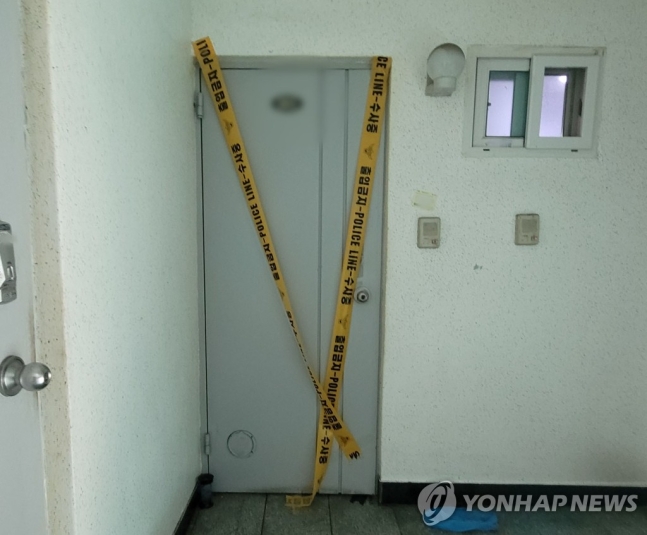 A multi-family house in Gwonseon-gu, Suwon-si, Gyeonggi-do, where three mothers and daughters living in Suwon, who suffered from financial difficulties and illness, passed away. / Yonhap News
[Asia Economy Reporter Kang Juhee] The 'Suwon Three Mothers' case, in which three women suffered from poverty and illness and died without receiving welfare benefits, has starkly revealed the gaps in our society's safety net. The government has belatedly begun discussions on ways to intensively identify vulnerable groups. However, experts point out that only with attention to marginalized groups and a sense of community can similar incidents be prevented.
The three mothers, found dead on the 21st in a multi-family house in Suwon, Gyeonggi Province, endured severe hardship and battled illness during their lifetimes. The mother, a woman in her 60s named Ms. A, and her two daughters in their 40s were suffering from cancer and rare incurable diseases, respectively. There were no relatives or neighbors around them to ask for help. It is reported that their situation worsened significantly after Ms. A’s husband and son, who supported the household, passed away two years ago due to chronic illnesses. The three mothers were unable to pay their monthly rent of about 400,000 won on time before their deaths. It is also known that they had been delinquent on health insurance premiums since February of last year.
Although there were signs of crisis, the state’s welfare support did not reach the three mothers. Their actual residence was in Suwon, but their registered address was in Hwaseong, making it difficult for local governments to locate them. It is known that they had not registered their residence change to avoid debt collection. Because of this, it appears they were unable to even apply for basic welfare services such as basic livelihood security benefits.
The central government’s welfare blind spot detection system also failed to function properly. The Ministry of Health and Welfare operates a system to identify households in welfare blind spots based on 34 crisis indicators, including power, water, and gas cutoffs, and health insurance premium delinquencies. However, the three mothers were only flagged for health insurance premium delinquency and were not included as candidates for crisis household detection. Other information such as debts or the death of the head of household was not identified, so they were classified as having relatively low risk signs.
Hwaseong City conducted a field investigation in July by visiting the registered address after the three mothers’ health insurance premiums were delinquent for 16 months. However, when their whereabouts could not be confirmed, they were classified as 'non-target' for welfare services and no further follow-up was made. In fact, for those like the three mothers who have no choice but to hide to avoid debt collection, welfare systems are useless even if they exist.
The welfare system, which is based on 'application caution,' is also pointed out as having limitations. Currently, most welfare programs in Korea require the individual to apply directly to receive support. However, the procedures such as document preparation are complicated. Therefore, many are blocked at the entry stage or, like the three mothers, are unable to apply due to their circumstances and conditions. Among the 205,748 high-risk individuals identified through the welfare blind spot survey conducted by the Ministry of Health and Welfare from May to July, 1,117 were unreachable because they did not live at their registered addresses. This suggests that there may be others in situations similar to the three mothers.
The government has belatedly begun preparing measures to eliminate welfare blind spots. On the 24th, the Ministry of Health and Welfare held an 'Expert Meeting on Welfare Blind Spot Detection.' They focused on discussing ways to identify the whereabouts of crisis households by seeking police assistance, treating them similarly to missing or runaway persons when their location cannot be confirmed. Additionally, when the next-generation social security system is applied on September 6, the number of crisis indicators will be expanded from the current 34 to 39.
Experts emphasize that to prevent tragedies like the three mothers case, it is necessary to supplement personnel who can discover welfare blind spots and foster community interest. Professor Seo Dongmyung of Dongduk Women’s University’s Department of Social Welfare said, "Korea’s welfare system has most of the essential components. There are various programs to support and assist economically vulnerable groups, but the problem lies in the process of vulnerable groups accessing these systems." He advised, "Ultimately, it is a matter of manpower. The government and local governments must increase personnel and boldly expand the administrative costs required. Also, neighbors and those nearby alerting others to crises and extending a helping hand greatly help prevent neglect of vulnerable groups."
© The Asia Business Daily(www.asiae.co.kr). All rights reserved.
![Clutching a Stolen Dior Bag, Saying "I Hate Being Poor but Real"... The Grotesque Con of a "Human Knockoff" [Slate]](https://cwcontent.asiae.co.kr/asiaresize/183/2026021902243444107_1771435474.jpg)
















