[Seoul District News] Eunpyeong-gu Hosts Academic Symposium on "10 Years of Eunpyeong Hanok Village Development and the Future of Hanok" at Jingwansa Han Culture Experience Center on the 25th & Jo Insuk, CEO of Dari Architects, Explains "Eunpyeong Hanok Village Design Proposal and Future Directions through Hanok Design Education for Architects"... Seongbuk-gu Completes Multi-Generational Family Park at Odong Neighborhood Park
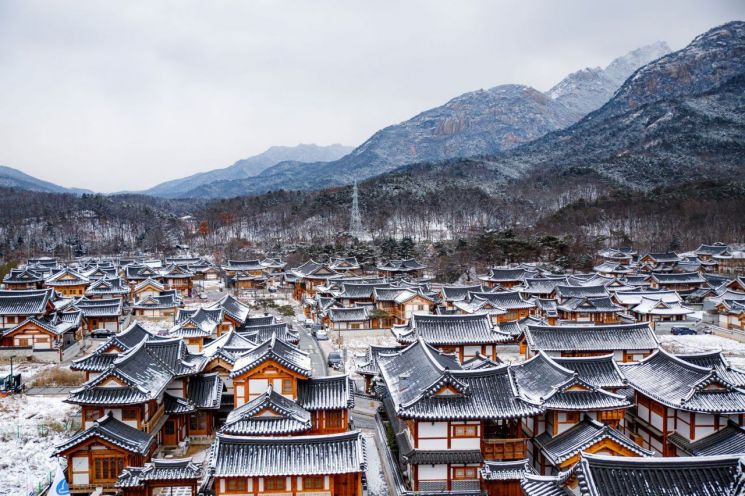
[Asia Economy Reporter Jong-il Park] Eunpyeong-gu (Mayor Kim Mi-kyung) held an academic symposium titled “10 Years of Eunpyeong Hanok Village Development, Discussing the Future of Hanok” on the 25th at the Jingwansa Han Culture Experience Center.
The symposium reviewed the architectural value and current status of Eunpyeong Hanok Village to explore the future direction of residential complex planning in Korea and to assess the potential of future hanok. It was jointly hosted by the Eunpyeong History Hanok Museum and the Korean Architectural History Society.
Participation was open to any residents who wished to join without prior application. Through the symposium, attendees could learn about various new construction methods applied in Eunpyeong Hanok Village and confirm the value of the village’s development as well as domestic and international hanok complex development cases.
To aid understanding of the symposium, a guided tour of Eunpyeong Hanok Village was conducted on the 25th from 10 a.m. for about 1 hour and 30 minutes. The meeting point was at the entrance of the Eunpyeong History Hanok Museum, and participants had the opportunity to directly observe various hanoks throughout the village.
The academic symposium was held on the same day from 1:30 p.m. for about 4 hours, featuring presentations and discussions on eight topics. The first presentation was given by Jo In-sook, CEO of Dari Architects, explaining “Design Proposals for Eunpyeong Hanok Village Attempted through Hanok Design Education for Architects and the Future Direction of Hanok Villages.”
Following this, actual construction cases were introduced, including ▲ Kang Seok-mok, CEO of Gojin TNC’s “Characteristics of Construction Methods Applied in Eunpyeong Hanok Village” ▲ Lee Dong-beom, Director of Jiyu Hanok Research Institute’s “The People Who Built Eunpyeong Hanok Village: Focusing on Designers, Constructors, Master Carpenters, Joiners, and Roofers” ▲ Yoon Hee-sang, CEO of Yesseul Architects’ “Architectural Value and Meaning of Eunpyeong Hanok Village Seen through Archive Construction” ▲ Kim Jae-myung, CEO of Seoul Cultural Heritage Research Institute’s “Comparative Analysis between Other Domestic Hanok Villages and Eunpyeong Hanok Village,” and international architectural cases including ▲ Nam Hae-kyung, Professor at Jeonbuk National University’s “Experience in Overseas Hanok Complex Development” ▲ Kim Il-hak, Professor at Jilin Architecture University’s “Renovation and New Construction of the Korean-Chinese Village in Changchun, China” ▲ Han Dong-soo, Professor at Hanyang University’s “Practical Value and Prospects of Eunpyeong Hanok Village.”
The discussion was moderated by Baek So-hoon, Academic Director of the Korean Architectural History Society, with Kim Seok-hyun, Curator of A&A Cultural Research Institute, and Shin Chi-hoo, Director of the National Hanok Center, participating.
A representative from the Eunpyeong History Hanok Museum stated, “We hope this will become a forum to discuss the direction of modern hanok centered on Eunpyeong Hanok Village,” adding, “As global interest in hanok increases, we will continue to organize international academic conferences in the future.”
Seongbuk-gu (Mayor Lee Seung-ro) has transformed Odong Neighborhood Park into a “Generational Empathy Family Park” that all generations, from infants to the elderly, can enjoy.
Odong Neighborhood Park is the second largest park in Seongbuk-gu and is located near residential areas, attracting many visitors. However, it had been criticized for being monotonous with few attractions or activities.
In response, Seongbuk-gu created a green welfare space through comprehensive renovations to meet the increasing standards and demands of visitors, allowing all generations?including infants, children, adolescents, seniors, and people with disabilities?to use the park without restrictions.
The generational empathy family park at Seongbuk-gu’s Odong Neighborhood Park was developed through eight projects: ▲ Creation of a Book Rest Area (Forest Library) within the park ▲ Odong Neighborhood Park (Seongbuk) Development Project ▲ Barrier-Free Forest Trail (Jarakkil) Construction Project ▲ Infant Forest Experience Center Construction Project ▲ Healing Forest Trail Construction Project ▲ City Park Maintenance Project ▲ Wildflower Fragrance Garden Construction Project ▲ Renovation of Old Restrooms.
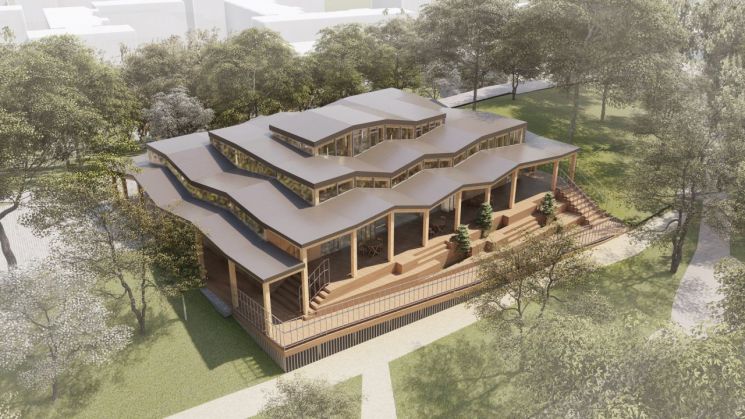
First, the Book Rest Area (Forest Library ·photo) project is constructing a one-story, 428㎡ book rest area (forest library) in the central part of the park, where previously wood chippers and other equipment caused dust and landscape damage complaints. This is part of Seoul City’s overall plan for “Creating Book Rest Areas in Parks,” supported by 2.6 billion KRW in city funds. It will be developed as a complex community space where visitors can read books in the forest and communicate with family and neighbors, with completion targeted for October.
The Odong Neighborhood Park (Seongbuk) Development Project involved removing hazardous trees (black locust) scattered throughout the park, creating azalea hills, planting pine and cherry trees to improve the park entrance landscape, and establishing a school forest garden linked to a nearby elementary school as a space for children’s rest and education. This project, supported by 1.9 billion KRW in city funds and covering about 4,560㎡, was completed in August and is actively used by residents.
The Barrier-Free Forest Trail (Jarakkil) Construction Project addressed the steep and dirt paths of the existing Odong Neighborhood Park trails, which were difficult for seniors, disabled people, and pregnant women to use. Since 2014, Seongbuk-gu has steadily developed barrier-free forest trails, creating a total of 1.5 km of connected paths over four phases. These trails allow vulnerable groups and residents to comfortably enjoy nature while minimizing environmental damage. The barrier-free trails have increased accessibility and user satisfaction.
The Infant Forest Experience Center Construction Project was implemented to provide a space for infants in the Jangwi and Wolgok areas, where forest experience spaces were scarce, to freely play in the forest and promote forest welfare. Utilizing existing terrain and forest resources in a 10,000㎡ forest area within the park, the center was designed with minimal artificial structures, considering infants’ characteristics. It includes outdoor experiential learning areas, safe rest facilities, and shelters. The district also operates programs at the Infant Forest Experience Center, which was completed in March. Since April, 1,747 infants from 90 institutions have participated in the programs.
The Healing Forest Trail was created with support from Seoul City and the Korea Forest Service in an area with excellent forest environments such as existing pine forests. It contributes to citizens’ physical and mental health through phytoncide exposure, healing, and relaxation during walks, providing a space to freely experience the forest. Additionally, forest healing programs conducted on the trail help alleviate depression and stress, offering green welfare services for tired and stressed modern people. The district operates five forest healing programs targeting youth, adults, women, seniors, and workers. Each session accommodates five participants, and anyone can make reservations through the Seoul City Public Service Reservation website by searching “Odong Park Healing Forest Trail Forest Healing Program.” Reservations must be made at least three days in advance and are accepted on a first-come, first-served basis.
Seongbuk-gu also maintains safety and a pleasant park environment through the City Park Maintenance Project, which refurbished old restrooms, wooden deck trails, and other rest and exercise facilities in 2020 and 2022 to prevent accidents. The Wildflower Fragrance Garden, created with citizen participation and budget allocation, planted 3 zelkova trees, 1,911 shrubs (including evergreen species), and 30,511 herbaceous plants (including Agastache species), becoming a famous spot with year-round floral scents.
The renovation of old restrooms in Odong Neighborhood Park installed flush toilets near the park’s summit, improving restroom convenience and providing a clean and comfortable environment for park users.
Lee Seung-ro, Mayor of Seongbuk-gu, said, “Odong Neighborhood Park can now provide green welfare services that embrace all generations, vulnerable groups, and marginalized communities. Especially, by reorganizing Odong Neighborhood Park into a generational empathy family park connecting Buk Seoul Dream Forest and the Seongbuk and Gangbuk districts, we have achieved significant progress in balancing park and green space development in the northeastern region of Seoul, which has long lacked and been neglected in quality of life improvements for citizens.”
He added, “We hope that residents can use various programs and facilities in the park to alleviate fatigue and depression caused by prolonged social distancing.”
© The Asia Business Daily(www.asiae.co.kr). All rights reserved.


















