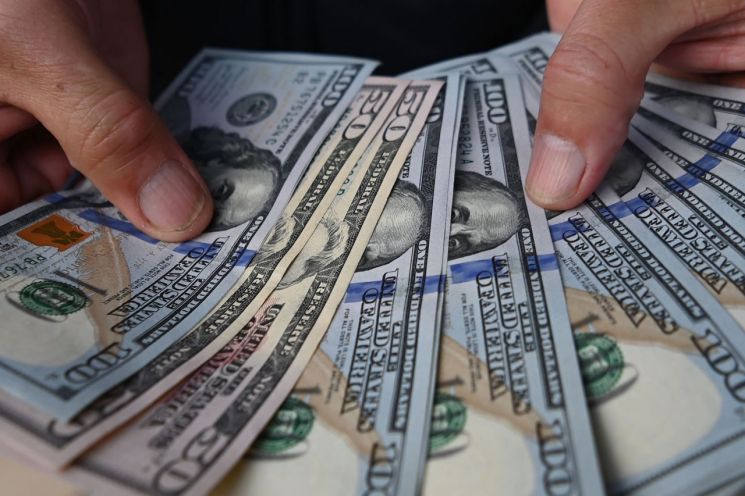
[Asia Economy Reporter Park Byung-hee] Emerging market foreign exchange reserves have been confirmed to be decreasing at the fastest pace since the 2008 global financial crisis. As the US dollar shows ultra-strong performance due to the Federal Reserve's aggressive interest rate hikes, emerging markets are rapidly depleting their dollar reserves in the process of defending their own currencies' values.
According to data from the International Monetary Fund (IMF), emerging market foreign exchange reserves decreased by $379 billion in the first half of this year, reported the Wall Street Journal on the 24th (local time). JP Morgan Chase analyzed that, excluding exchange rate fluctuations and omitting countries with abundant reserves such as China and Middle Eastern oil-producing nations, emerging market foreign exchange reserves have declined at the fastest rate since 2008.
This year, as the dollar showed ultra-strong performance, most countries released their foreign exchange reserves to defend the value of their own currencies. In a situation where inflation has already surged due to rising energy costs, a decline in currency value further fuels inflation. Central banks hold highly credible currencies such as the dollar, euro, and yen, and when foreign investment funds flow out, they release foreign exchange reserves to increase market liquidity and prevent the depreciation of their own currency.
Although emerging markets like China, India, and Brazil hold large foreign exchange reserves, many emerging countries face increased economic risks due to the sharp decline in their reserves.
Sri Lanka already defaulted in May, and Nigeria blocked the repatriation of funds by foreign airlines to prevent dollar outflows. Pakistan, Egypt, T?rkiye, and Ghana are also reported to be facing similar crisis situations.
According to financial information provider CEIC, Pakistan and Ghana's foreign exchange reserves decreased by 33% and 29% respectively this year. Both countries are currently negotiating bailout packages with the IMF.
Egypt's foreign exchange reserves also fell by 26%, standing at about $24 billion as of the end of July. This is only enough to cover three months of import costs. Egypt is also negotiating a bailout with the IMF.
Eastern European countries have suffered significant damage due to Russia's invasion of Ukraine. The foreign exchange reserves of the Czech Republic and Hungary decreased by 15% and 19% respectively this year. The Hungarian forint has depreciated by nearly 30% this year.
Alejandro Arevalo, head of emerging market bonds at Jupiter Asset Management, said, "Sub-Saharan African countries, which have heavily relied on low interest rates until now, are the most at risk."
© The Asia Business Daily(www.asiae.co.kr). All rights reserved.
![Clutching a Stolen Dior Bag, Saying "I Hate Being Poor but Real"... The Grotesque Con of a "Human Knockoff" [Slate]](https://cwcontent.asiae.co.kr/asiaresize/183/2026021902243444107_1771435474.jpg)















