Early Termination of Existing DC Therapeutic Clinical Trial
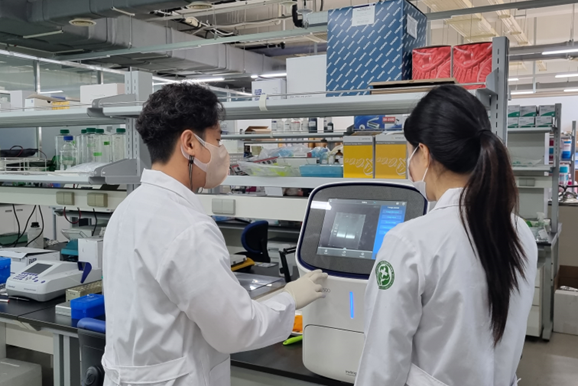
[Asia Economy Reporter Lee Gwan-joo] Paxel Bio announced on the 25th that it will officially accelerate the development of CAR-MIL, a new multiple myeloma treatment that replaces the existing DC (dendritic cell) therapy.
A Paxel Bio official explained, "To build an efficient pipeline in line with market trends and changes, we have officially decided to terminate early the Vax-DC/MM clinical trial, which had been provisionally on hold, and to actively develop a new CAR-MIL therapy as its replacement."
Paxel Bio has been conducting clinical research on multiple myeloma using the Vax-DC/MM therapy based on DC. In the Phase 1/2a clinical trial, it achieved a clinical benefit rate of 66.7% and an immunological response rate of 77.8%, leading to approval from the Ministry of Food and Drug Safety for Phase 2 clinical trials.
However, recently, two chimeric antigen receptor (CAR)-T cell therapies targeting multiple myeloma have been approved by the U.S. Food and Drug Administration (FDA), and the global market for hematologic cancer treatments is rapidly advancing. In South Korea, various combination therapies for first-line treatment of multiple myeloma as well as for patients who are refractory or relapsed have also received approval from the Ministry of Food and Drug Safety.
In response to these changes in the multiple myeloma treatment market, Paxel Bio has been conducting research and development with experts in the field to develop more advanced and commercially viable therapies. Among these, a recently prominent study is the MIL (marrow-infiltrating lymphocyte) therapy established for multiple myeloma at the Cancer Immunotherapy Research Center of Hwasun Chonnam National University Hospital.
The MIL therapy involves expanding and culturing marrow-infiltrating T lymphocytes that can recognize numerous tumor antigens of multiple myeloma, resulting in fewer side effects and higher therapeutic efficacy. CAR-MIL is expected to be a more powerful therapy than existing CAR-T cell therapies by conjugating CAR to the established MIL, the company explained.
© The Asia Business Daily(www.asiae.co.kr). All rights reserved.
![Clutching a Stolen Dior Bag, Saying "I Hate Being Poor but Real"... The Grotesque Con of a "Human Knockoff" [Slate]](https://cwcontent.asiae.co.kr/asiaresize/183/2026021902243444107_1771435474.jpg)















