Post-COVID Income and Consumption Polarization + Lifestyle Changes
Luxury Hotel Restaurants Compete Beyond 'Upscale' to 'Differentiation'
Fully Booked Daily in August... "Business Demand Returns, Trend Expected to Strengthen"
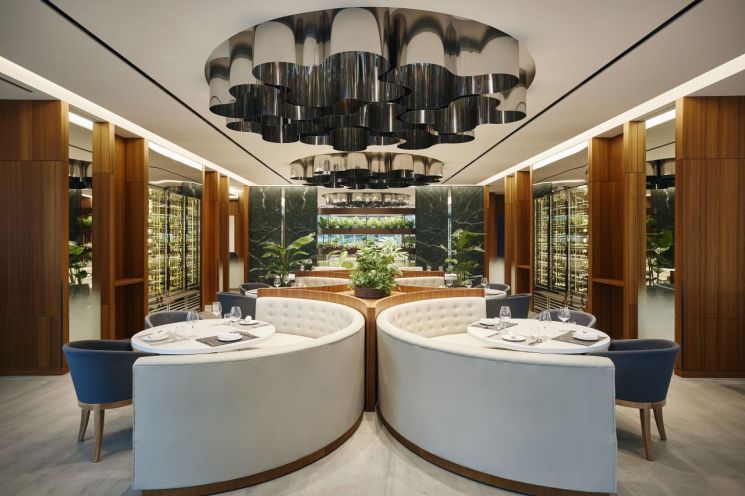
Domestic luxury hotels are transforming into ‘gourmet destinations.’ The number of visitors coming to hotels solely to enjoy fine dining, beyond just a place to stay, is increasing. This trend is influenced by the widening income and consumption gap over recent years and lifestyle changes among those who engaged in ‘revenge consumption’ of luxury food during the COVID-19 pandemic. The culture of the MZ generation (Millennials + Generation Z), which values experiences, has also played a role. Consequently, luxury hotel restaurants, which previously focused on upscale services mainly for business clients, have recently bet on ‘differentiation.’ They have clearly defined their concepts with exotic locations and story-driven menus to attract customers.
◇Beyond Luxury, Establishing Concepts
According to the hotel industry on the 19th, The Mayfield Hotel Seoul reopened its European restaurant ‘The Q’ after renovation the day before. Starting in 1962 on a 100,000㎡ orchard site, the hotel is characterized by its large garden and forest connected to the hotel. The restaurant also reopened with the concept of a ‘greenhouse garden in the forest.’ Ingredients such as asparagus and onions are grown on the Mayfield Hotel’s 200,000㎡ farm and used in the restaurant. Starting with this restaurant, the hotel plans to strengthen its food and beverage (F&B) offerings and expand its business. Kim Young-moon, CEO of The Mayfield Hotel, said at the reopening commemorative meeting the day before, “We will continue restaurant renovations, aiming to reorganize the Korean restaurant next year to expand our customer base,” adding, “We plan to open a bar near Magoknaru Station in Seoul.”
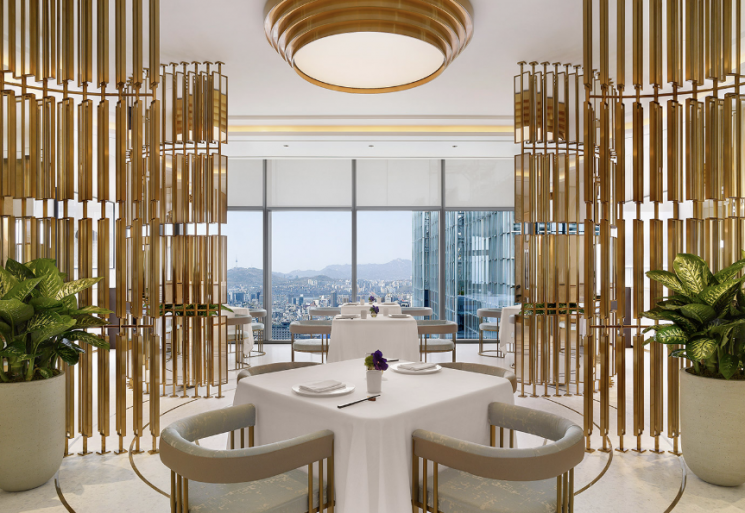
The Westin Chosun Seoul introduced a ‘wine pairing’ course at its restaurants ‘Nine’s Gate’ and ‘Lubrica,’ where customers can experience wines that complement the signature dishes representing each restaurant’s concept. The course allows tasting of 8 to 9 signature and seasonal dishes paired with suitable wines. A hotel official said, “As the number of people visiting hotel restaurants has increased recently, more customers are considering the unique characteristics of each hotel restaurant’s location and menu concept in detail,” adding, “We are preparing to segment targets accordingly to provide diverse experiences.”
◇“Doing Even Better” After COVID-19
Hotel F&B has been a savior for hotels that suffered significant losses in room sales after COVID-19. Although its revenue share is much lower than rooms, it performed relatively well as a safer dining option by reducing the number of tables, increasing spacing between tables, and strengthening quarantine measures during the pandemic. After the endemic phase (periodic outbreaks of infectious diseases), business demand, which had declined, has recovered, and those who visited hotel restaurants during COVID-19 have joined the ranks of new mainstream customers, boosting popularity even further.
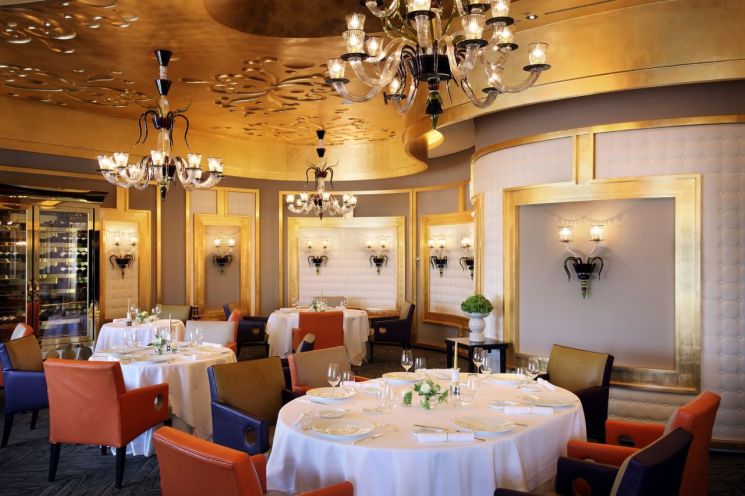
Major luxury hotels in Seoul continue to be fully booked daily even after normalizing hotel seating capacity. Chosun Hotel & Resort operates all its food and beverage outlets, including Chosun Palace, at full capacity. On weekends, reservations are essential to use the facilities. Seoul Shilla Hotel’s major restaurants were mostly fully booked until early September. InterContinental is also fully booked on weekends for both buffet and fine dining. On weekdays, lunch and dinner seat occupancy exceeds 90%. Lotte Hotel Seoul is experiencing difficulty in weekend reservations at places like Pierre Gagnaire.
A hotel industry official said, “Changes in lifestyle aiming for luxury, the expansion of high-income groups supporting this, and the MZ generation’s changing perception that spending over 100,000 won per meal is worthwhile are thickening the customer base of hotel restaurants,” adding, “With business demand strengthening again after the endemic, this trend is expected to continue for the time being.”
© The Asia Business Daily(www.asiae.co.kr). All rights reserved.



















