KOFIX Records Largest Ever Increase
Variable Mortgage Rates Soar Above 6%
High Possibility of Additional Rate Hike by Bank of Korea on 25th
"Loan Rates Expected to Rise Further by Year-End"
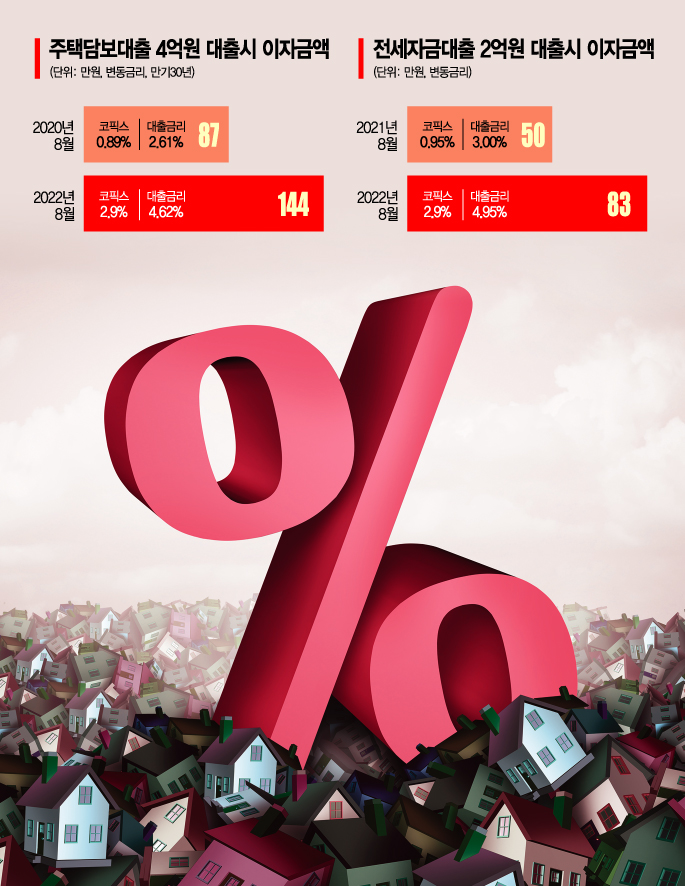
Two years ago, Kim Jinha (36, pseudonym), who took out a 400 million KRW mortgage loan to set up a newlywed home in Ilsan, Gyeonggi Province, ultimately canceled his summer vacation plans. After receiving a notice from the bank about the changed loan interest rate, he felt the need to save every penny. When he took out the loan in August 2020 at an interest rate of 2.61%, the monthly interest was about 870,000 KRW. Although it was a burden, the couple, both working, could comfortably repay it.
However, on the 17th, the interest rate shown in the text message sent by the bank to Mr. Kim nearly doubled to 4.62%. The monthly interest jumped to 1,440,000 KRW. The variable interest rate is recalculated every six months based on market rates. Mr. Kim said, "I can't believe this interest rate is real, even seeing it with my own eyes," adding, "My wife is on parental leave, so it's almost a single income, and with the interest cost rising by nearly 600,000 KRW a month, we can't even dream of a vacation."
◆ Soaring COFIX... Reflected in Loan Interest Rates
From the 17th, the mortgage loan interest rates at commercial banks recorded the highest-ever increase based on variable interest rates. KB Kookmin Bank's variable mortgage loan interest rate was 3.92~5.32% on the 16th but jumped to 4.44~5.84% in just one day. Other banks are in a similar situation. Due to the steep rise, interest rates in the 6% range (Woori Bank 5.31~6.11%) have also appeared. This is because the shock of COFIX (Cost of Funds Index), the benchmark for variable mortgage loan interest rates, rising by a record 0.52 percentage points (p), was fully absorbed by commercial bank interest rates. COFIX is the weighted average interest rate of funds raised by eight commercial banks (KB Kookmin, Shinhan, Hana, Woori, NH Nonghyup, IBK Industrial Bank, SC First Bank, and Korea Citibank) through deposits, savings, and financial bonds, and is used to calculate variable interest rates for mortgage and jeonse (long-term deposit) loans.
The Korea Federation of Banks announced on the 16th that the COFIX based on new transaction amounts for July was 2.90%, the largest increase since its inception in January 2010. The previous largest increase was in June (2.38%), which rose by 0.4 percentage points from the previous month, meaning the record was broken for two consecutive months. As COFIX rises, the cries of jeonse loan borrowers have also grown louder.
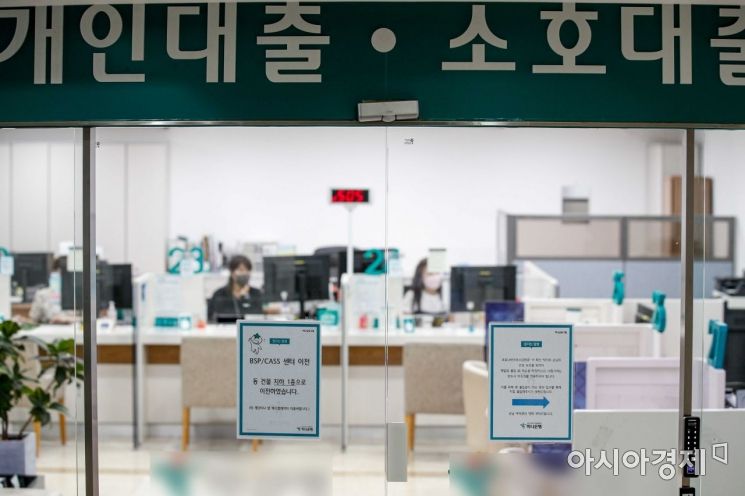 On the 7th, a scene at a bank counter in downtown Seoul shows the ongoing trend among major commercial banks to lower loan interest rates while raising interest rates on regular savings and installment savings products. Photo by Jinhyung Kang aymsdream@
Office worker Lee Areum (28, pseudonym) took out a 200 million KRW jeonse loan last summer when she rented a jeonse house in Mia-dong, Gangbuk-gu, Seoul. At that time, the interest rate was 3.0%, but it rose by 2 percentage points to 4.95% in just one year. The monthly interest payment to the bank increased from 500,000 KRW to 825,000 KRW, rising by more than 300,000 KRW.
Ms. Lee said, "A 100 million KRW jeonse deposit is like paying 400,000 KRW in monthly rent, but the interest rate has risen to 5%," adding, "If I had known this, it would have been better to sign a monthly rent contract from the start; I deeply regret it." Considering that the interest rate hike will continue until next year, she said she is currently checking the market prices for monthly rental houses.
◆ Result of the Bank of Korea's Big Step and Government Pressure
The Bank of Korea is highly likely to raise the base interest rate once more on the 25th. If this happens, the steep rise in COFIX is expected to continue. If the current base rate (2.25%) rises to around 2.75~3.00% by the end of the year, deposit and savings interest rates and funding costs such as financial bonds will also surge, pushing COFIX higher. The financial sector analyzes that the record increase in COFIX in July was influenced by the Bank of Korea's big step last month (a simultaneous 0.5 percentage point hike in the base rate).
A commercial bank official said, "Along with the big step, the Financial Services Commission and the Financial Supervisory Service have been pressuring commercial banks to raise deposit and savings interest rates, inducing the COFIX increase, which in turn caused a butterfly effect of rising loan interest rates," adding, "If this atmosphere continues, market interest rates are expected to rise by at least another 0.5 percentage points by the end of this year."
© The Asia Business Daily(www.asiae.co.kr). All rights reserved.


















