Jang Sang-i "Choosing SMIC Was a Lifetime Mistake"
After TSMC→SMIC→HSMC→SMIC, Resigned Due to 'Personal Reasons'
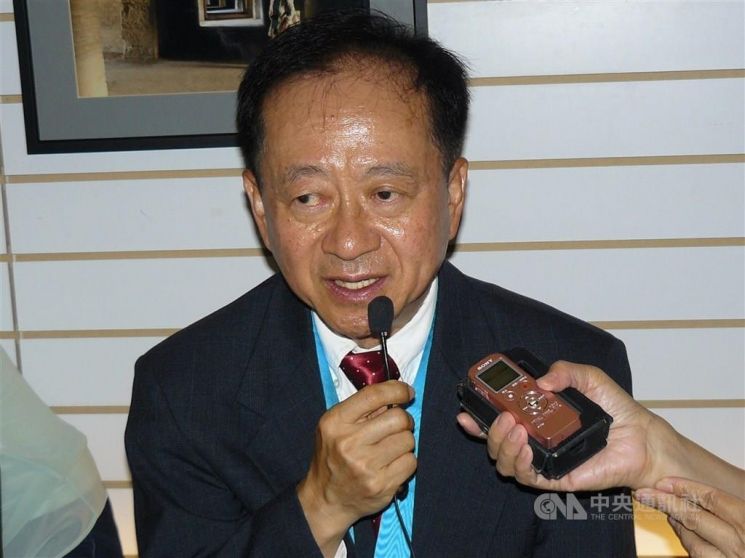 Semiconductor industry giant Jang Sang-i, formerly of Taiwan's TSMC, said, "Going to China was the biggest mistake of my life." Photo by Yonhap News
[Asia Economy Culture Young Intern Reporter] Chang Sang-yi (76), a semiconductor industry giant who was the former chief technology officer of Taiwan's TSMC, the world's largest foundry (semiconductor contract manufacturing) company, and was recruited to China, has expressed regret, calling his choice a "lifetime mistake."
According to Taiwan's Central News Agency on the 12th, in an oral history interview with the Computer History Museum (CHM) in California, USA, Chang Sang-yi said that leaving TSMC to join SMIC (Semiconductor Manufacturing International Corporation), a core company in China's semiconductor rise, was a "lifetime mistake."
Chang Sang-yi, one of the giants in the global foundry industry led by Taiwan, said, "People sometimes do foolish things in life," and "Joining SMIC was one of those foolish things."
Born in Taiwan, Chang studied electronic engineering at Princeton University and Stanford University in the United States. He joined TSMC in 1997 and rose to the position of chief responsible for advanced semiconductor development before retiring in 2013. After retirement, he moved to China and actively supported China's semiconductor rise.
From 2016 to 2019, he served as an independent director at SMIC, and in 2019, he moved to become the CEO of Wuhan Hongxin Semiconductor Manufacturing Co., Ltd. (HSMC), a new Chinese foundry company with an investment plan reaching 20 trillion won.
However, after HSMC was stranded amid fraud controversies, Chang left the company at the end of 2020 and rejoined SMIC as vice chairman. At that time, industry observers speculated that SMIC, which was struggling under multilayered sanctions as a key target of the US alongside Huawei, was trying to find a breakthrough in advanced fine processes by recruiting Chang Sang-yi.
However, when Chang joined as a key executive, internal conflicts arose among SMIC's top management, including CEO Liang Mengsong, also a former TSMC member who had led SMIC since 2017 and expressed his intention to resign in opposition. Eventually, caught in internal power struggles, Chang left SMIC in November last year citing "personal reasons." This was less than a year after joining as vice chairman.
In this oral history interview, Chang lamented that because he currently holds US citizenship, he was unable to gain trust at SMIC. He also revealed that due to US sanctions, SMIC cannot acquire advanced process equipment and thus cannot produce 7nm process products from a technical standpoint.
However, recently, the industry believes that SMIC has already succeeded in mass-producing 7nm products despite US sanctions. Considering that Chang left in November last year and this oral interview took place in March, his assessment does not fully reflect SMIC's current advanced process operational capabilities.
© The Asia Business Daily(www.asiae.co.kr). All rights reserved.
![Clutching a Stolen Dior Bag, Saying "I Hate Being Poor but Real"... The Grotesque Con of a "Human Knockoff" [Slate]](https://cwcontent.asiae.co.kr/asiaresize/183/2026021902243444107_1771435474.jpg)
















