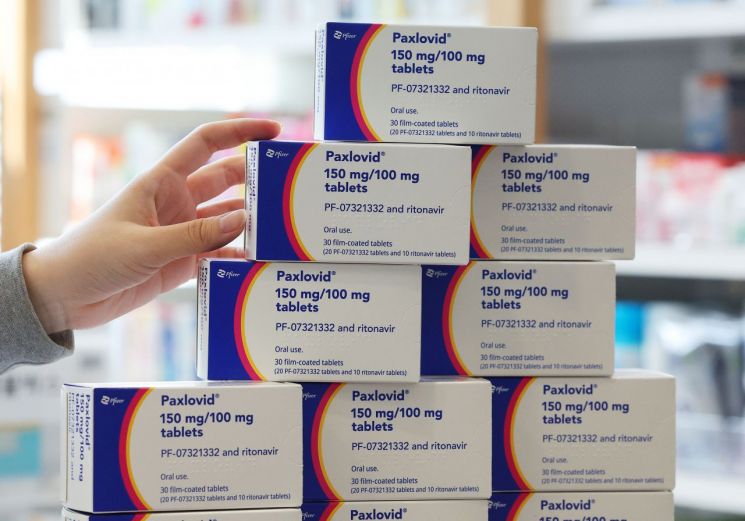
[Asia Economy Reporter Kim Young-won] The administration rate of oral antiviral treatments for elderly COVID-19 patients remained at a similar level in August as it was in June. Authorities have decided to expand the prescription of oral antiviral treatments at hospital-level medical institutions to promote active treatment.
On the 12th, the Central Disaster and Safety Countermeasures Headquarters stated, "Despite analyses showing that early administration of oral antiviral treatments to high-risk groups such as patients and residents of nursing hospitals and facilities is effective in preventing severe progression, the average administration rate among confirmed COVID-19 patients aged 60 and over, which was 18% in June, remained at 18.7% in the first week of August," confirming this situation.
Doctors at Tertiary General Hospitals Patients Usually Visit Prescribe COVID-19 Treatments
The Central Disaster and Safety Countermeasures Headquarters first significantly expanded the number of hospital-level medical institutions capable of outpatient prescriptions regardless of medical specialty to over 1,000 locations, so COVID-19 patients can more easily receive prescriptions and dispensing. Outpatient prescriptions at tertiary general hospitals and general hospitals will also be improved. Currently, outpatient prescriptions for oral antiviral treatments at tertiary general hospitals and general hospitals are operated in specific departments or through separate counters, but going forward, prescriptions will be possible throughout the entire hospital outpatient departments. Accordingly, doctors who usually treat patients will be able to prescribe oral antiviral treatments.
Earlier, on the 8th, Jeong Gi-seok, Chair of the National Infectious Disease Crisis Response Advisory Committee, said during a briefing on the committee meeting results, "Many patients visit general hospitals and university hospitals, but when they contract COVID-19, treatment is bifurcated to nearby other places, so doctors who see patients for the first time are confused, and patients cannot be informed in detail about the medications they are taking." He added, "It is believed that prescription rates can be increased if it is recommended that hospitals managing chronic diseases continue treatment when patients contract COVID-19, separately from one-stop treatment centers."
However, so far, oral antiviral prescriptions have been made only at tertiary general hospitals and general hospitals designated as one-stop treatment centers. Park Hyang, Head of the Central Accident Response Headquarters’ Quarantine General Division, explained, "Prescriptions are currently being made within tertiary hospitals designated as one-stop treatment centers," adding, "Whether to expand further and the implementation schedule will be announced after consultation with the Central Disease Control Headquarters."
To activate treatment prescriptions, the number of pharmacies capable of dispensing has been nearly doubled from 1,082 to 2,175 as of this date. To ensure smooth supply in line with the expansion of prescription and dispensing institutions, 142,000 doses of Lagevrio will be initially introduced domestically in August and September. Additionally, 800,000 doses of Paxlovid, for which additional purchase contracts have been signed, will be supplied with 200,000 doses arriving in the second half of this year and 600,000 doses in the first half of next year.
Furthermore, medical staff with experience in prescribing treatments will directly participate in creating educational materials and prescription guidelines. This is a countermeasure addressing concerns that medical staff find it difficult to prescribe Paxlovid due to its 23 contraindicated medications and lack of clinical information.
Strengthening Operation of Consultative Bodies Involving Basic and Metropolitan Local Governments and Medical Community
At this Central Disaster and Safety Countermeasures Headquarters meeting, measures to strengthen the operation of 'health and medical consultative bodies' involving the medical community in local governments’ COVID-19 response were also discussed. Based on a proposal from the Korean Medical Association on the 27th of last month, many metropolitan and basic local governments are currently operating such consultative bodies.
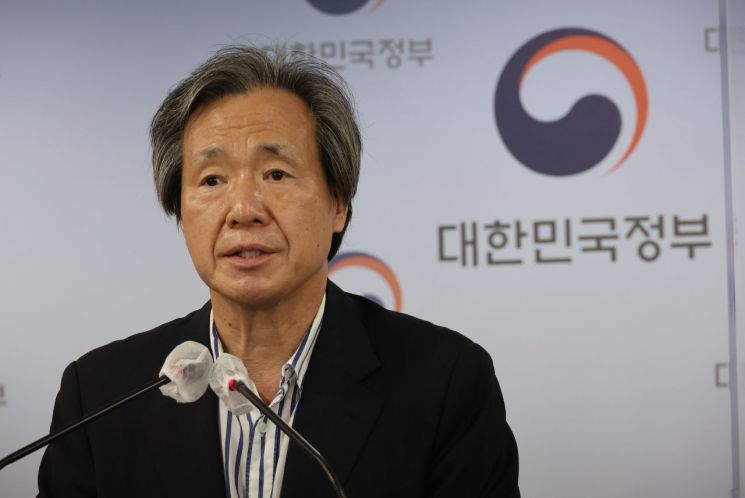
On this day, Chair Jeong emphasized the importance of the permanent operation of health and medical consultative bodies. He said, "Until now, cooperation has been led by the central government and nationwide private organizations," adding, "If the operation of regional medical consultative bodies becomes smoother, COVID-19 situations can be resolved as much as possible within the region, and rapid linkage in emergencies can also be achieved through cooperation with neighboring local governments."
Chair Jeong introduced, "Currently, out of 17 metropolitan local governments, 12 cities and provinces operate regional medical consultative bodies," adding, "Gwangju City is a model local government where the head of the local government, the president of the local medical association, the hospital association president, the pharmacist association president, the nursing association president, the city council chairman, the superintendent of education, infectious disease professors, and hospital directors all participate to share COVID-19 related situations." He continued, "Gangwon, Chungbuk, and Gyeongbuk operate consultative bodies at the basic local government level, while Seoul and Daejeon do not operate them even at the basic level."
Finally, Chair Jeong recommended to the government, "Please consider forming consultative bodies centered on the Ministry of Health and Welfare, the Fire Agency, the Korean Medical Association, the Korean Nurses Association, and other health and medical organizations, extending down to 226 city, county, and district units."
© The Asia Business Daily(www.asiae.co.kr). All rights reserved.
![Clutching a Stolen Dior Bag, Saying "I Hate Being Poor but Real"... The Grotesque Con of a "Human Knockoff" [Slate]](https://cwcontent.asiae.co.kr/asiaresize/183/2026021902243444107_1771435474.jpg)
















