Interview with Kim Young-ho, CEO of ToolGen
Charcot-Marie-Tooth has relatively many patients
No specific treatment yet
Possesses 3rd generation gene editing technology 'CRISPR-Cas9'
First patent filed in 2012 related to eukaryotic cells
Leading ahead of competitors
"Rather than continuing patent disputes,
collaborating to develop treatments for humanity is the priority"
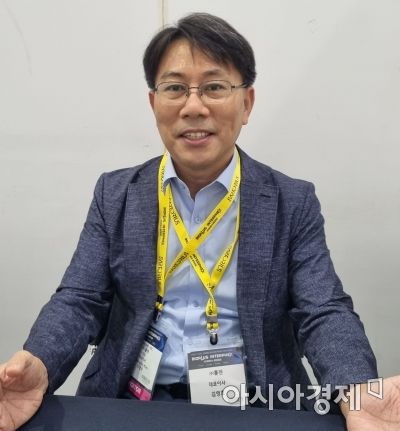
[Asia Economy Reporter Chunhee Lee] "We are the first in the world to file a patent for gene-editing technology in eukaryotic cells. Although it is challenging, our top priority is developing a treatment for Charcot-Marie-Tooth (CMT), a neurological genetic disorder." (Kim Young-ho, CEO of ToolGen)
Gene-editing technology is a cutting-edge medical technology that has just surpassed 10 years. Previously, there were first-generation ‘Zinc Finger Nucleases’ and second-generation ‘TALEN’ technologies, but serious discussions began after the development of the third-generation ‘CRISPR-Cas9’ technology in 2011. At that time, Professor Emmanuelle Charpentier of the Max Planck Institute announced the existence of CRISPR-Cas9, and Professor Jennifer Doudna of UC Berkeley successfully reproduced the gene-editing tool in vitro through joint research with Charpentier.
In 2013, the development accelerated when Jin-Soo Kim, then a professor at Seoul National University, and Feng Zhang, a professor at the Massachusetts Institute of Technology (MIT), succeeded in human gene editing using gene-editing technology for the first time. Charpentier and Doudna received the Nobel Prize in Chemistry in 2020 for their development of CRISPR-Cas9 technology, drawing significant attention.
The current technological competition is also led by these figures. Among them, there is an intense patent dispute between ToolGen, founded by former Professor Kim, the UC Berkeley-Vienna-Charpentier (CVC) group led by Professors Charpentier and Doudna, and the Broad Institute led by Professor Zhang, over who developed the technology first.
CEO Kim emphasized, "ToolGen was the first to file a patent for eukaryotic cells in 2012," stating that they are leading the patent competition. ToolGen has been recognized as the ‘senior party’ in the interference proceedings with CVC and Broad. Since ToolGen does not bear the burden of proof for who developed the technology first, and CVC and Broad must prove it as ‘junior parties,’ ToolGen holds the advantage. Former Professor Kim, the founder, recently stepped down as the director of the Genome Editing Research Center at the Institute for Basic Science (IBS) and returned to ToolGen as an advisor, which is expected to strengthen their position in the patent dispute.
However, CEO Kim stressed that "rather than continuing the dispute, it is a priority to cooperate in developing treatments quickly for humanity," emphasizing the importance of reaching an agreement. He added that the ongoing dispute between CVC and Broad is causing difficulties.
ToolGen’s core pipeline targets Charcot-Marie-Tooth (CMT), a hereditary peripheral neuropathy with no current treatment. Although a genetic disorder, it affects about 1 in 2,500 people, making it relatively common. They are focusing on type 1A. CEO Kim explained, "We plan to submit an Investigational New Drug (IND) application for the CMT treatment next year," adding, "We are preparing for clinical trials not only in Korea but also in the United States."
Regarding safety concerns that may arise during gene editing, he confidently stated it is safe. He explained, "CMT1A is caused by gene duplication leading to gene overexpression. Our approach reduces the activity of the duplicated gene to normalize the overexpressed protein, so it is safe and sufficiently effective." He also emphasized that ToolGen is virtually the only company in the world focusing on treating neurological diseases using gene-editing technology. "Because neurological diseases are difficult, other overseas companies focus on eyes or liver, but we have seen efficacy in animal experiments and have the unique challenge of pursuing this difficult area," he said.
They are also developing chimeric antigen receptor (CAR)-T cell therapies in collaboration with Australian company Caserix. CEO Kim said, "By developing CAR-T through gene editing, the lifespan and activity of CAR-T cells improve compared to existing CAR-T therapies," adding, "We are targeting ovarian cancer and striving to submit an IND within this year."
CEO Kim also highlighted that gene-editing technology can expand beyond disease treatment into various fields. ToolGen is accelerating its green bio business by developing ‘HO soybean,’ which produces high-oleic acid oil. In the United States, where regulations on genetically modified organisms (GMOs) are more relaxed than in Korea, it has already been approved as non-GMO. Kim explained, "It is closer to creating a natural mutation rather than inserting external genes," and "It is recognized as being the same as conventional crops." ToolGen plans to start commercialization through actual cultivation of HO soybean at its newly established Kyrgyzstan subsidiary this year.
© The Asia Business Daily(www.asiae.co.kr). All rights reserved.
![Clutching a Stolen Dior Bag, Saying "I Hate Being Poor but Real"... The Grotesque Con of a "Human Knockoff" [Slate]](https://cwcontent.asiae.co.kr/asiaresize/183/2026021902243444107_1771435474.jpg)
















