Rapidly Increasing MZ Golfers Give Up Due to Cost Burden... Economic Downturn Also a Cause
Golf Popularization Diminishes 'Special Hobby' Rarity... Shift to Tennis and Others
[Asia Economy Reporter Byeon Seon-jin]
Hwang (35), an office worker who started golfing two years ago, recently put up for sale a set of golf clubs from Company T that he had purchased for 1.4 million KRW at 500,000 KRW. After a weekend round last month, he felt that continuing golf was difficult due to excessive costs. Having spent 290,000 KRW on green fees (including 90,000 KRW for the cart) and 440,000 KRW on caddie fees (150,000 KRW), he judged that it exceeded his financial capacity. He said, "I also spent 50,000 KRW on food and beverages at the golf course and an additional 30,000 KRW on 'betting golf.'"
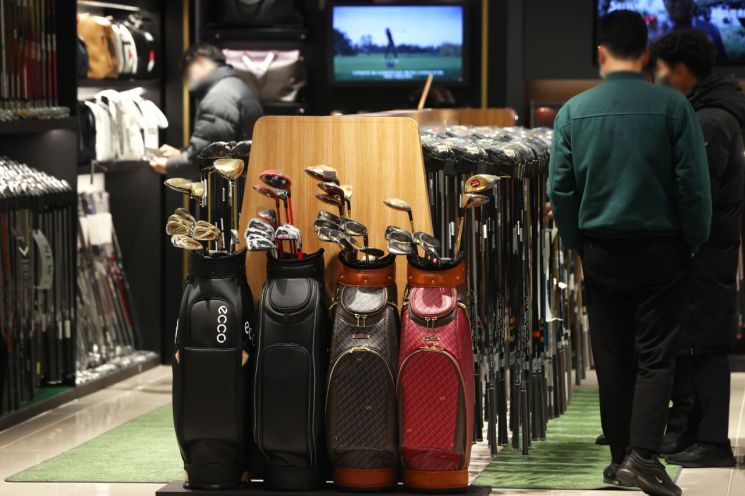
Unusual signs are emerging in the golf market, which had been booming due to COVID-19. Signals indicate that the 2030 generation 'gollini'?young beginners who were the main drivers of the golf population surge?are quitting golf. Young golfers are increasingly burdened by the already expensive golf fees, various equipment, and clothing prices. There are forecasts that the domestic golf industry, which alone experienced a 'COVID boom,' may be approaching a turning point.
Products once impossible to buy due to shortage... 'Gollini' selling on secondhand sites
On the 10th, more than 5,000 golf-related items were posted for sale on the secondhand trading site Junggonara. This means more than 3.5 used golf products are listed every minute. The situation is similar on Danggeun Market, another representative secondhand trading platform along with flea markets.
As listings increase, popular driver models that once experienced shortages are now easily found on the market. Representative examples include Company T's S driver and Company P's G series. Additionally, high-priced golf apparel popular among young people is also being listed in the secondhand market.
Shin (30s) said, "I started golfing and buying golf products because my father said, 'You should at least be able to play golf,' but the cost of rounds became too expensive and burdensome. So, I have been using relatively cheaper screen golf facilities and putting the golf apparel and equipment I purchased on the secondhand market."
There are even talks that young people's interest is shifting from golf to the more affordable tennis. A leisure industry official said, "For the MZ generation, who value leaving photographic evidence of living a 'godly life' (sin + life), tennis is more cost-effective than golf."
Changes are also being sensed in the golf course industry. Green fees, which had been competitively rising due to surging demand, are showing signs of limited adjustment. Recently, 44 public golf courses have reduced green fees by as little as 20,000 KRW and as much as 60,000 KRW. This is a response to the government's plan to reduce tax benefits for public golf courses charging above a certain amount, but industry analysis suggests it is also related to the recent decline in golf users. A public golf course official in northern Gyeonggi Province said, "Although the total number of visitors has not been affected yet, the proportion of young customers is noticeably decreasing."
Although international air routes remain at only 30-40% compared to pre-COVID-19 levels, the number of golfers traveling abroad is increasing. Jeong (62), recently retired from a large corporation, said, "I plan to take a golf trip to Southeast Asia during my vacation without rushing around. Considering green fees and other costs, it doesn't particularly cost more."
Industry: "Boom will continue for 2-3 years"... Endemic seen as market turning point
Of course, the general outlook is that the domestic golf industry is not at a turning point just yet. It is highly likely that the golf industry will continue its upward trend for the next 2-3 years. Major department stores, sensitive to economic conditions, are still aggressively expanding golf-related stores, and high-end imported brand apparel remains popular. A representative from a large department store said, "There are no signs yet that demand is declining."
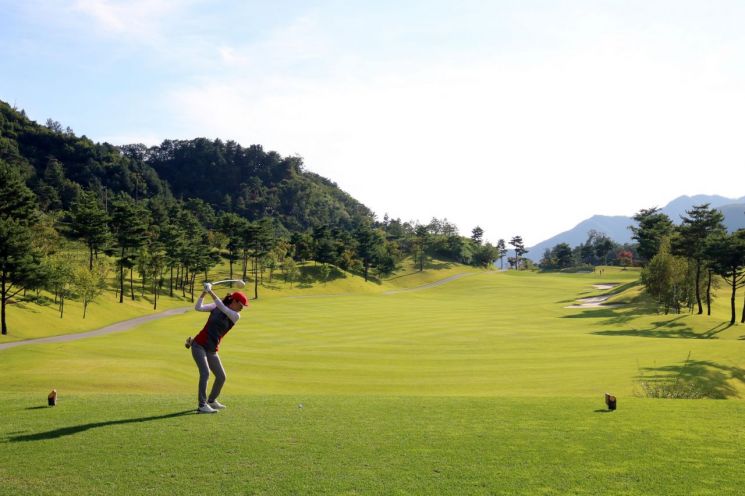
However, there are also forecasts that the market situation will change from 4-5 years later. The Korea Leisure Industry Research Institute expects that by 2026, the number of users per golf course in six of the seven regions nationwide, excluding Jeju, will decrease by up to 20% compared to the previous year. Due to the birthrate cliff, the population able to play golf is steadily decreasing, while the number of golf courses continues to increase, raising the possibility of demand and supply inversion.
Moreover, if the current trend continues, the price competitiveness of domestic golf courses will inevitably decline. Seo Cheon-beom, director of the Korea Leisure Industry Research Institute, said, "Due to competitive price increases by domestic golf courses, fees for overseas golf courses such as in Japan have dropped to about one-third of domestic golf course fees," and added, "If psychological resistance to domestic golf courses grows, the industry cannot enjoy sustained prosperity."
© The Asia Business Daily(www.asiae.co.kr). All rights reserved.