30th Anniversary of Launch on the 11th
Space Development Budget Nearly 10 Times Increased
Rising as a Satellite Power, Possessing Independent Launch Vehicles
Expanding Space Exploration with Danuri Launch
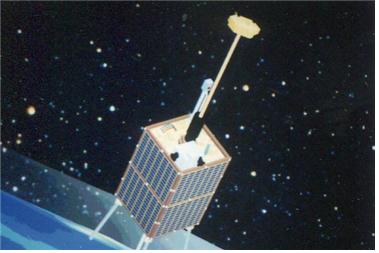
[Asia Economy Reporter Kim Bong-su] The 11th marks the 30th anniversary of the first launch of UriByul-1 in 1992. Over the past 30 years, South Korea's space development has shown remarkable growth. A small satellite, which a few university students learned to build at a foreign university, played a pivotal role as a signal flare in expanding South Korea's domain into space.
According to the Ministry of Science and ICT on the 11th, UriByul-1 was South Korea's first artificial satellite, launched in August 1992 by the Ariane 4 launch vehicle from Kourou, French Guiana. It was a satellite developed by students from KAIST's Satellite Research Center through technical cooperation with the University of Surrey in the UK. Starting with UriByul-1, South Korea, which was almost a blank slate in satellite technology, developed UriByul-2 and 3, and then advanced to develop world-class satellites such as scientific satellites, multipurpose practical satellites, next-generation medium and small satellites, and the Cheollian satellites, establishing itself as a leading satellite technology powerhouse.
Currently, the Arirang satellites (multipurpose practical satellites) 3, 3A, and 5, next-generation medium satellite 1, Cheollian satellites 1, 2A, and 2B, next-generation small satellite 1, and the Nuri rocket performance verification satellite are in operation. Arirang-6 and next-generation medium satellite 2 have been completed and are awaiting launch. In the future, eight satellites of the Korean Positioning System (KPS) are scheduled to be launched, and Cheollian-3, micro cluster satellites, next-generation small satellite 2, multipurpose practical satellites 6, 7, and 7A, and next-generation medium satellites 2 to 5 are currently under development.
Not only satellites but also South Korea's entire space development industry has grown dramatically. The budget for satellite production in South Korea's space development increased from 5.5 billion KRW in 1992 to 413.5 billion KRW this year, and the budget for launch vehicle development rose nearly tenfold from 2.5 billion KRW to 214.4 billion KRW during the same period. Through this, on June 21, South Korea successfully launched the Korean space launch vehicle Nuri, joining the ranks of the world's seventh country capable of independently launching satellites weighing over 1 ton. On the 5th, the lunar exploration orbiter 'Danuri' was launched for South Korea's first independent celestial body exploration mission, which will begin its mission from the end of December. If Danuri succeeds, South Korea will belong to the leading group of space development countries performing all three major areas of space development: satellites, launch vehicles, and exploration.
Meanwhile, Minister Lee Jong-ho of the Ministry of Science and ICT attended the KAIST-hosted commemorative ceremony via video on the morning of the same day, saying, "Commemorating the 30th anniversary of the UriByul launch is also a moment to celebrate the history of South Korea's space development," and added, "I hope this will be a meaningful occasion for those who dedicated themselves to satellite development and those working in the space sector."
© The Asia Business Daily(www.asiae.co.kr). All rights reserved.
![Clutching a Stolen Dior Bag, Saying "I Hate Being Poor but Real"... The Grotesque Con of a "Human Knockoff" [Slate]](https://cwcontent.asiae.co.kr/asiaresize/183/2026021902243444107_1771435474.jpg)















