Non-Regular Workers, Monthly Income of 1.87 Million Won, Childcare
People for Whom Banjiha Is a Necessity, Not a Choice
"Banjiha Eviction" Announced, "Where Are We Supposed to Live?"
Considering 'Orderly Exit' Including Securing Rental Housing
Mr. A, a temporary worker in his 30s, started his newlywed life in a one-room villa. As he had children, he needed a larger space, but his financial situation, with an average monthly income of 1.87 million won, held him back. Eventually, Mr. A chose a nearby semi-basement villa with nearly twice the area but similar monthly rent. Although it has drawbacks such as less sunlight and frequent dampness, considering the relatively affordable price and convenient commuting location, Mr. A believes it was a good decision.
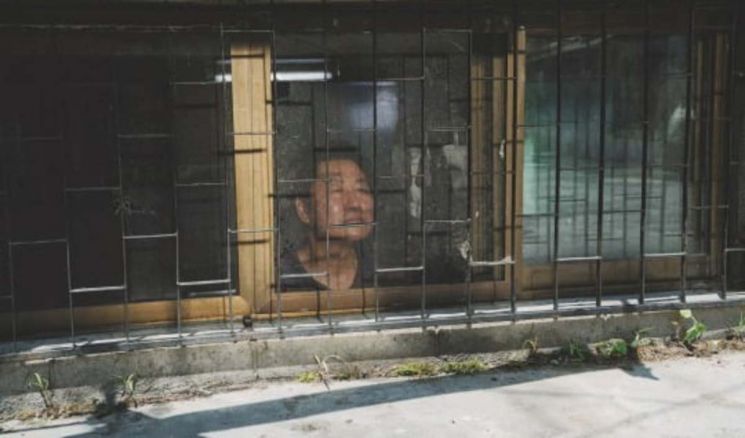
The heavy concentrated rainfall in the central region was particularly harsh on residents living in semi-basement homes once again. The government and local governments hastily announced measures for households living in semi-basements.
On the 10th, the Ministry of Land, Infrastructure and Transport stated, "We will continuously strive to prepare fundamental support measures to protect the safety and lives of vulnerable households living in semi-basements and similar housing from disasters and calamities, so that tragedies like this do not occur again." Seoul City, where many casualties among semi-basement residents occurred, declared, "We will eliminate underground and semi-basement housing."
This is not the first time semi-basement homes have been flooded. Every summer, heavy rains cause victims among residents. In 2010, after many semi-basements were flooded by Typhoon Kompasu, Seoul City banned the construction of residential semi-basements in low-lying areas, but this has not prevented casualties. This is because the issue of semi-basement housing is a complex problem intertwined with social structural factors.
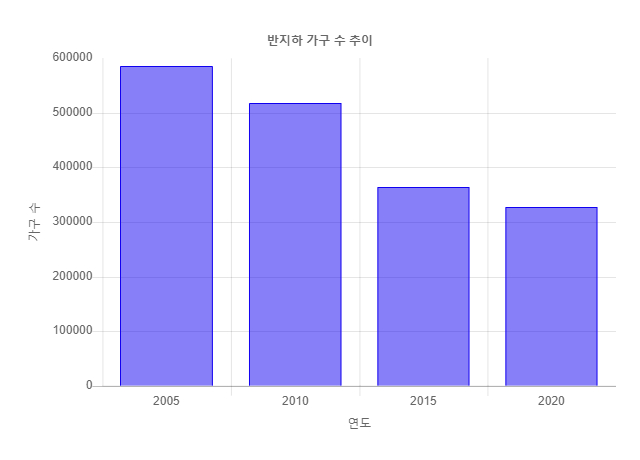
◆People for whom semi-basements are not a choice but a necessity: monthly income of 1.87 million won and child-rearing= The story of Mr. A in his 30s above is a fictional case based on data from the '2019 Ministry of Land, Infrastructure and Transport Housing Survey.' According to the report, the average income of tenants living in underground housing in low-rise residential areas is 1.87 million won. The proportions of low-income and temporary workers are 74.7% and 52.9%, respectively.
In particular, the proportion of elderly household heads (19.2%) is nearly twice as high as in other housing types, and the proportion of households raising children (22.1%) is relatively high. These households have few options in the real estate market.
Huibin Lee, a senior researcher at the Korea Research Institute for Human Settlements, said, "Especially households raising children need relatively larger living spaces, so it is difficult to live in non-residential one-room types," adding, "In fact, underground housing is virtually the only housing type that low-income households raising children can choose."
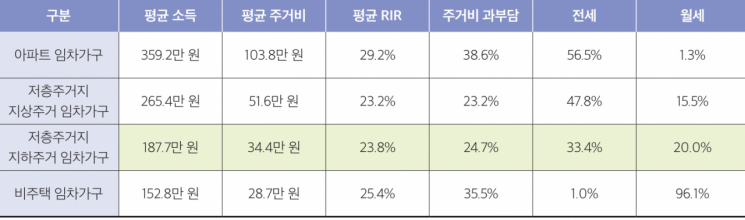
In reality, the average housing cost for underground housing tenants is 344,000 won, and the average RIR (housing cost to income ratio) is 23.8%, which is lower than the average RIR of apartment tenants (29.2%). Although dissatisfaction with the internal condition of underground housing is relatively high (48.2%), a significant portion (35.4%) perceive the poor internal condition as a trade-off for the advantage of a good location.
Considering these circumstances, it is difficult to deny that semi-basement housing has functioned as an alternative housing type for economically vulnerable groups. The head of A Real Estate Agency in Dangsan-dong, Yeongdeungpo-gu, Seoul, said, "Among those looking for semi-basement properties, many choose them because they offer a better environment than their previous residence," adding, "Residents of semi-basements themselves may not welcome the elimination of semi-basements."
Unless tenants are provided with alternative accommodations as affordable as semi-basements, there is no incentive for them to voluntarily leave semi-basement housing, and immediate elimination of semi-basements will inevitably cause a housing refugee crisis.
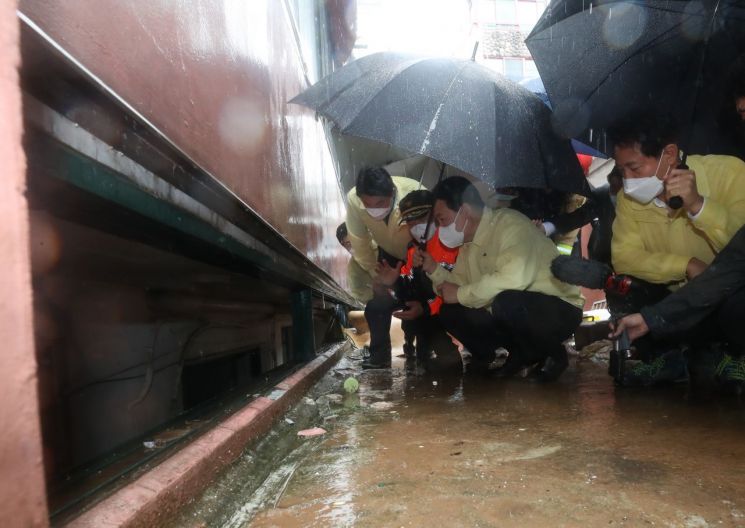 President Yoon Suk-yeol visited the flood damage site in Sillim-dong, Gwanak-gu, Seoul on the 9th. In this semi-basement house, a family with developmental disabilities was isolated and died due to flooding caused by heavy rain last night.
 ◆Incentives for floor area ratio upon reconstruction after semi-basement demolition... policy alternatives such as expanding public rental housing= There are calls for a more multidimensional and systematic approach beyond simply eliminating semi-basement housing.
Many policy support and incentive ideas for the 'orderly phase-out' of semi-basements have already been proposed.
The Korea Research Institute for Human Settlements suggested in a report published in April last year ▲priority allocation of public rental housing for low-income large families ▲supply of public rental housing considering location ▲separate child housing subsidies for low-income child-rearing households.
The Gyeonggi Research Institute proposed in its 2020 report 'Improvement Measures for the Residential Environment of Semi-basements' ▲floor area ratio incentives upon reconstruction after semi-basement demolition ▲priority application of redevelopment and reconstruction in semi-basement dense areas ▲strengthening support for relocation to public rental housing for semi-basement residents ▲providing moving expenses and other housing support funds.
The government has announced plans to respond first by expanding rental housing supply and housing vouchers.
The Ministry of Land, Infrastructure and Transport stated, "We will maintain the supply volume for low-income vulnerable groups among public rental housing (50,000 units annually) while improving quality through area expansion, placement in preferred locations, and facility and finishing improvements." It also added, "We will strengthen housing cost support such as expanding housing benefits and monthly rent support for youth."
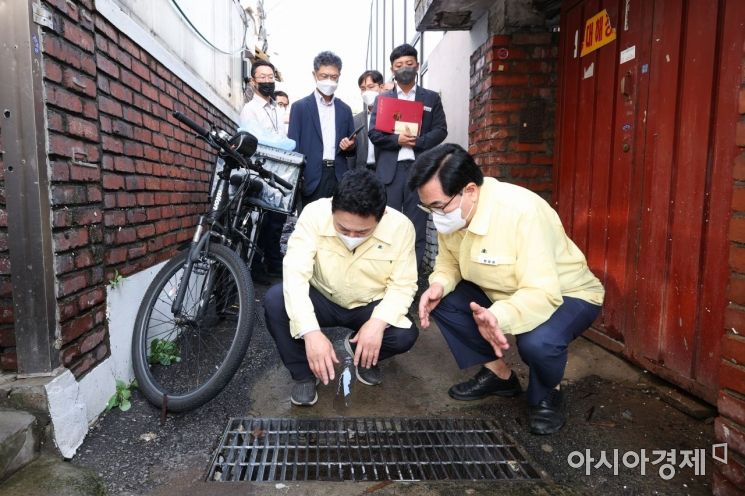 On the 10th, Won Hee-ryong, Minister of Land, Infrastructure and Transport, visited the semi-basement residential area in Sangdo-dong, Seoul, where fatalities occurred due to heavy rain concentrated in the central region, to inspect the site.
 Seoul City plans to utilize the 'Housing Upgrade Project' and 'Housing Vouchers.'
The Housing Upgrade Project offers opportunities to move into public rental housing after counseling vulnerable groups living in underground, semi-basement, gosiwon (small rooms), and lodging facilities. Housing vouchers support monthly rent for near-poverty households not living in public rental housing.
Won Hee-ryong, Minister of Land, Infrastructure and Transport, promised, "We will review fundamental measures to protect the safety and lives of vulnerable households living in semi-basements and gosiwon," adding, "We will strengthen vulnerability analysis across the entire city, enhance disaster prevention functions such as drainage and retention facilities, and revise building design and management standards to suit the era of climate change, thereby establishing practical measures to create a safe environment from disasters and calamities."
© The Asia Business Daily(www.asiae.co.kr). All rights reserved.
![Clutching a Stolen Dior Bag, Saying "I Hate Being Poor but Real"... The Grotesque Con of a "Human Knockoff" [Slate]](https://cwcontent.asiae.co.kr/asiaresize/183/2026021902243444107_1771435474.jpg)

















