Pain and itching from stings... Severe cases may cause shock and death
Rinse with seawater... Tap water worsens wounds
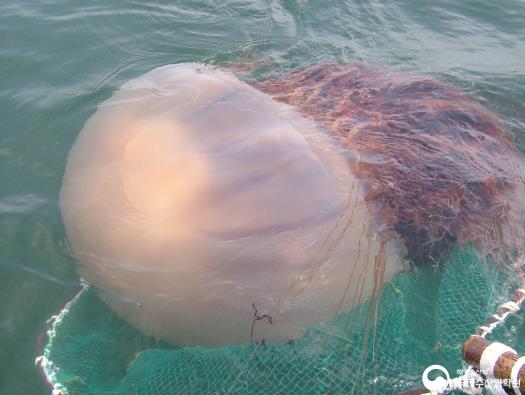
[Asia Economy Reporter Kim Jung-wan] A jellyfish appeared at a beach crowded with vacationers, causing dozens of injuries. This jellyfish, mainly found in China, is known to enter Korea by riding ocean currents. Stings from jellyfish can cause pain and even loss of consciousness, so caution is required.
According to the Lifeguard Service at Imrang Beach in Gijang-gun, Busan, on the morning of the 6th at 8:30 AM, about 50 Nomura's jellyfish with tentacles measuring up to 3 meters appeared in the sea in front of Imrang Beach. It is reported that about 20 of the jellyfish were adult-sized.
Vacationers stung by the jellyfish on that day received on-site emergency treatment using saline solution. The lifeguard team collected the jellyfish that drifted ashore using nets, and the collected jellyfish will be disposed of through Gijang-gun.
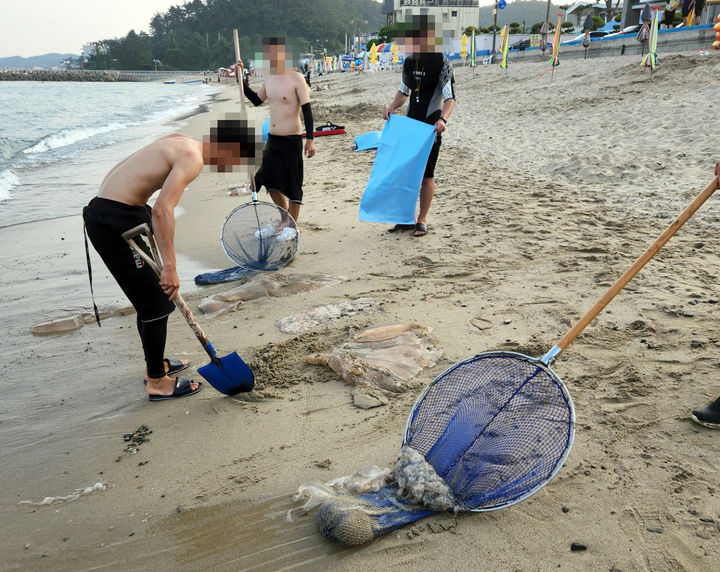
Earlier, on the 2nd, a single Nomura's jellyfish appeared at Hamdeok Beach in Jeju City, stinging nine vacationers.
Nomura's jellyfish is known as the largest type of jellyfish. It mainly occurs along the Chinese coast, drifts with ocean currents, and enters Korea, often being found at beaches during the summer vacation season every year.
Stings can cause rashes, pain, and itching, and in severe cases, respiratory distress, loss of consciousness, and full-body pain may occur. In serious cases, shock can lead to death. Additionally, it can cause damage to fishing gear, loss of fishing operations, and deterioration of the marketability of catches.
Haeundae Beach, which attracts about 300,000 vacationers daily, has installed jellyfish nets, and firefighters use nets to remove jellyfish. When highly toxic jellyfish appear, there are incidents where vacationers evacuate the water. This year, the number of jellyfish sting patients in Busan reached 241, far exceeding last year's total. Experts believe that the increase in jellyfish appearances is due to rising water temperatures caused by climate change, creating ideal conditions for jellyfish.
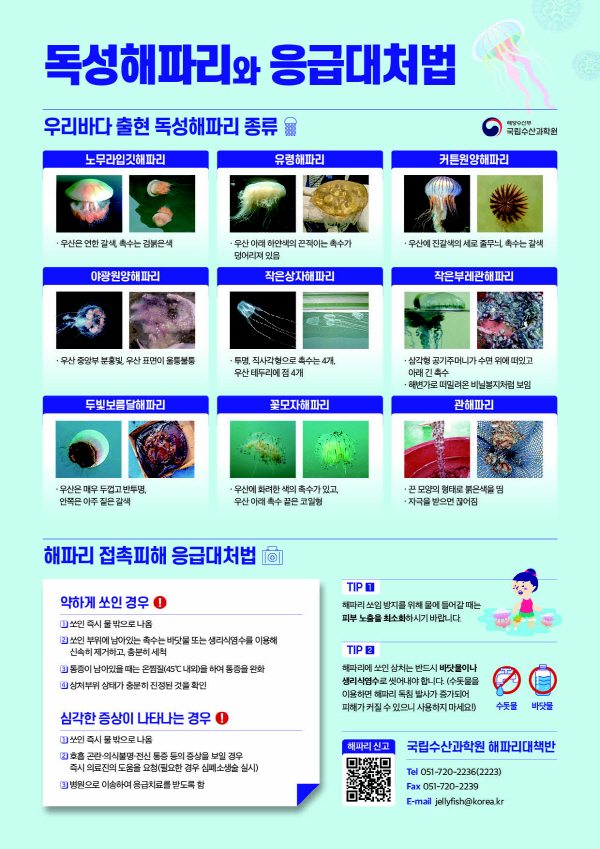
If stung by a jellyfish, immediate and swift action is necessary. For mild stings, get out of the water and wash the stung area with seawater or saline solution to remove any remaining tentacles. Washing with tap water can cause the venom to spread further into the wound, worsening the condition. If pain persists, warm compresses (around 45 degrees Celsius) are also needed.
If severe symptoms such as respiratory distress occur, immediately go to a hospital and seek medical help. To prevent jellyfish stings, it is important to wear swimsuits that cover more skin or carefully observe the water before entering.
Aside from Nomura's jellyfish, no other toxic jellyfish have been found domestically yet. There are nine types of toxic jellyfish found in Korea: ▷Ghost jellyfish ▷Curtain oceanic jellyfish ▷Bioluminescent oceanic jellyfish ▷Small box jellyfish ▷Small siphonophore jellyfish ▷Two-colored full moon jellyfish ▷Flower hat jellyfish ▷Crown jellyfish ▷Nomura's jellyfish.
© The Asia Business Daily(www.asiae.co.kr). All rights reserved.
![Clutching a Stolen Dior Bag, Saying "I Hate Being Poor but Real"... The Grotesque Con of a "Human Knockoff" [Slate]](https://cwcontent.asiae.co.kr/asiaresize/183/2026021902243444107_1771435474.jpg)

















