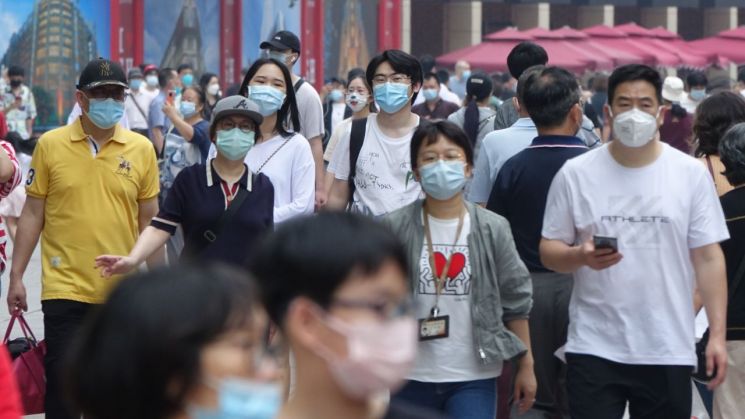
 Last June, citizens were walking on Nanjing East Road, the largest downtown area in Shanghai, China. [Image source=Yonhap News]
[Asia Economy Reporter Hwang Sumi] The repercussions of China's stringent "Zero COVID" policy continue to unfold. Due to lockdown measures, countless citizens are experiencing the inconvenience of being unable to leave their homes, and the ongoing uncertainty has significantly reduced economic growth rates. As a result, global luxury brands that have long depended on the Chinese market are gradually turning their attention to the United States.
According to a recent report by The Wall Street Journal (WSJ), Gucci and Chanel have each opened new stores in Columbus, Ohio in the U.S. Northeast and Troy, Michigan in the North-Central region. Business activities have also become more active in Texas, known as a hub for information technology (IT) companies and startups.
Most of these companies reportedly received satisfactory results in the U.S. during the first half of this year. Kering, the owner of the Gucci brand, saw its North American sales nearly double compared to the same period in 2019. French fashion group Louis Vuitton Mo?t Hennessy (LVMH) experienced a 28% increase. Additionally, Gucci (23%), Herm?s (29%), and Prada (22%) also saw growth compared to the previous year.
According to WSJ, luxury brands intend to further strengthen their investments in the U.S. market. Although there are concerns about a potential recession in the U.S., it is explained that luxury consumption by the wealthy is less affected by economic cycles compared to the general consumer goods market.
The background for these companies shifting their focus from the Chinese market to the U.S. is attributed to the Chinese government's strict Zero COVID policy. Major Chinese cities, including Shanghai, which have driven growth in the global luxury market, were locked down, resulting in a hit to sales.
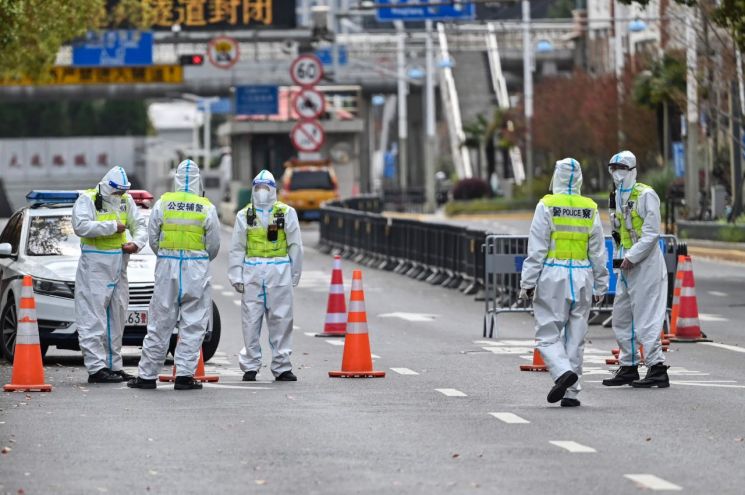 On March 28, in Shanghai, China, where a COVID-19 lockdown was imposed, a police officer wearing protective clothing is blocking passage through a tunnel leading to Pudong New Area. [Image source=Yonhap News]
In fact, since March, when the Omicron variant spread, the Chinese government has imposed full or partial lockdowns on dozens of cities, including Shanghai and the capital Beijing.
This has dealt a severe blow to the Chinese economy. China's economic growth rate in the second quarter of this year was 0.4%, the lowest level in over two years since the first quarter of 2020 (-6.8%) when COVID-19 first emerged. It also represents a significant decline compared to the same period last year (7.9%). The Zero COVID policy in China has effectively led to "zero growth." The Bank of Korea recently diagnosed in a report that lockdowns in major cities such as Shanghai in March caused logistics bottlenecks, resulting in sluggish production and consumption.
However, despite this economic downturn, the Chinese government maintains its commitment to the Zero COVID policy. Recently, Hainan Island, a famous tourist destination in China, was locked down due to a surge in confirmed cases. According to China Central Television (CCTV) on the 7th, as confirmed cases rapidly increased in the Sanya area of Hainan Province, travel between other parts of Hainan and Sanya was prohibited. Authorities requested airlines not to carry tourists, and major tourist spots, including the massive duty-free shopping complex Sanya International Duty-Free City (cdf mall), which used to attract tens of thousands of shoppers daily, suspended operations. Consequently, it is reported that approximately 80,000 residents and tourists visiting Hainan were unable to leave their homes or accommodations while undergoing COVID-19 PCR (polymerase chain reaction) testing.
© The Asia Business Daily(www.asiae.co.kr). All rights reserved.
![Clutching a Stolen Dior Bag, Saying "I Hate Being Poor but Real"... The Grotesque Con of a "Human Knockoff" [Slate]](https://cwcontent.asiae.co.kr/asiaresize/183/2026021902243444107_1771435474.jpg)
















