Legislative Research Office Presents 'Key Issues and Tasks in the Discussion on Flexible Adjustment of Oil Tax Rates'
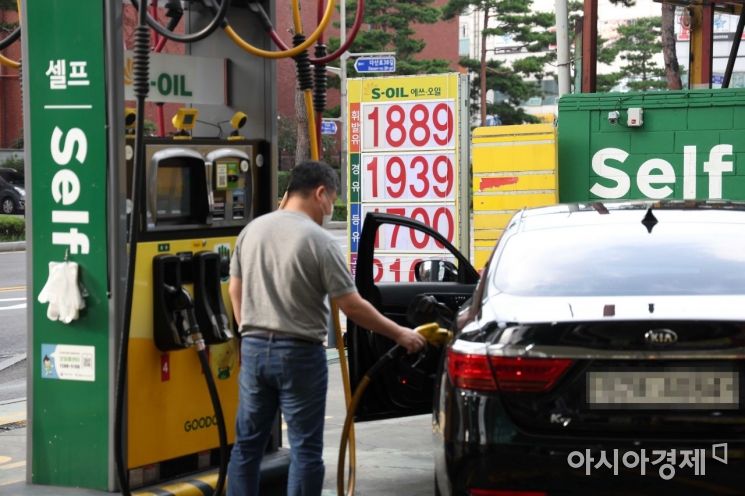 On the 4th, as international oil prices fall and fuel tax is further reduced, citizens are refueling their vehicles at a gas station in Seoul. Photo by Mun Ho-nam munonam@
[Asia Economy Sejong=Reporter Kwon Haeyoung] As oil prices soar and the government has lowered the fuel tax to the maximum legal limit, there are calls to reduce the statutory 'basic tax rate' rather than the government's adjustable fuel tax 'flexible tax rate.' There were also suggestions that, instead of lowering the fuel tax to respond to high oil prices, subsidies should be considered for vulnerable groups.
According to the National Assembly Legislative Research Office on the 7th, this was revealed in a recent report titled "Issues and Tasks in the Discussion of Adjusting the Flexible Fuel Tax Rate."
The report argued that while maintaining the current ±30% adjustment range for the flexible tax rate, a plan to reduce the basic tax rate stipulated by law should be considered. The flexible tax rate refers to the tax rate that the government can flexibly change and operate based on economic conditions for policy response, starting from the basic tax rate set by law. The National Assembly has passed a bill in the plenary session to expand the flexible fuel tax rate from the current 30% to 50%.
The report pointed out, "The introduction of the flexible tax rate is a limited exception to the principle of taxation by law, allowing the executive branch to respond flexibly in unavoidable situations," and added, "Even in exceptional cases, it should not deviate from the fundamental intent of the Constitution, which stipulates the principles of taxation by law and prohibition of broad delegation." It argued that lowering the basic tax rate is preferable to expanding the adjustment range of the flexible tax rate.
It also expressed the opinion that support for vulnerable groups should be prioritized over lowering the fuel tax in a high oil price situation.
The report stated, "If the benefits of lowering the fuel tax cannot be evenly distributed to the entire population, it is necessary to consider supporting subsidies for vulnerable groups or devising measures to ensure that the fuel tax reduction is properly reflected in consumer prices."
© The Asia Business Daily(www.asiae.co.kr). All rights reserved.
![Clutching a Stolen Dior Bag, Saying "I Hate Being Poor but Real"... The Grotesque Con of a "Human Knockoff" [Slate]](https://cwcontent.asiae.co.kr/asiaresize/183/2026021902243444107_1771435474.jpg)
















