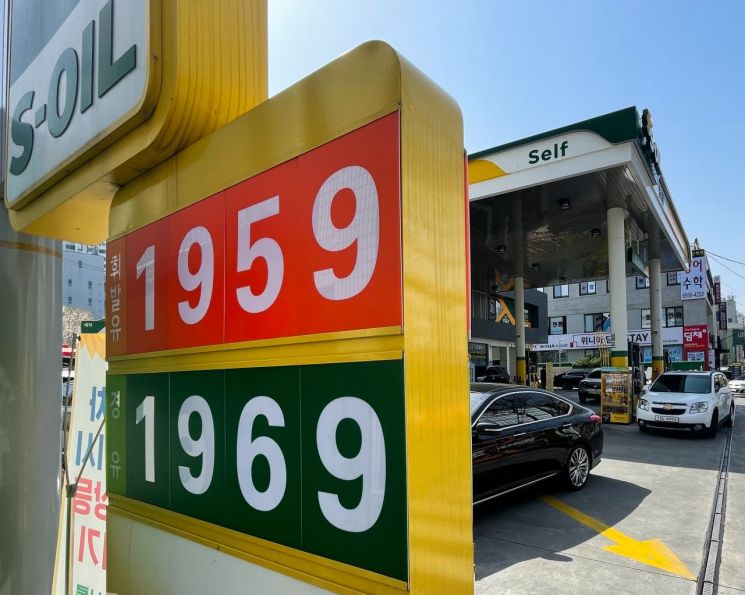
[Asia Economy Reporter Oh Hyung-gil] International oil prices have fallen below $90 per barrel. Concerns over an economic recession due to interest rate hikes have overlapped, returning prices to pre-Russia-Ukraine war levels. Domestic fuel prices are also showing signs of further decline this month.
According to the industry on the 6th, the September West Texas Intermediate (WTI) crude oil price closed at $88.54 per barrel on the New York Mercantile Exchange on the 4th (local time), down $2.12 (2.34%) from the previous trading day.
This is the lowest level since February 2nd, effectively returning to the period before Russia invaded Ukraine at the end of February.
International oil prices surged to over $120 per barrel after the Russia-Ukraine invasion but fell below $100 early last month and have now broken the $90 barrier.
The October Brent crude oil price is also trading at $94.04 per barrel as of this day, marking the lowest price since February 21st.
The decline in international oil prices is mainly due to a sharp increase in U.S. crude oil inventories amid recession concerns and aggressive interest rate hikes by central banks in countries such as the UK. The spread of recession fears is expected to weaken demand for petroleum products.
According to the U.S. Energy Information Administration (EIA), crude oil inventories increased by 4.467 million barrels in the week ending on the 29th, compared to the previous week.
Contrary to the market expectation of a 700,000-barrel decrease, crude oil inventories actually increased, indicating a sharp cooling in consumption, which accounts for two-thirds of the U.S. economy.
Additionally, the Bank of England’s 0.50 percentage point interest rate hike?the first in 27 years?along with its forecast that the UK economy will enter a recession in the fourth quarter of this year, was a major factor in the oil price decline. The Bank of England expects the UK’s GDP growth rate to be -2.1% next year.
The Organization of the Petroleum Exporting Countries (OPEC) Plus (+) producers’ decision to reduce the planned increase in September production to only 100,000 barrels per day, less than previously expected, is also interpreted as a response to the global economic slowdown.
As international oil prices fall, domestic fuel prices are expected to enter a downward stabilization trend.
Domestic fuel prices have been declining since the beginning of this month following an expanded reduction in fuel tax.
With international oil prices showing a downward trend, domestic gasoline and diesel prices have also fallen for four consecutive weeks.
According to the Korea National Oil Corporation’s oil price information service Opinet, the average retail price of gasoline at gas stations nationwide in the third week of July (24th?28th) was 1,937.7 KRW per liter, down 75.4 KRW from the previous week. During the same period, the average retail price of diesel also fell by 57.0 KRW to 2,015.5 KRW per liter.
© The Asia Business Daily(www.asiae.co.kr). All rights reserved.
![Clutching a Stolen Dior Bag, Saying "I Hate Being Poor but Real"... The Grotesque Con of a "Human Knockoff" [Slate]](https://cwcontent.asiae.co.kr/asiaresize/183/2026021902243444107_1771435474.jpg)















