Special Investigation Committee: Insufficient Preventive Measures in Manual, Including Failure to Install Larvae Blocking Devices
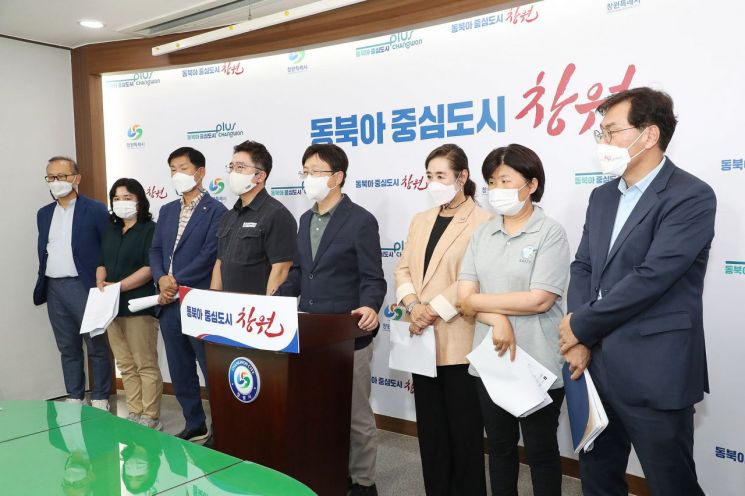 The Special Investigation Committee on Larvae announced the results of their activities at the Seokdong Water Purification Plant in Changwon.
[Asia Economy Yeongnam Reporting Headquarters, Reporter Song Jong-gu] After larvae were discovered at the Changwon Seokdong Water Purification Plant in Gyeongnam, a special investigation committee announced on the 28th that water quality management at the activated carbon filtration stage was insufficient, and that sufficient preventive measures suggested in the manual, such as the installation of larva-blocking devices, were not implemented.
The committee concluded that the direct cause of the larvae was inadequate water quality management at the activated carbon filtration stage, the final step of the purification process, and stated that the situation was more complex compared to the case in Incheon, where larvae were found only at the activated carbon filtration stage.
The committee confirmed that the related measures outlined in the Ministry of Environment’s “Preventive and Response Measures for Larvae Occurrence in Tap Water” were not sufficiently implemented during the larvae outbreak period, judging that these insufficient measures caused the inflow and spread of larvae.
Due to these causes, the insufficient preventive measures at the Seokdong Water Purification Plant led to the inflow of larvae, and the reuse of backwash water increased the possibility of larvae spreading, making rapid initial response difficult. As a result, larvae ultimately reached citizens’ homes.
Based on the analysis and conclusions, the committee recommended to Changwon City: ▲ Facility improvements including ultra-advanced water purification plant facilities for safe tap water supply and related national government funding support, and the establishment of a water supply network connecting Chilseo, Daesan, and Seokdong Water Purification Plants for emergency and alternative tap water supply in case of emergencies;
▲ Organizational operation improvements urgently needed to establish a water quality management system capable of effectively responding to climate and environmental changes, and the preparation of regulations for forming a public-private council to ensure safe tap water management in Changwon City;
▲ Raw water management measures including setting management zones around intake facilities in public water areas, responding to water quality and sediment contamination, aquatic ecosystem management, and comprehensive water environment management plans including measures against algal blooms.
Vice Chairman Baek Do-hyun stated, “Changwon City must actively accept the recommendations prepared based on our committee’s investigations so far and manage tap water more thoroughly to ensure that citizens can feel safe and trust the water supply.”
© The Asia Business Daily(www.asiae.co.kr). All rights reserved.
![Clutching a Stolen Dior Bag, Saying "I Hate Being Poor but Real"... The Grotesque Con of a "Human Knockoff" [Slate]](https://cwcontent.asiae.co.kr/asiaresize/183/2026021902243444107_1771435474.jpg)















