MZ Generation's Last Resort to Cut Living Expenses
Switching to Banks with Lower Loan Interest Rates
Parking Private Cars and Commuting by Public Transport
Shopping Out of the Question... Not Buying Even a Single Shirt
[Asia Economy Reporters Moon Hyewon and Koo Eunmo] Jo Yonghoon, a single-person household worker in his 30s living alone in Seoul, is participating in a ‘no-spending challenge’ for the second week. He skips the breakfast he used to buy on his way to work and eats lunch only at the company cafeteria every day. For dinner, instead of dining out with friends or colleagues, he often settles for instant cup noodles at home. Jo said, "The prices of meals, coffee, and alcohol are all rising, but my salary remains the same," adding, "No-spending is no longer about being stingy but a lifestyle pattern that our generation should respect."
On the 25th, amid a brutal inflation where nothing has escaped price hikes, even dining-out costs have surged by over 8%, sparking a no-spending challenge trend especially among the MZ generation (Millennials + Generation Z), who were once known for the YOLO (You Only Live Once) lifestyle.
The no-spending challenge refers to a consumer trend where participants spend absolutely nothing throughout the day. Those taking part continue the challenge by recording their daily spending or no-spending activities on social media platforms.
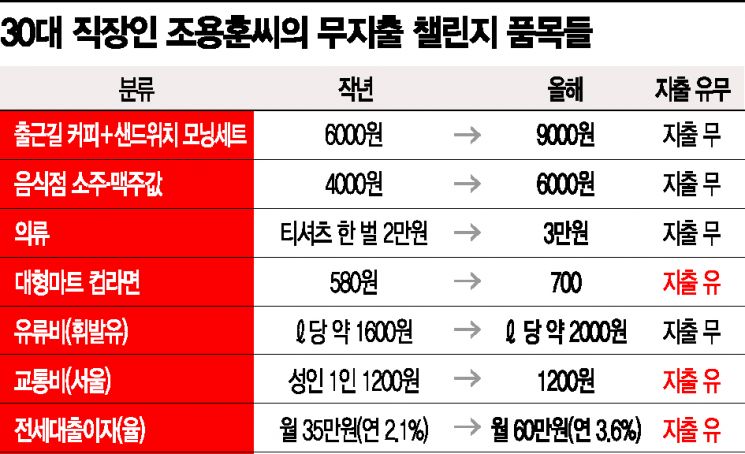
Jo is one of them. The first expense he cut was food. The coffee and sandwich breakfast set he used to grab on his way to work jumped from 6,000 won to 9,000 won last month, prompting him to skip breakfast altogether.
He now uses meal coupons provided by his company to eat lunch at the cafeteria. Previously, he often dined out with colleagues around the office to get some fresh air, but the rapidly rising dining-out costs have made it difficult to afford, so he visits the cafeteria every day.
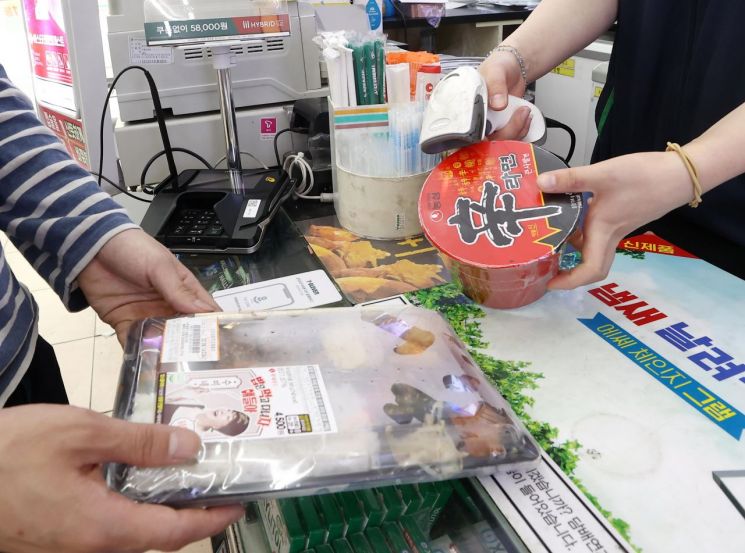
Dinner is often just instant cup noodles. Jo lamented, "Among food options, instant noodles are the cheapest and don’t put much strain on my living expenses."
He has long stopped making plans with friends due to the burden of dining-out costs. He also quit drinking after work with friends or colleagues. At his regular pub on the way home, soju and beer that used to cost 4,000 won last year have jumped to 6,000 won this month, making a ‘somaek’ (soju and beer cocktail) cost over 10,000 won per glass.
Jo’s jeonse (long-term lease) loan is also a problem. He recently renewed his lease. Using the lease renewal right, he managed to keep the deposit increase to 5%, but could not avoid the rising interest burden due to rate hikes. On the 13th, the Bank of Korea’s Monetary Policy Committee raised the base interest rate by 0.5 percentage points from 1.75% to 2.25%. As a result, jeonse loan interest rates surged, significantly increasing loan interest burdens. During the renewal process, the interest rate on Jo’s 200 million won jeonse loan rose from 2.1% to 3.6%, an increase of about 1.5 percentage points. Although he had been benefiting from relatively low interest rates, the monthly interest payment jumped from about 350,000 won to 600,000 won. Jo sighed, "The loan amount is the same, but the interest nearly doubled. After searching extensively for banks with slightly lower rates, I even switched banks, but thinking about paying this interest every month makes the future look bleak."
Recently, he has also been parking his car more often instead of driving it. The fuel costs for commuting have become unaffordable. Jo said, "I envy those around me who drive electric cars. Since I can’t change my car right now, I use my car only once or twice a week and mostly commute by public transportation despite the inconvenience." Since Russia’s invasion of Ukraine in February, gasoline and diesel prices have soared. The government expanded the fuel tax cut from the previous 30% to the legal maximum of 37% on the 1st of this month. However, gasoline prices still hover around 2,000 won per liter. According to the Korea National Oil Corporation’s oil price information service Opinet, the average gasoline price at gas stations nationwide during the third week of July (17?21) was 2,013.1 won per liter, up 23.0% (375.9 won) from 1,637.2 won a year ago.
In this situation, shopping for new clothes is out of the question. As various living costs soar, SPA (Specialty retailer of Private label Apparel) brands known for cost-effectiveness have also joined the price hike trend. Uniqlo raised prices on some products by up to 50% starting June 27, while H&M, Zara, and Musinsa increased some product prices by about 6?10%. The consecutive price hikes are due to international cotton prices rising 30% in a year, reaching the highest level since 2011. Moreover, future products will inevitably reflect these raw material price increases, so clothing price hikes for this fall and winter are expected to be even steeper. Jo said, "This year, I plan to get by with the clothes I already have as much as possible."
Professor Kim Ikseong of Dongduk Women’s University observed, "Prices have become so high that consumers are closing their wallets and choosing cheaper options or lowering their expectations. Consumers naturally seek the most cost-effective options, and I think many are currently going through this process amid the current inflationary phase."
© The Asia Business Daily(www.asiae.co.kr). All rights reserved.
![Clutching a Stolen Dior Bag, Saying "I Hate Being Poor but Real"... The Grotesque Con of a "Human Knockoff" [Slate]](https://cwcontent.asiae.co.kr/asiaresize/183/2026021902243444107_1771435474.jpg)

















