Japanese Professor Analyzes in Economic Paper 'Toyokeizai' Column
Yen Weakness Continues... "Japanese Industry Weakens"
"Korea Has Surpassed Japan in Wages for Several Years," Points Out
"To Stop Yen Weakness, Must Change Monetary Easing Policy and Accept Interest Rate Hikes," Suggests
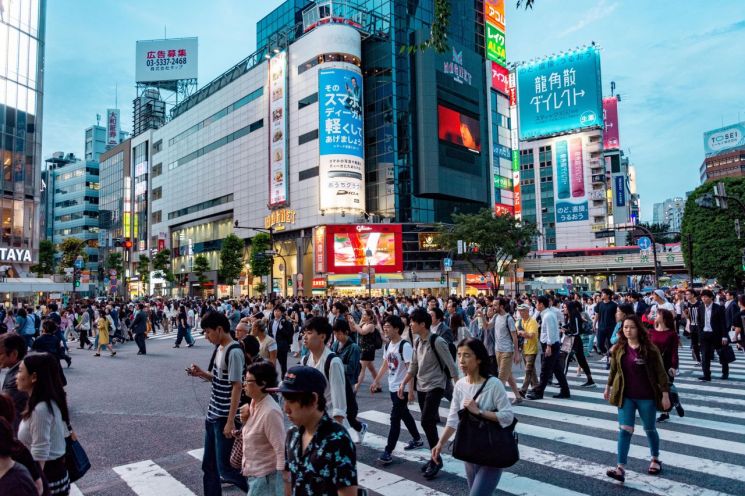 A Japanese professor warned that Japan's nominal GDP per capita could fall below that of South Korea. Photo by Pixabay
[Asia Economy Intern Reporter Kim Se-eun] As the yen depreciation continues, an analysis has emerged suggesting that Japan's nominal GDP per capita could fall below that of South Korea.
On the 24th, the Japanese economic magazine Toyo Keizai cited an economic analysis column by Professor Yukio Noguchi of Hitotsubashi University, reporting, "Japan's GDP per capita is becoming lower than South Korea's, and compared to the United States, it is less than half," adding, "This is not just a matter of numbers. The Japanese people have become poorer, and Japan's industry has weakened."
According to the paper, the yen-dollar exchange rate was around 115 yen at the beginning of the year but surged to 139 yen on July 14. As the yen's value continues to decline in the ongoing 'yen depreciation' phenomenon, the real effective exchange rate as of May 2022 stands at 61.77, nearly the same level as in 1971. The real effective exchange rate is an indicator reflecting the actual value of a currency by considering price changes and trade weights. The base year is set at 2010 with an index of 100.
Professor Noguchi used the method of applying the recent dollar exchange rates to each country's 2020 GDP per capita when comparing South Korea and Japan in his paper.
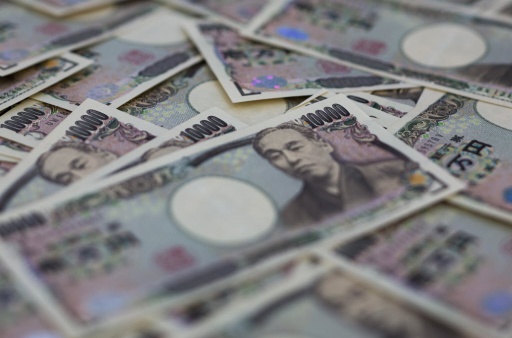 The 10,000 yen banknote symbolizing Japan, which is benefiting from the effect of the weak yen. Photo by Asia Economy
When applying the won-dollar exchange rate of 1,316.35 won, South Korea's GDP per capita is $31,902. For Japan, applying 139 yen results in $32,010, which is higher than South Korea, but at 140 yen, it falls below South Korea. Ten years ago, in 2012, Japan's GDP per capita was twice that of South Korea.
In reality, South Korea's nominal GDP has shown a steady upward trend. Nominal GDP is an indicator used to understand economic scale and industrial structure, calculated by multiplying the quantity of final goods produced domestically by their prices at that time.
According to the Bank of Korea's announcement of the '2020 National Accounts (Final) and 2021 National Accounts (Preliminary),' South Korea's nominal GDP in 2021 was 2,071.7 trillion won, up 6.7% from the previous year. This growth continued despite the adverse effects of the COVID-19 pandemic. Particularly, manufacturing and service industries led the growth with increases of 6.9% and 3.8%, respectively, compared to the previous year.
Professor Noguchi emphasized that the wage gap is even more pronounced than GDP differences. In 2021, wages by country in local currency were 444 yen for Japan, 42.57 million won for South Korea, and $84,737 for the United States. When converted to dollars, South Korea's wage is $32,316, but Japan's (based on 1 dollar = 140 yen) is $31,714, again trailing South Korea. Professor Noguchi explained, "In terms of wages, South Korea has surpassed Japan for several years, and the gap is widening."
Similar situations occur not only in wages but also in corporate market capitalization. Japan's largest company, Toyota, ranks 39th globally with a market capitalization of $211 billion, whereas Taiwan's TSMC ranks 11th with $433.9 billion, and South Korea's Samsung Electronics ranks 25th with $299.1 billion, surpassing Japan.
Professor Noguchi stated, "Whether this situation can be changed depends on Japan's future policies," adding, "If the financial easing stance is altered to acknowledge interest rate hikes, the yen depreciation could stop and shift to yen appreciation."
Meanwhile, on the 21st, the Bank of Japan announced it would continue its large-scale monetary easing policy despite ongoing yen depreciation and rising prices. The short-term interest rate was held steady at -0.1%, and the 10-year government bond yield, a long-term interest rate indicator, is expected to remain around 0%.
Bank of Japan Governor Haruhiko Kuroda emphasized, "We will continue monetary easing to support the economy and wage increases due to rising prices," and stressed, "If necessary to achieve the price target, we will not hesitate to implement additional easing."
© The Asia Business Daily(www.asiae.co.kr). All rights reserved.
![Clutching a Stolen Dior Bag, Saying "I Hate Being Poor but Real"... The Grotesque Con of a "Human Knockoff" [Slate]](https://cwcontent.asiae.co.kr/asiaresize/183/2026021902243444107_1771435474.jpg)















