GTX-C Line Planned for Suwon, Uijeongbu, Anyang
Price Drop Due to Transaction Freeze Despite Transportation Benefits
Newly Built Pre-sale Rights Also Down 50 Million Won in a Month
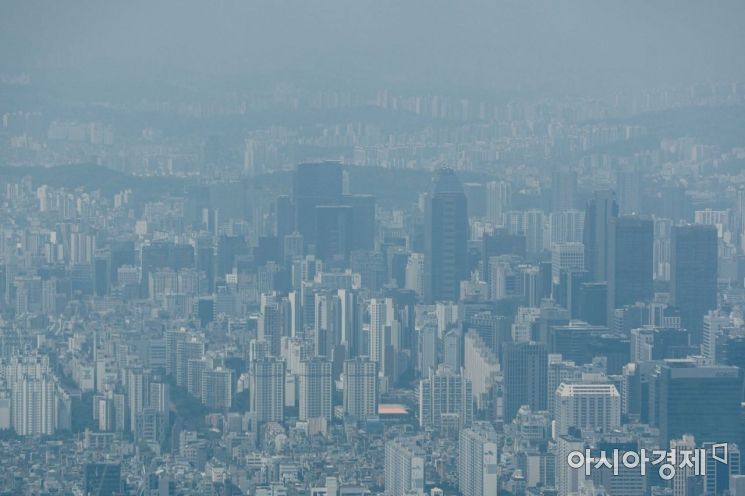
[Asia Economy Reporter Hwang Seoyul] “In a situation where there are more sellers than buyers, demand is not moving. It’s really hard to even pay the monthly rent. With new construction move-ins nearby coinciding, prices are falling further.” (Mr. A, representative of a real estate agency in Gwonseon-gu, Suwon-si, Gyeonggi-do)
The positive impact of the GTX opening also seems to be ineffective against the real estate market slump. Apartments in Suwon, Uijeongbu, and Anyang, located on the outskirts of Seoul, saw prices surge last year due to improved transportation, but with buyer sentiment frozen, transactions rarely occur unless at bargain prices.
According to the Korea Real Estate Board on the 24th, the apartment sale price index in Gwonseon-gu, Suwon-si, Gyeonggi-do, near Suwon Station where the GTX-C line is planned, has declined for four consecutive months since February (110.5), recording 109.4 last month. The month-on-month decline also widened to 0.44% last month from -0.36% the previous month. This is not only the case for Suwon Station. Uijeongbu-si near Uijeongbu Station and Dongan-gu, Anyang-si near Indeogwon Station, both planned for the GTX-C line, have shown negative change rates for five consecutive months from January to last month.
These areas experienced a sharp price increase last year due to the anticipation of the GTX arrival acting as a positive factor. In June last year, Dongan-gu, Anyang-si saw the sale price index rise by 6.44% month-on-month, and Gwonseon-gu, Suwon-si also rose by 3.63% during the same period. These figures far exceeded the national change rate of 1.70%. Uijeongbu-si also rose by 3.63% month-on-month in February last year.
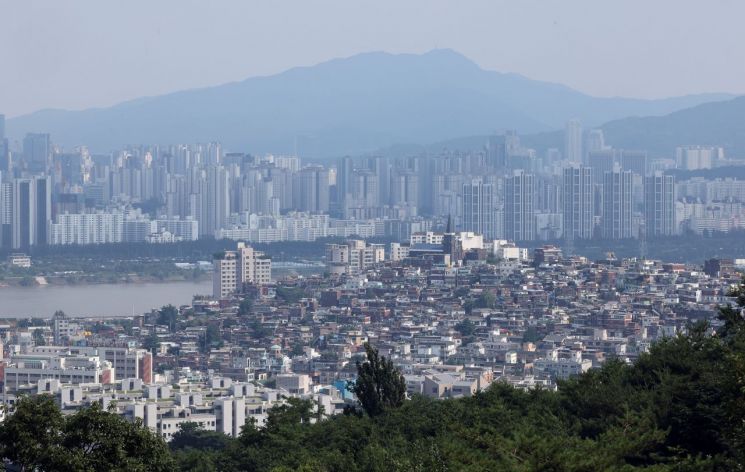
However, the situation has changed now. Despite the GTX benefits, the real estate market downturn has become a bigger variable, causing a sharp drop in sales volume. According to the Gyeonggi Real Estate Portal, as of the day before, Uijeongbu-si’s June sales volume (154 cases) decreased compared to May (227 cases). In June last year, it was 418 cases. Considering that reports can be filed within 30 days of contract signing, there may be uncounted cases, but this is still a low figure. Suwon-si and Anyang-si also recorded 265 and 88 cases respectively in June, showing about one-fifth and one-sixth of the same month last year. A representative of a real estate agency in Uijeongbu-si said, “Since buying has stalled, there are almost no transactions,” adding, “Today, there were zero inquiries from buyers.”
Transactions are mostly happening at bargain prices, far below the prices during the peak trading period last year. According to the Ministry of Land, Infrastructure and Transport’s real transaction price disclosure system, ‘Indeogwon Daewoo (84.96㎡)’ near Indeogwon Station was traded for 1.24 billion KRW in August last year but dropped to 860 million KRW last month, a decrease of 380 million KRW. Haemoro Apartments (84.75㎡) near Suwon Station also traded for 602.5 million KRW this month, down more than 200 million KRW compared to 805 million KRW in October last year.
The situation is not good even for new constructions scheduled for move-in. Looking at the pre-sale right sale prices of apartment complex A in Uijeongbu-si listed on Naver Real Estate, it is common to find cases where the price was lowered by 50 million KRW within less than a month from the initial listing price. A representative of nearby real estate agency B explained, “Prices have already been lowered, but sales are happening at prices even lower than that.”
Yeokyung Hee, senior researcher at Real Estate R114, said, “Investment demand that entered aiming for development benefits likely now expects low price increase potential,” adding, “Supply probably increased slightly due to the overlap with the grace period for multiple-homeowners’ heavy taxation, but demand remains weak.” However, Senior Researcher Ye added, “GTX is a long-term positive factor, so prices tend to jump once at each stage of progress,” and “Since these areas are at the initial stage, they may not be strongly affected by the benefits yet.”
© The Asia Business Daily(www.asiae.co.kr). All rights reserved.


















