[Asia Economy Reporter Seo So-jeong] What role can monetary policy play in inflation triggered by supply-side factors?
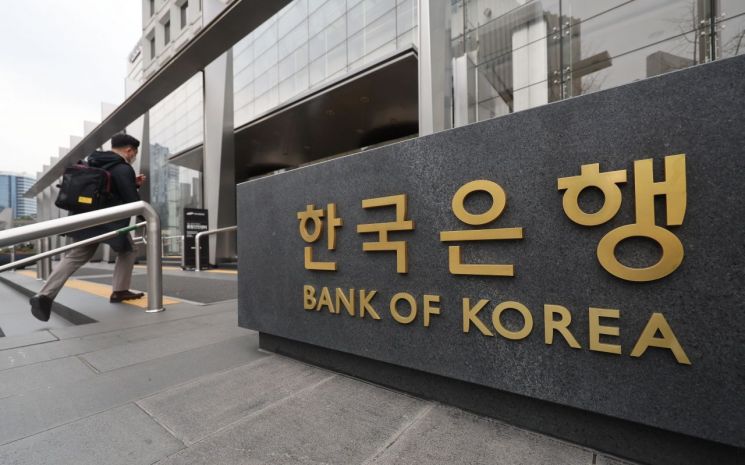
Hong Kyung-sik, Director of the Monetary Policy Department at the Bank of Korea, explained in detail on the Bank of Korea blog on the 18th why monetary policy must respond to price increases caused by the surge in international commodity prices, saying, "Recently, I have been frequently asked whether raising interest rates will resolve supply bottlenecks and lower raw material prices."
According to the blog, assuming that international oil prices surge once and then remain at that level, the primary effect is a rise in inflation, while total income, total production, or employment decline.
What happens if the central bank tries to restore the reduced income by expanding aggregate demand through accommodative monetary policy? This was the policy most central banks implemented in response to the 1970s oil shock. The more the central bank lowers interest rates, the faster the 'second-round effects' occur, where rising oil prices spill over into price increases of other goods. The expected inflation of economic agents such as households and firms also rises sharply. This leads to a decrease in real wages, reducing labor supply, which ultimately lowers total income and neutralizes the effect of the interest rate cut.
Director Hong said, "If the central bank maintains accommodative monetary policy, inflation will continue to rise without income growth," adding, "To curb inflation later, interest rates must be raised sharply, which inevitably leads to a significant decline in total income and an economic recession." The tightening policy under Paul Volcker, Chairman of the U.S. Federal Reserve in the late 1970s, is an example of this.
What if the supply shock prolongs, leading to product price increases and wage hikes? In this case, expected inflation rises, making inflation a persistent rather than temporary phenomenon. Director Hong stated, "If the central bank fails to respond to the interaction among prices, wages, and expectations?that is, the second-round effects of the supply shock?in a timely manner, inflation will accelerate, making larger interest rate hikes inevitable to stabilize prices in the future." He added, "This could deepen the economic slowdown, causing total income to fall even more than the level reduced by the initial surge in international oil prices."
On the other hand, if the central bank preemptively raises interest rates to counter the second-round effects and stabilize inflation expectations, prices stabilize early, allowing the economy to quickly re-enter a growth trajectory.
In particular, Director Hong emphasized, "It is important that the entire economy does not fall into a 'composition error' when inflation occurs due to supply shocks. If rising prices lead to wage increases, which then cause further price hikes repeatedly, even if economic agents make individually rational decisions, the result is a persistent high-inflation situation that harms everyone. In other words, it is judged that economic agents absorbing the supply shock as much as possible is the way to minimize economic losses.
Director Hong stressed, "Realistically, if the supply shock prolongs, some degree of second-round effects is inevitable," adding, "It is crucial for the central bank to respond swiftly and stabilize inflation expectations." He pointed out that this approach can prevent larger long-term losses even if there are short-term costs.
He continued, "In a high-inflation environment, the damage is concentrated on low-income vulnerable groups," and added, "Other economic policies should aim to ease supply constraints and stabilize prices for ordinary citizens, while preparing selective support measures for low-income vulnerable groups who suffer from inflation and rising interest rates as an appropriate response."
© The Asia Business Daily(www.asiae.co.kr). All rights reserved.
![Clutching a Stolen Dior Bag, Saying "I Hate Being Poor but Real"... The Grotesque Con of a "Human Knockoff" [Slate]](https://cwcontent.asiae.co.kr/asiaresize/183/2026021902243444107_1771435474.jpg)
















