35.1% Increase Compared to the Original Budget
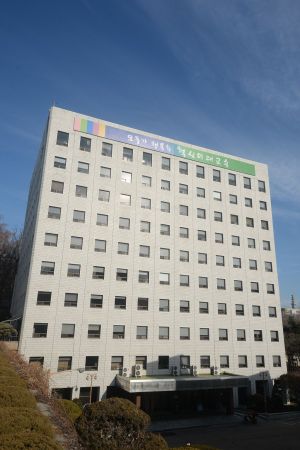
[Asia Economy Reporter Han Jinju] The Seoul Metropolitan Office of Education has prepared a supplementary budget reflecting the increased cost of food ingredients necessary to stably operate school meals. Over 100 billion KRW will be invested respectively to improve industrial accident risk factors at schools and to support education in the field of artificial intelligence (AI).
On the 15th, the Seoul Metropolitan Office of Education submitted the 2nd supplementary budget proposal, which is 3.7337 trillion KRW (35.1%) higher than the main budget (10.6393 trillion KRW), to the Seoul Metropolitan Council.
A budget of 167.6 billion KRW was allocated for education recovery, including ensuring basic academic skills and restoring social skills deficits. This includes 4.7 billion KRW for supporting students who have dropped out and recovering social skills deficits, 1.7 billion KRW for focused support on basic academic skills and parent learning counseling, 38.7 billion KRW for comprehensive repairs of school libraries, and 7.8 billion KRW for creating playgrounds and play classrooms for kindergarten and elementary students.
To improve risk factors for industrial accident prevention at individual schools and to cover costs due to increases in public utility fees and inflation, 106 billion KRW will be invested in supporting school autonomous recovery. A total of 100.1 billion KRW was allocated for AI and metaverse-based education. This includes 57.4 billion KRW for AI classrooms and digital classroom conversion, 31 billion KRW for purchasing smart devices to strengthen digital literacy skills for 1st-year middle and high school students, and 2.3 billion KRW for operating AI leading schools and building customized integrated platforms.
A budget of 113.9 billion KRW will be invested in students’ health and welfare. This includes 10.9 billion KRW for employment competency enhancement vouchers supporting vocational high school students’ certification and language proficiency acquisition, and field training support, as well as 5.3 billion KRW for supporting low-income students with after-school free course vouchers.
Due to recent price increases, the burden of food ingredient costs for school meals has increased, making it difficult to operate meals at frontline schools. Therefore, 17.1 billion KRW will be invested in free meal support reflecting the increased food costs. For school quarantine support due to the spread of COVID-19, 40 billion KRW was allocated, along with 6.8 billion KRW for small-scale asbestos repairs at schools, 2.1 billion KRW for supporting school health instructors, and 1.5 billion KRW for modernizing health rooms.
75 billion KRW will be invested in creating digital-based smart health management classrooms to manage high school students’ basic physical fitness and emotional health. Additionally, 900 million KRW was allocated for lung cancer health checkups for 7,400 meal service workers. A total of 288.3 billion KRW was allocated for creating safe schools, including improvements to aging meal cooking equipment, facilities for the disabled, aging electrical and fire facilities, and rebuilding schools over 40 years old.
In addition, 1.7423 trillion KRW will be transferred to the Education Facility Environment Improvement Fund, and 962 billion KRW to the Integrated Education Financial Stabilization Fund. A budget of 14.8 billion KRW was set for the construction fund of the Seoul Metropolitan Office of Education’s new building and training center. These fund transfers are a proactive response to recent reductions in local education finance grants due to decreases in domestic taxes caused by economic downturns.
Cho Hee-yeon, Superintendent of the Seoul Metropolitan Office of Education, said, "This supplementary budget is a catalyst to fully take responsibility for the educational gap and learning deficits caused by COVID-19 while leading Seoul education into an era of AI-based customized learning support." He added, "The 2023 main budget will include special allocations to achieve a leap in public education, such as strengthening education recovery and restoring the middle learning group, and expanding elementary after-school care until 8 p.m."
Regarding the recently announced reform plan for local education finance grants at the National Fiscal Strategy Meeting, Superintendent Cho criticized, "The unilateral decision to reduce grants based solely on the simple economic logic of declining student numbers, under vague expectations that the increase in local education finance grants will continue, will accelerate the deterioration of educational conditions in kindergarten, elementary, and secondary education and lead to qualitative decline." He pointed out, "Reducing investment in kindergarten, elementary, and secondary education to invest in higher education is like removing a lower stone to support an upper stone, making it difficult to properly nurture future talents who need higher education starting from kindergarten, elementary, and secondary education."
© The Asia Business Daily(www.asiae.co.kr). All rights reserved.
![Clutching a Stolen Dior Bag, Saying "I Hate Being Poor but Real"... The Grotesque Con of a "Human Knockoff" [Slate]](https://cwcontent.asiae.co.kr/asiaresize/183/2026021902243444107_1771435474.jpg)















