National Science Museum Successfully Redesigns Core Component 'Jujeon' Principle
[Asia Economy Reporter Kim Bong-su] The automatic water clock 'Jagyeokru' created by Jang Yeong-sil during the early Joseon period under King Sejong had its manufacturing method remain unknown until now. Although its structure and descriptions were passed down, the core component's manufacturing principle was unclear, making it impossible to replicate. However, scientists have now succeeded in unraveling this secret and restoring it, drawing significant attention.
The National Science Museum announced on the 14th that it has unlocked the secret of the core component of the early Joseon Jagyeokru, the power transmission and time regulation device called ‘Jujeon (籌箭)’, and successfully restored (designed) it. The true nature of ‘Jujeon’, which had been shrouded in mystery and only documented in the "Annals of the Joseon Dynasty," has now been clearly identified.
Jagyeokru is an automatic water clock made by Jang Yeong-sil during King Sejong's reign and served as the standard clock of Joseon. Its structure and explanation are detailed in the "Sejong Sillok" in the 「Boru Gakgi (報漏閣記)」 and 「Boru Gak Myeongbyeongseo (報漏閣銘幷序)」. Visually, Jagyeokru appears to combine two large devices: one is the water quantity control section with Pasuho and Susuho, which regulate the amount and flow of water, and the other is the automatic time announcement section that indicates time through the movement of figurines. At this time, there is a part that releases beads at regular intervals according to the water quantity to transmit power and regulate time. The restored Jujeon system connects the water quantity control device and the automatic time announcement device, acting as the brain of the Jagyeokru standard water clock by transmitting power and regulating time. Pasuho refers to the water supply jar in Jagyeokru, and Susuho is the cylindrical jar that receives water from Pasuho.
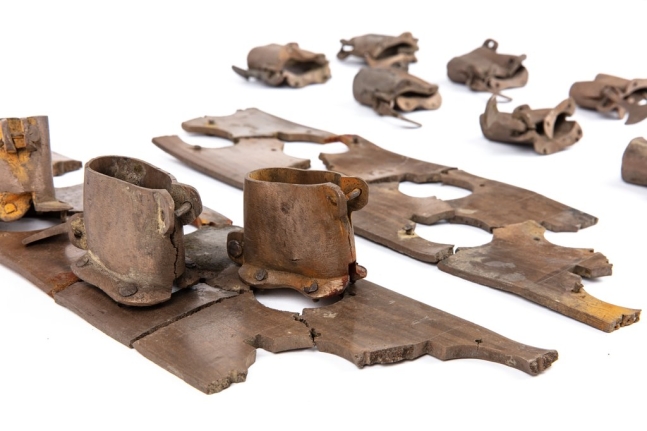
The Jujeon system consists of the Jujeon bamboo (籌箭竹) inside the Susuho, the square wood (方木) above it, two types of copper plates (銅板) installed on the left and right sides inside the square wood, and the bead release mechanism that loads beads onto the copper plates.
Yoon Yong-hyun, head of the Korean History of Science and Technology Department at the National Science Museum, and his research team were able to newly restore (design) the original form of Jujeon after 588 years through the basic research project of the National Science Museum titled ‘Development of Early Joseon Automatic Water Clock Jujeon (籌箭) Exhibit’.
The decisive factor was the excavation of relics of copper plates and bead release devices in Insadong, Seoul, in 2021. Based on this, Director Yoon, who had previously restored the Heumgyeonggak Okru, succeeded in restoring the Jagyeokru Jujeon system design together with Dr. Kim Sang-hyuk of the Korea Astronomy and Space Science Institute, Dr. Min Byung-hee, and Oh Kyung-taek, director of the Capital Cultural Heritage Research Institute.
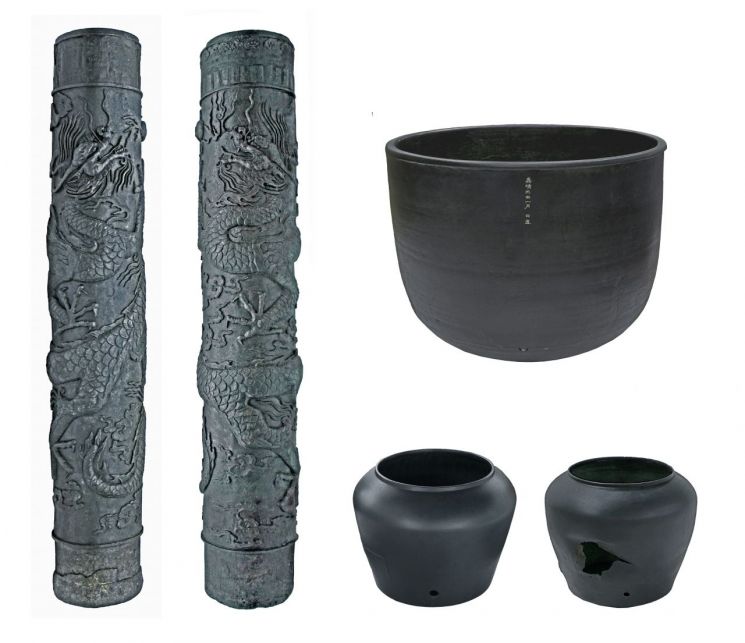
During the Joseon period, the standard time system used was the "Jeongsi" method, which divided the day into 12 hours (時). However, at night, the time was divided into five segments called "Gyeong (更)", and each Gyeong was further divided into five points called "Jeom (點)". This method is called the Gyeongjeom method (更點法). The nighttime time system divided into 25 segments was a variable time system that changed with the solar terms, and the "Nujutongui (漏籌通義)" served as a guidebook for telling nighttime time. The excavated copper plates and bead release device correspond to the Gyeongjeom Jujeon. The research team revealed that, compared with the "Nujutongui" explaining the use of Jujeon, the copper plate relics included not only the ‘Iljeon (一箭)’ marked with inscriptions but also Jujeon corresponding to ‘3 Jeon’ and ‘6 Jeon’. Furthermore, by comparing the excavated Gyeongjeom Jujeon copper plates and bead release devices with the contents of 「Boru Gakgi」 and considering the production dates of the Ilseong Jeongsi clock, metal movable type, Chongtong (cannons), and bronze bells found together, the production date of the excavated Jujeon relics was estimated to be 1536, corresponding to the Jujeon of the Borugak during King Jungjong’s reign. This aligns with the structure of the early Joseon automatic water clocks Borugak Jagyeokru and Heumgyeonggak Okru.
Currently, the National Science Museum is undergoing remodeling of the Korean History of Science and Technology Hall. After transferring the restored Jagyeokru exhibited at the National Palace Museum, they plan to apply the newly researched early Joseon automatic water clock Jujeon system to exhibit a restoration of Jagyeokru closer to the original form. Through the development of interactive exhibits to understand the scientific principles of Jujeon, they aim to contribute to enhancing the national pride of the public.
© The Asia Business Daily(www.asiae.co.kr). All rights reserved.
![Clutching a Stolen Dior Bag, Saying "I Hate Being Poor but Real"... The Grotesque Con of a "Human Knockoff" [Slate]](https://cwcontent.asiae.co.kr/asiaresize/183/2026021902243444107_1771435474.jpg)
















