3 out of 10 Adults Under 50 Live with Parents
Returning to Kangaroo Lifestyle Due to Financial Burden After Independence
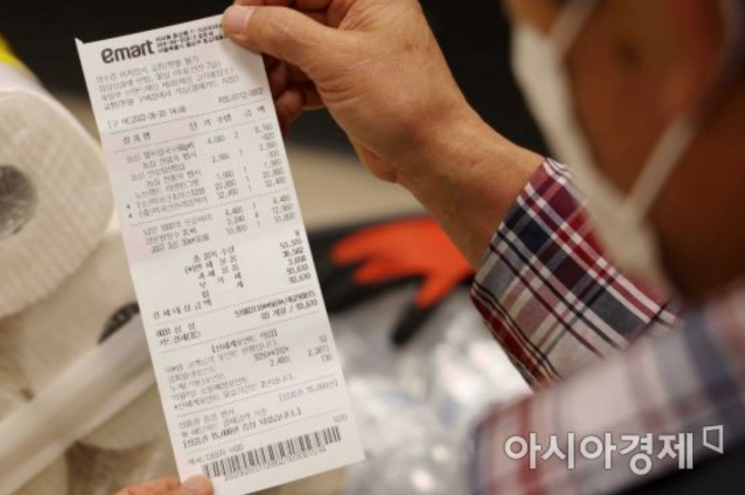 A citizen who shopped at a large supermarket in downtown Seoul is looking over the receipt. Photo by Asia Economy DB.
[Asia Economy Reporter Heo Midam] # Lee Ji-young (29, pseudonym), who commutes from Yangcheon-gu, Seoul to Pangyo, Gyeonggi Province, gave up trying to find a jeonse (long-term deposit) house near her workplace. She said, "I wanted to find a place because the commute, which takes about an hour and 30 minutes, was too exhausting. I originally planned to get a jeonse house because if I lived paying monthly rent, I thought I wouldn't have a chance to save money. But with interest rates rising, I was worried about getting a loan. Also, if I lived independently, various living expenses like food costs would come out of my salary, which was too burdensome, so I eventually gave up on independence."
The so-called 'Kangaroo tribe,' adults who continue to live with their parents and receive financial support, is increasing. Not only people in their 20s who are taking their first steps into society but also those in their 30s and 40s who are actively working are staying with their parents for economic reasons. This is because they judge that it is difficult to bear soaring housing prices and skyrocketing living costs alone.
According to a research report published last month by the Korea Institute for Health and Social Affairs, 29.9% of adults aged 19 to 49 live with their parents. In particular, the rate of living with parents was higher among those who were unemployed or unmarried. While 64.1% of unmarried people and 43.6% of the unemployed live with their parents, the cohabitation rate is relatively low at 3.1% for married people and 23.5% for employed people.
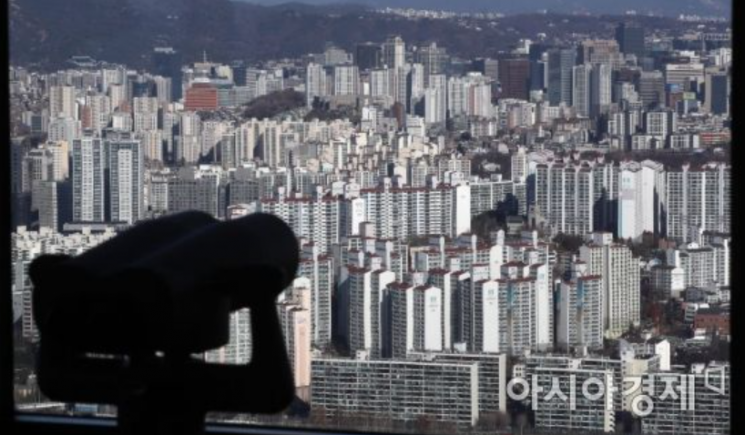
The increase in the Kangaroo tribe seems to be influenced by soaring prices and housing cost burdens. The Bank of Korea projected the annual consumer price inflation rate at 4.7% this year, which is the same level as in 2008 when prices surged due to the global financial crisis. Moreover, the skyrocketing apartment prices in Seoul and the increased loan interest rates are also burdensome for young people.
Office worker Jo Ju-young (28, pseudonym) also dreamed of having her own space but is living with her parents due to practical barriers. She said, "It would be convenient to live away from my parents' house, but I can't save money. It's not easy to live without asking my parents for help. I want to be financially independent before I turn 30, but I don't think my salary will increase much, so it seems difficult."
Recently, many people who left their parents' home return because they cannot cope with housing and living cost pressures. In particular, there are so-called 'Returnoo tribe' who, after marrying and living independently, return to their parents' home due to the jeonse crisis and childcare issues. The Returnoo tribe is a newly coined term combining 'return' and 'Kangaroo tribe.'
However, the parent generation feels considerable burden from their children's financial dependence. According to a survey by the LINA Life Social Contribution Foundation, LINA Jeonseonggi Foundation, targeting 1,068 men and women aged 55 to 74 living in Seoul on the topic of social participation after retirement among middle-aged and older adults, 91.7% of respondents answered that they have "no plans to take care of their children."
Choi Sun-young, a senior researcher at the Korea Institute for Health and Social Affairs, said, "Leaving the parents' home by adult children is not normatively fixed around a specific age but is selectively done according to events such as labor market transition and marriage. Continued cohabitation with parents after becoming an adult and continued financial support from non-cohabiting parents should be explained through more in-depth research at the level of institutional and policy issues rather than as a cultural characteristic of our society."
© The Asia Business Daily(www.asiae.co.kr). All rights reserved.
![Clutching a Stolen Dior Bag, Saying "I Hate Being Poor but Real"... The Grotesque Con of a "Human Knockoff" [Slate]](https://cwcontent.asiae.co.kr/asiaresize/183/2026021902243444107_1771435474.jpg)
















