June Consumer Price Index Rises 6.0% Year-on-Year
Vehicle Maintenance Costs and Fuel Tax Burden Increase
"Low Salary but High Maintenance Cost Share"...Giving Up on Owning a Car
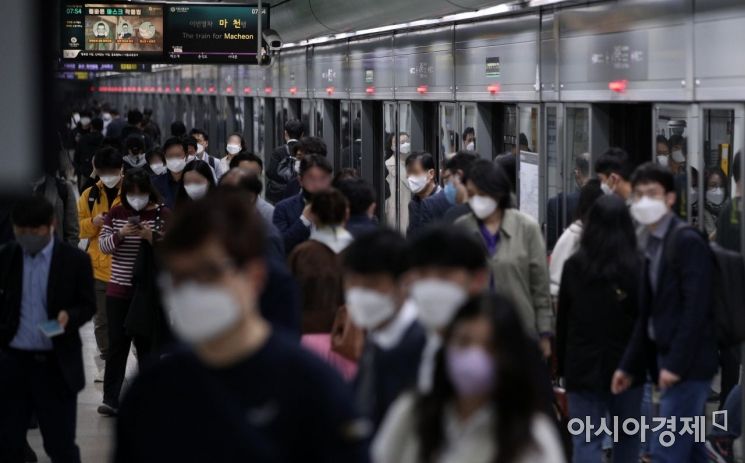 On May 2nd, citizens were walking at Gwanghwamun Station of the Seoul subway./Photo by Hyunmin Kim kimhyun81@
[Asia Economy Reporter Kim Jung-wan] #. Kang (31), a 5-year office worker living in Yangju-si, Gyeonggi Province, commutes to work every day using public transportation, which takes about two hours. The cost of maintaining a vehicle is considerable, and the burden of fuel taxes has been increasing. Kang said, "In the past, I had a dream of buying a stylish car even if I became a 'car poor' (someone who buys an expensive car beyond their economic means and lives in poverty), but these days I realize that the cost of owning a car is not trivial, so even buying a used car feels burdensome now," adding, "Although the commute is tiring, I plan to continue using public transportation for the time being."
Among people in their 20s and 30s, more are giving up on owning a personal vehicle. This is due to rising prices, increasing vehicle maintenance costs, and ongoing fuel tax burdens. Faced with these financial pressures, many in their 20s and 30s say that being 'car poor' is a thing of the past and are choosing to reduce financial strain by using public transportation.
As the consumer price inflation rate rose to 6% for the first time in about 24 years since the foreign exchange crisis, the burden of vehicle maintenance costs has also increased. According to Statistics Korea, the consumer price index in June rose 6.0% compared to the same month last year, marking the highest increase since November 1998 (6.8%) during the foreign exchange crisis. In May, the consumer price index rose 5.4% year-on-year, with the highest inflation rate of 14.5% observed in expenditures related to 'transportation.'
Specifically, costs related to vehicle maintenance such as automotive supplies (11.0%), car tires (9.8%), car wash fees (8.7%), engine oil replacement fees (8.4%), and parking fees (4.7%) all increased. In June, the inflation rate for 'transportation' rose 16.8% year-on-year, the highest increase, suggesting that maintenance cost burdens will continue.
Kim (28), living in Seongbuk-gu, Seoul, said, "Having a car is definitely convenient, but thinking about the financial burden makes me uneasy," explaining, "I've rented cars occasionally, but parking fees are high, and looking for cheap parking spots wastes a lot of time." He added, "I think it's better to save on maintenance costs."
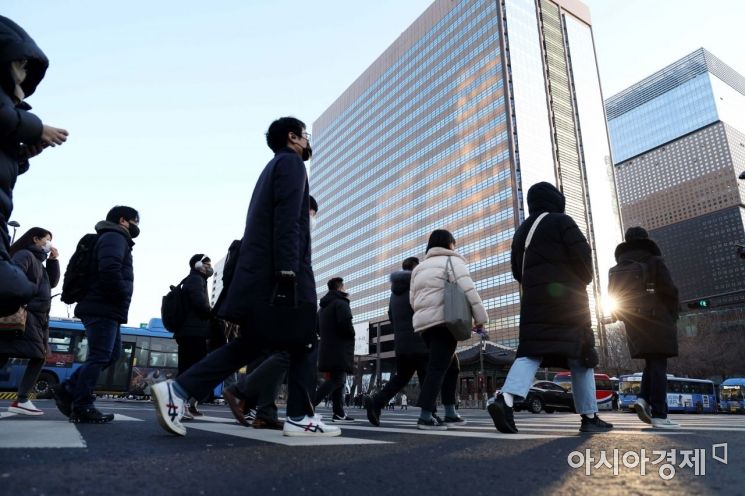
Fuel prices are also a factor delaying the purchase of personal vehicles. Despite government fuel tax reduction measures, fuel prices show no signs of dropping. According to Korea National Oil Corporation's Opinet as of 9 a.m. on the 7th, the average nationwide gasoline price was 2,111.11 KRW per liter, and diesel was 2,146.37 KRW per liter.
These prices represent decreases of 2.74 KRW and 2.22 KRW respectively compared to the previous day. Although the fuel tax reduction rate was expanded from 30% to 37% starting June 1, the price drop effect was minimal, and high fuel prices above 2,000 KRW per liter continue.
Lee (26), an office worker living in Goyang-si, Gyeonggi Province, said, "Until recently, I commuted a few times using the family car, but I recently started using public transportation again because fuel prices have become too expensive," adding, "There are cheaper gas stations if you look for them, but honestly, the savings are only a few won here and there and don't add up much." He lamented, "My salary is low, and maintenance costs take up too much of the budget to drive a car."
Meanwhile, the government has launched on-site inspections as consumers have not felt the price reductions. On the 6th, the Ministry of Trade, Industry and Energy, the Ministry of Economy and Finance, and the Fair Trade Commission formed a 'Refinery and Gas Station Market Inspection Team' and inspected three high-priced gas stations located in Seoul.
The inspection team plans to inspect about 10 gas stations in Seoul and Gyeonggi Province four times this week. Afterwards, they will continue to inspect nationwide at least twice a week to check for price collusion and other issues. Additionally, they will continuously monitor supply prices daily for refineries and conduct supply and quality investigations focusing on refineries and low-storage facilities.
© The Asia Business Daily(www.asiae.co.kr). All rights reserved.
![Clutching a Stolen Dior Bag, Saying "I Hate Being Poor but Real"... The Grotesque Con of a "Human Knockoff" [Slate]](https://cwcontent.asiae.co.kr/asiaresize/183/2026021902243444107_1771435474.jpg)
















