PC and Mobile Device Sales Decline
Cryptocurrency Market Turmoil Also Hits
Korean Companies Cut Inventory with Discounts
Server DRAM Prices in Q3 May Drop Up to 10%
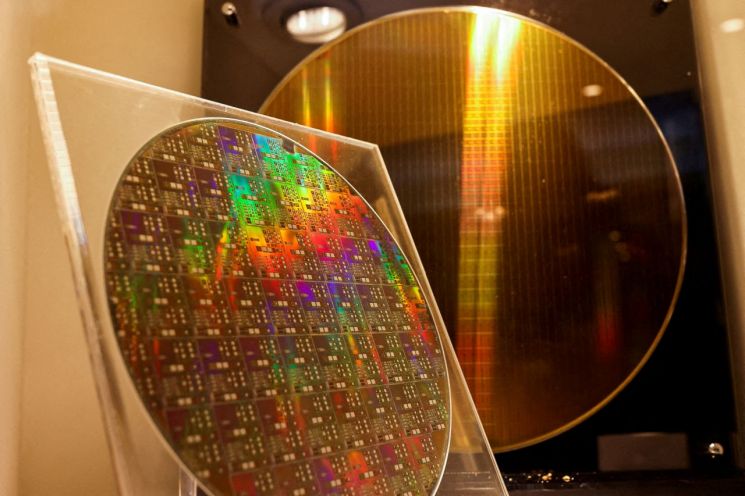
[Asia Economy Reporters Park Sun-mi and Jung Hyun-jin] "The semiconductor boom during the pandemic era, which caused a global shortage, is showing signs of weakening for the first time."
The Wall Street Journal (WSJ) reported on the current semiconductor market situation on the 4th (local time). It analyzed that the sales of consumer electronic devices such as PCs and smartphones, which saw explosive demand during COVID-19, have declined, and the turmoil in the cryptocurrency market starting from the collapse of the Korean-style cryptocurrencies TerraUST and Luna in May has also impacted the semiconductor market.
In the memory semiconductor market, led by domestic semiconductor companies such as Samsung Electronics and SK Hynix, demand has been relatively steady, defending against price declines even in server DRAM. However, it appears that demand is now decreasing even in server DRAM.
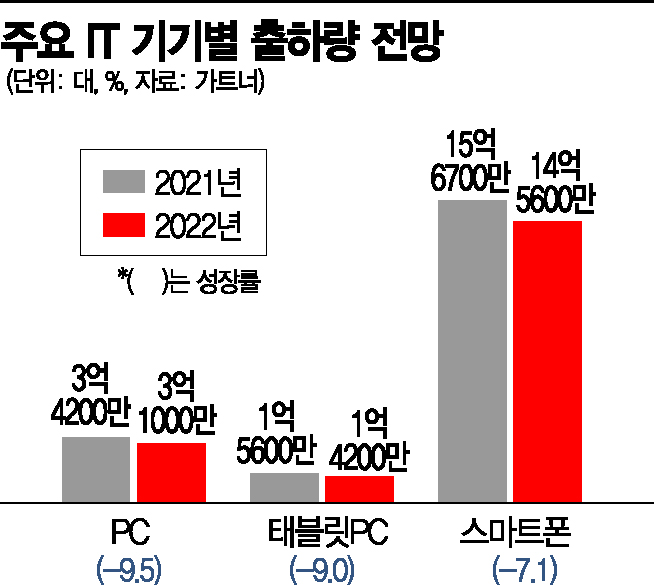
In fact, the decline in sales of IT devices such as PCs, which saw a significant increase in demand due to COVID-19, is being confirmed numerically. Market research firm Gartner forecasted that global PC shipments this year will be 310 million units, a 9.5% decrease from the previous year, showing the steepest decline among all IT devices.
This is more than 11 million units lower than the forecast released by market research firm IDC a month ago. Gartner cited geopolitical situations, high inflation, exchange rate fluctuations, and supply chain disruptions as major causes and predicted that sales of other IT devices such as smartphones and tablet PCs will also decline.
In the memory semiconductor market, market research firm TrendForce expanded the lower bound of the average price decline for DRAM used in PCs, mobiles, and servers in the third quarter from the previous 8% to 10%, and stated that it could fall more than 10% depending on the situation. They forecasted that server DRAM prices could drop up to 10% in the third quarter of this year.
Due to weak demand for IT devices such as PCs and smartphones, DRAM prices are falling, and the impact is now reaching server DRAM, which had experienced less price decline. TrendForce said, "From the supplier side, Korean semiconductor companies are attempting price discounts to reduce inventory," and predicted, "If price competition intensifies further, the decline could exceed 10%."
The global semiconductor industry is actively responding to the shrinking demand amid worsening market conditions and remains vigilant. David Zinsner, Intel's Chief Financial Officer (CFO), said last month that there would be more noise than before in the second half outlook and that they would adjust capital expenditures accordingly to respond to reality.
Intel temporarily froze hiring in its PC semiconductor division last month and implemented cost-cutting measures. Nvidia also decided to reduce hiring as semiconductor demand decreased due to the slowdown in cryptocurrency mining and the video game industry. Nvidia's semiconductors are mainly used in high-computing tasks such as cryptocurrency mining and graphics cards needed for video games enjoyed at home during the COVID-19 period.
With demand in these two sectors declining, Nvidia's stock price fell by 48% in the first half of this year alone. Chester Young, president of California-based retailer Central Computers, told WSJ that consumers had waited for two years to finally get a chance to buy Nvidia's graphics hardware, and only now have inventories been secured and supply restrictions introduced during the pandemic period have been lifted this year.
Lisa Su, CEO of US semiconductor company AMD, also expressed a conservative view on the PC sector last month, forecasting that demand will neither increase nor decrease for the next several years. Computer manufacturers HP and Dell Technologies also predicted that demand for low-priced consumer PCs will moderate. US memory semiconductor company Micron also delivered a message last week during its earnings announcement that "the industry demand environment is weakening due to declining PC and smartphone sales."
© The Asia Business Daily(www.asiae.co.kr). All rights reserved.
![Clutching a Stolen Dior Bag, Saying "I Hate Being Poor but Real"... The Grotesque Con of a "Human Knockoff" [Slate]](https://cwcontent.asiae.co.kr/asiaresize/183/2026021902243444107_1771435474.jpg)
















