Fast Fashion Platform 'Shein' Valued at 130 Trillion Won
Over 6,000 New Items Daily...Popular Among MZ Generation for 'Cost-Effectiveness'
From US Giants to Small Businesses and Emerging Designers...Shein Faces Plagiarism Claims
WSJ Criticizes 'Rapid Growth Through Plagiarism'
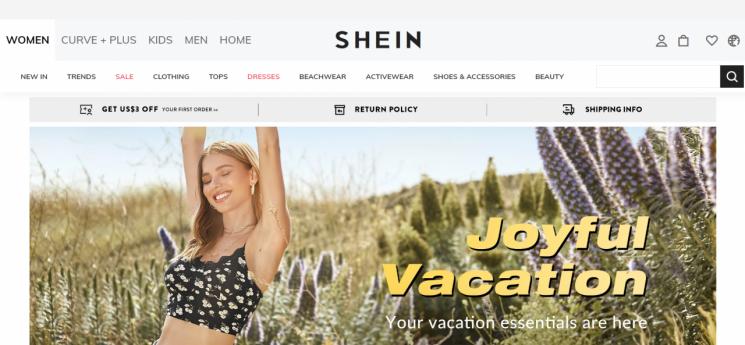 The website of the fast fashion platform 'Shein'. On the 3rd (local time), The Wall Street Journal (WSJ) reported that more than 50 trademark and copyright infringement lawsuits filed against Shein in the past three years have been confirmed in U.S. courts.
 Photo by Shein website capture.
[Asia Economy Reporter Yoon Seul-gi] Chinese fashion company 'Shein,' which has been recognized with a corporate value of 130 trillion won and rose to the top of the fast fashion industry in just over a decade, is facing a series of plagiarism lawsuits.
The Wall Street Journal (WSJ) reported that more than 50 trademark and copyright infringement lawsuits filed against Shein in the past three years have been confirmed in U.S. courts alone.
Shein is a fast fashion platform that quickly reflects the latest trends and sells products at low prices. Founded in 2008, it established its current fashion site in 2012 as a Chinese company. By offering 'cost-effective' products tailored to ever-changing trends, it especially gained the love of the MZ generation (Millennials + Generation Z) and grew significantly, achieving a corporate value of $100 billion (approximately 130 trillion won) in just over ten years. In May last year, it surpassed Amazon to become the most downloaded shopping application in the United States.
However, WSJ pointed out that Shein has been sued by several fashion companies for trademark infringement or design plagiarism, and that plagiarism was behind Shein’s ability to produce and sell about 6,000 new products daily at low prices, leading to its great success.
According to the media, various companies and individuals, from large corporations such as American clothing company Ralph Lauren and sunglasses company Oakley to small businesses and designers, have filed lawsuits. The American street fashion brand Stussy claimed that products bearing its trademark were sold on the Shein platform, causing damage. Shein also sold products that used the album cover image of the rock band Nirvana without permission and reached a confidential settlement with Nirvana earlier this year. Emerging designers have also accused Shein of plagiarism on social networking services (SNS).
It is not uncommon for fast fashion companies to be embroiled in plagiarism disputes. The Swedish brand H&M has also been involved in several plagiarism controversies. The problem is that Shein’s intellectual property infringement cases are far more numerous. WSJ’s analysis of copyright infringement lawsuits filed in U.S. courts since 2019 shows that the number of lawsuits filed against Shein is ten times that of H&M.
Susan Scafidi, a professor at Fordham University Law School in the U.S., criticized, "Companies that copy others’ designs without permission even consider the risk of lawsuits as part of their business."
In response, Shein denied the allegations, stating, "Plagiarism is solely the fault of contracted suppliers and is unrelated to Shein as a sales platform." In a statement, Shein said, "Infringing intellectual property rights is not our business model," and "Shein’s contracted suppliers are obligated to comply with such company policies."
© The Asia Business Daily(www.asiae.co.kr). All rights reserved.
![Clutching a Stolen Dior Bag, Saying "I Hate Being Poor but Real"... The Grotesque Con of a "Human Knockoff" [Slate]](https://cwcontent.asiae.co.kr/asiaresize/183/2026021902243444107_1771435474.jpg)















