Short-term Rebound Possible
"If High Inflation and Economic Recession Are Not Resolved, the Bear Market Will Continue"
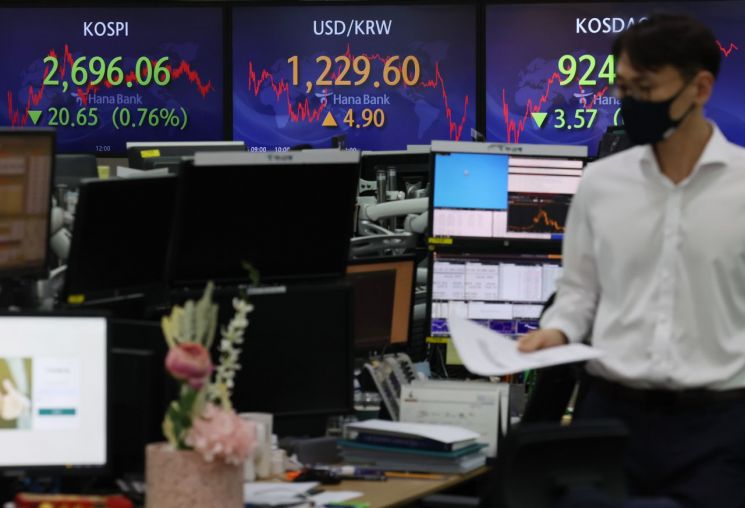
[Asia Economy Reporter Hwang Yoon-joo] An analysis has emerged that bearish market pressure will continue from a medium-term perspective of over one year as long as inflation and recession risks are not resolved. Important economic indicators to confirm this are expected to be the June CPI (Consumer Price Index) released on the 13th and the preliminary Q2 GDP (Gross Domestic Product) figures released on the 28th.
Moon Nam-jung, a researcher at Daishin Securities, stated on the 3rd, "At least until July 13, the US stock market will experience volatility, and the market's direction will be determined."
Currently, the US economy has a higher probability of recession, but it is not yet at a stage to definitively conclude that the US is entering a recession. The IMF (International Monetary Fund) also revised its economic outlook in June, lowering the US economic growth rate for this year from 3.7% (April) to 2.9%, a 0.8 percentage point decrease, but still expects to narrowly avoid a recession in 2022?2023. However, it added a caveat that if current headwinds (the Ukraine crisis, China lockdowns) persist or if another negative shock occurs, there is a real risk that the economic slowdown could turn into a short-term recession.
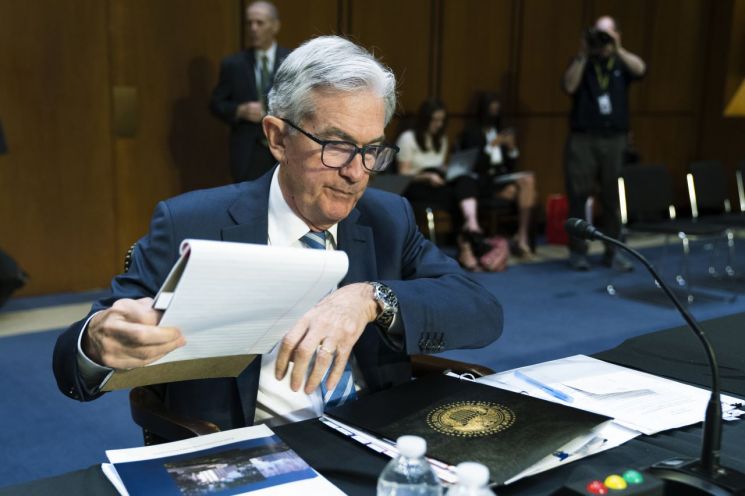
Looking at past Federal Reserve monetary tightening periods, among seven interest rate hike cycles since 1979 (starting years: 1979, 1983, 1986, 1994, 1999, 2004, 2015), except for two (1979 and 2004), the other rate hike periods were followed by relatively mild or no recessions.
Researcher Moon evaluated, "This year, inflation (May +8.6%) is very high due to supply-side price pressures, and the unemployment rate (May +3.6%) is low due to expansionary fiscal policy," adding, "This is similar to 1979 (Fed Chair Volcker) and 2004 (Fed Chair Greenspan)."
He pointed out, "During the rate hikes from August 1979 to May 1981, stagflation (economic contraction in Q3?Q4 1980 + high inflation) occurred, and after the hikes ended, crises such as a double-dip recession and the Latin American debt crisis were experienced. After the rate hikes from June 2004 to June 2006 ended, the global financial crisis occurred."
He further analyzed, "Although it cannot be concluded that past situations will repeat, the Federal Reserve's high-intensity rate hikes are inevitable to control inflation this year."
Researcher Moon emphasized, "Since major crises tend to occur after rate hikes end, economic slowdown during this year's and next year's US rate hike phases is inevitable. However, prematurely concluding a recession at this point would be a mistake by market participants that has historically increased market anxiety."
© The Asia Business Daily(www.asiae.co.kr). All rights reserved.
![Clutching a Stolen Dior Bag, Saying "I Hate Being Poor but Real"... The Grotesque Con of a "Human Knockoff" [Slate]](https://cwcontent.asiae.co.kr/asiaresize/183/2026021902243444107_1771435474.jpg)
















