New Corporation to Be Established to Take Over Sakhalin-2 Operating Rights
Russian Lower House Points Out, "Japan Imposes Economic Sanctions on Russia While Securing All Production Resources of Sakhalin-2 Project"
[Asia Economy Intern Reporter Kim Se-eun] Russia has prepared measures that could disadvantage foreign companies participating in the 'Sakhalin-2' project in response to Western sanctions.
◆Russia to Change Operator of Sakhalin-2 Project...Foreign Investors Must Submit Separate Requests to Acquire Shares
According to Interfax News Agency on the 1st, the Russian government plans to establish a new Russian corporation that will acquire all rights and assets of 'Sakhalin Energy,' the operator of the Sakhalin-2 project.
Sakhalin-2 is an energy development project led by Russia in the East Asia region, which exported 10.41 million tons of liquefied natural gas (LNG) and 4.16 million tons of oil from this project alone last year.
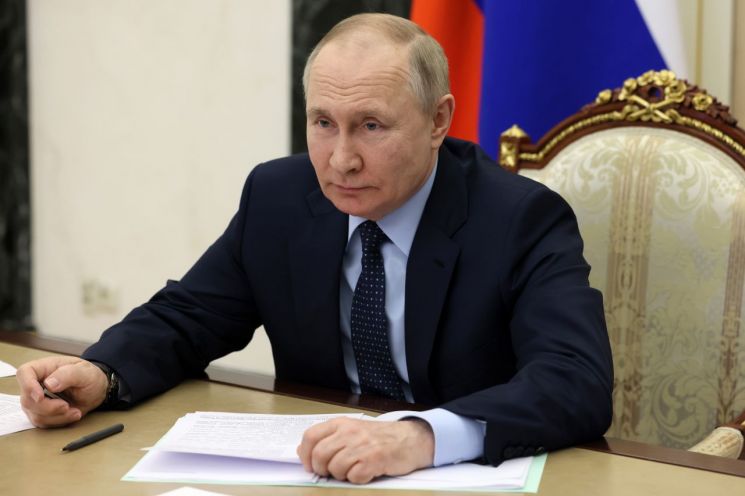
Russian President Vladimir Putin signed the "Law on Special Economic Measures in the Fuel and Energy Sector Concerning Unfriendly Actions by Certain Foreign and International Entities," which includes these provisions. According to the law, half of the shares of the newly established corporation will be held by Gazprom Sakhalin Holdings LLC and others participating in joint operations.
The remaining shares will be proportionally allocated to previous participants in Sakhalin Energy's operations, including the British oil company Shell (27.5%), Japan's Mitsui & Co. (12.5%), and Mitsubishi Corporation (10%).
However, foreign investors must submit separate requests to acquire shares in the new Russian corporation within one month. The Russian government will then approve or deny these requests.
If investors' requests are rejected, the Russian government will sell the shares to Russian companies and deposit the amount into a special account under the foreign investors' names. Additionally, while foreign investors participate in the Sakhalin-2 project based on the Production Sharing Agreement (PSA), the government will review activities in financial and environmental areas and calculate damages. The government plans to deduct the assessed damages from the amount deposited in the special account and return only the remaining balance.
Pavel Zavalny, chairman of the Energy Committee of the Russian State Duma, stated, "Japan, along with the US and other Western countries, imposed economic sanctions on Russia, and we have suffered losses. However, Japan is simultaneously participating in the Sakhalin-2 project and securing all production resources." He added, "We do not rule out the possibility of imposing sanctions not only on Shell but also on Japanese companies."
◆With Shell Out, Sakhalin-2’s Target Ultimately Becomes 'Japan'
Shell announced its intention to withdraw from Sakhalin-2 immediately after the outbreak of the Ukraine war. Currently, Shell is pursuing the sale of its shares to Chinese companies.
Therefore, Russia's sanction measures are interpreted as targeting Japan, which holds the remaining shares after Shell's exit.
Previously, Japan froze assets of Russian key figures including President Putin and imposed export-import bans on certain Russian goods. In April, Japan, along with G7 countries, announced a ban on Russian coal imports and even expelled diplomats.
However, Japan has firmly indicated no intention to withdraw from the Sakhalin-2 project.
Currently, most of the LNG Japan imports from Russia comes through this project, so Russia's sanction measures could deal a significant blow to Japan. According to Japan’s Ministry of Economy, Trade and Industry, LNG imported from Sakhalin-2 accounts for 3% of Japan’s total electricity supply.
◆Japan Faces Severe Power Shortage...Concerns Over Energy Price Surge if Expelled from Project
Recently, Japan has encountered a power shortage. Early heatwaves have increased electricity demand, but the capacity to meet this demand is insufficient. Japan’s reliance on energy imports and the aging of its thermal power plants are cited as reasons.
Moreover, the rainy season ended earlier than expected this year, impacting hydropower plant operations. Notably, the water level at Saura Dam in Kochi Prefecture is only about half of the average.
In response, the Japanese government announced plans to maximize the use of nuclear power plants to alleviate the power shortage. Since the 2011 Great East Japan Earthquake and the Fukushima Daiichi nuclear disaster, the share of nuclear power has significantly decreased. After review by the Nuclear Regulation Authority and approval by local government heads, 14 reactors are eligible for restart. Of these, only 10 reactors have passed enhanced safety inspections and are currently operational.
Due to the power supply shortage, electricity rates in Japan have risen for 12 consecutive months. The increase compared to a year ago is about 30%. The combined effect of rising fuel costs and a weak yen means that if electricity prices remain high after autumn, household consumption and corporate activities could contract, potentially leading to an overall economic downturn.
In this context, if Japan is expelled from the project, energy prices are expected to surge further, raising concerns about the repercussions.
On the same day, Japanese Prime Minister Fumio Kishida stated, "LNG imports will not be immediately halted," adding, "We need to communicate with the operators and consider responses."
Seiji Kihara, Chief Cabinet Secretary of Japan, said at a regular press conference, "There should be no infringement of Japan’s related rights and interests," and added, "It is not the stage to respond to future measures yet."
© The Asia Business Daily(www.asiae.co.kr). All rights reserved.
![Clutching a Stolen Dior Bag, Saying "I Hate Being Poor but Real"... The Grotesque Con of a "Human Knockoff" [Slate]](https://cwcontent.asiae.co.kr/asiaresize/183/2026021902243444107_1771435474.jpg)















