Electric Furnace Carbon Emissions at 25% Compared to Blast Furnace
Production Costs Inevitably Rise Due to Electricity Price Increase
Power Discounts Should Be Recognized for Eco-Friendly Business Transition
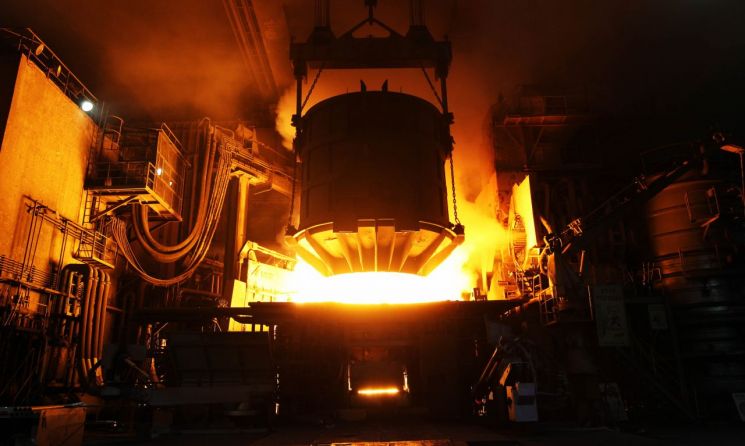
[Asia Economy Reporter Oh Hyung-gil] POSCO Group has decided to invest approximately 20 trillion KRW over the next five years in introducing eco-friendly facilities and strengthening steel product technology, including the establishment of electric arc furnaces to transition its steel business to an eco-friendly production system.
Hyundai Steel is also building its independent electric arc furnace-based carbon-neutral steel production system called 'Hi-Cube' and plans to produce low-carbon premium steel sheets by transitioning to a hydrogen-based steel production system by 2030.
Steel companies that had chosen electric arc furnaces due to their low carbon emissions are now facing difficulties. With raw material prices soaring and electricity rates rising in earnest, concerns over cost burdens are growing.
Electric arc furnaces are evaluated as an eco-friendly method that can reduce greenhouse gas emissions by about 75% compared to traditional blast furnaces. Steel companies have led the adoption of electric arc furnaces as part of their decarbonization efforts for carbon neutrality. Electric arc furnaces are known to emit only about 25% of the carbon compared to blast furnaces.
In particular, Hyundai Steel is focusing on Hi-Cube, a hydrogen-based process-integrated steel production system. It is a new concept of electric arc furnace that has evolved from the conventional electric arc furnace, which melts scrap metal to produce molten steel, to one capable of melting iron raw materials, removing impurities, and adding components.
Hyundai Steel will use scrap metal, hot metal (molten iron produced from blast furnaces), and DRI (Direct Reduced Iron) in the electric arc furnace to minimize carbon emissions and produce premium steel sheets such as automotive steel plates.
Although this was a choice for decarbonization, it has faced headwinds due to electricity rate increases.
According to Korea Electric Power Corporation (KEPCO) statistics, the primary metal industry purchased 35 billion kWh of electricity last year. Even applying a simple increase of 5 KRW per kWh, the additional burden on the steel industry is estimated to reach 175 billion KRW.
The problem is that this electricity rate increase is far from sufficient to cover KEPCO's deficit, so further electricity rate hikes are expected in the second half of the year. This means the burden on the steel industry could increase further.
The steel industry argues that discounts should be provided for the increased electricity consumption associated with the transition to eco-friendly business operations.
A steel industry official said, "Steel companies that have been promoting the expansion of electric arc furnaces for carbon neutrality are now bearing a heavy burden due to the sudden electricity rate increase," adding, "Support from authorities is needed for the increased electricity usage for eco-friendly business operations."
© The Asia Business Daily(www.asiae.co.kr). All rights reserved.
![Clutching a Stolen Dior Bag, Saying "I Hate Being Poor but Real"... The Grotesque Con of a "Human Knockoff" [Slate]](https://cwcontent.asiae.co.kr/asiaresize/183/2026021902243444107_1771435474.jpg)















