Fire at Yeongdeungpo Gosiwon in April This Year
Collapse Disaster in Hakdong, Gwangju in June Last Year
Experts Point Out Lack of Safety Awareness
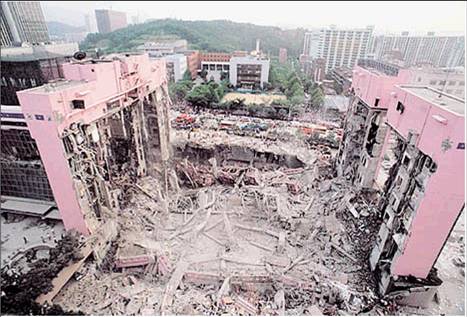 Sampung Department Store Collapse Site
[Asia Economy Reporter Yoo Byung-don] On June 29, 1995, 27 years ago, the Sampoong Department Store, which was the most luxurious department store in South Korea at the time based on sales and boasted the second-largest scale after the Lotte Department Store main branch, suddenly collapsed at around 5:52 PM.
Originally an apartment shopping center, the building's use was changed to a department store, and during a forced expansion from four to five floors, poor construction practices such as reducing the circumference of the pillars were carried out, which became the root cause of the disaster. As a result of this accident, 502 citizens and employees died, 937 were injured, and 6 went missing, totaling 1,445 casualties, marking the largest loss of life since the Korean War.
Several signs related to the collapse appeared days before, such as cracks forming and cement dust falling from the ceiling as the building tilted, but the management reportedly insisted on continuing operations, which sparked public outrage.
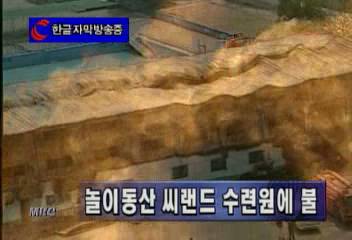 ▲Ssailand Controversial Incident. (Source: MBC News Broadcast Capture)
On June 30, 1999, at the Sealand Youth Training Center, a youth facility located in Baekmi-ri, Seosin-myeon, Hwaseong-si, Gyeonggi Province, there were 497 kindergarten and elementary school students from the metropolitan area and 47 supervising teachers staying there.
Around 1:41 AM, when everyone except some on-duty teachers was asleep, a mosquito coil in Room 301 of Building C on the third floor caught fire, which then spread to nearby clothes. The flames quickly engulfed the entire room and soon consumed the whole building. This fire resulted in a tragedy where 23 people, including 19 kindergarteners and 4 teachers and instructors, died, and 6 were injured.
After the tragedy, a joint investigation revealed that the training center was a temporary structure built by placing 52 containers on top of a concrete first-floor building to create second and third-floor rooms. It was deemed unsuitable for use as a youth training center and had multiple risk factors. The fire alarms installed inside the building were defective, and several fire extinguishers were found to be empty cans that were unusable.
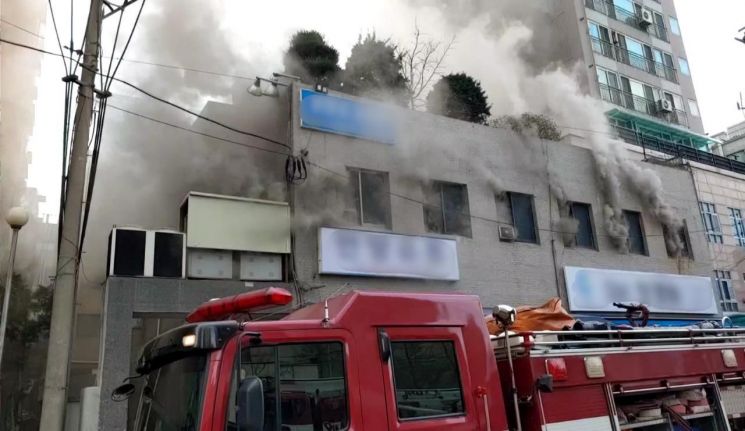
More than 20 years have passed since these two tragedies, but safety negligence still remains close to us. Collapse accidents occur here and there, and large-scale fire disasters continue unabated.
In April, a fire broke out at a goshiwon (small lodging facility) located in Yeongdeungpo-gu, Seoul, resulting in two deaths. Although a simple sprinkler system was installed, it had a lower water discharge than a standard sprinkler, making it insufficient to extinguish the sudden fire. A standard sprinkler sprays 80 liters per minute for 20 minutes, whereas a simple sprinkler sprays only 50 liters per minute for 10 minutes. The significant difference in water volume and duration caused the accident.
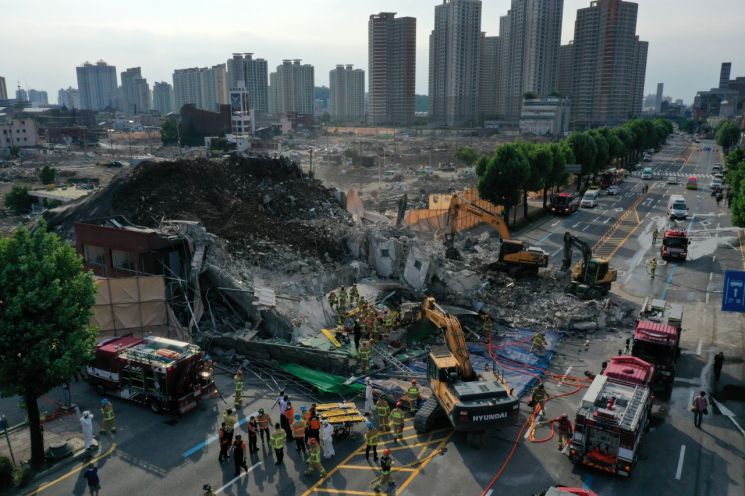
On June 9 last year at 4:23 PM, a building being demolished for the redevelopment of Hakdong 4 District in Dong-gu, Gwangju, collapsed and crushed a city bus, killing 9 people and injuring 8. It was found that demolition was carried out ignoring the plan to shorten the construction period, and the supervisor did not oversee the process, revealing safety management gaps from start to finish.
In cases of such collapse and fire accidents, a lack of safety awareness during both the building construction phase and management process is often a decisive factor. Experts point out the absence of a system to prevent safety accidents. Professor Lee Soo-gon, former professor of civil engineering at the University of Seoul, emphasized, “When a major accident occurs, the reality is that the focus is on blaming and punishing someone. Now, it is necessary to accurately identify the causes of accidents and establish systems that can improve them.”
© The Asia Business Daily(www.asiae.co.kr). All rights reserved.
![Clutching a Stolen Dior Bag, Saying "I Hate Being Poor but Real"... The Grotesque Con of a "Human Knockoff" [Slate]](https://cwcontent.asiae.co.kr/asiaresize/183/2026021902243444107_1771435474.jpg)
















