Emphasizing the Need for a 'Global Pandemic Response Organization' to Prevent Pandemic Resurgence
Advocated Vaccine Development and Distribution While Warning of Pandemics Even Before COVID-19
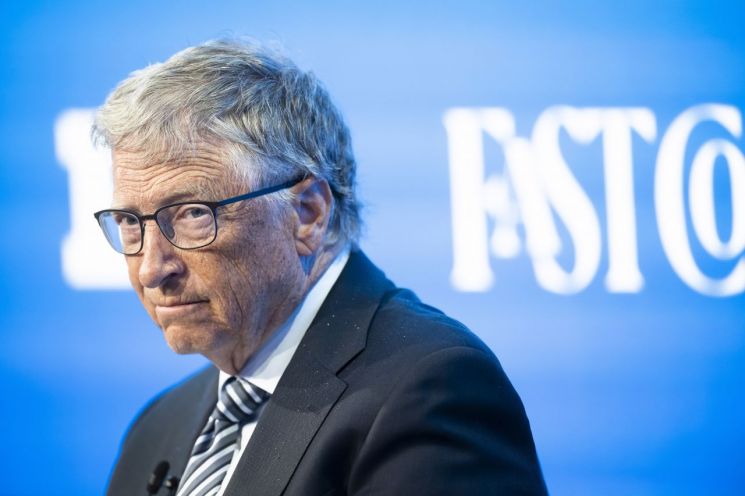 Bill Gates emphasized global cooperation to prevent the resurgence of the pandemic (a worldwide outbreak of infectious disease). [Image source=Yonhap News]
[Asia Economy Reporter Park Hyun-joo] Bill Gates, the founder of Microsoft, predicted that "if we do nothing, there is a 50% chance that a pandemic (a global outbreak of infectious disease) will occur again within 20 years."
In an interview with Japan's Asahi Shimbun on the 27th, Gates compared a pandemic to a fire, warning that "it can happen in any country, but if it is not extinguished early, it can engulf the entire world." Regarding the possibility of future pandemics, he emphasized early containment, saying, "We should not quietly watch a new disease emerging in China or Africa, but intervene at the outbreak stage."
Gates described the 'Global Epidemic Response and Mobilization (GERM)' team he proposed as a firefighting squad to respond to pandemics, stating, "It requires a cost slightly more than 1 billion dollars (about 1.29 trillion won) annually, but if it can prevent the global loss of 14 trillion dollars (about 1,800 trillion won) caused by the COVID-19 pandemic, it is not a large amount."
He added, "If infectious diseases in poor countries are suppressed, rich countries will also benefit," pointing out, "Diagnostic kits to detect variant viruses were needed in developing countries. However, rich countries monopolized them." This is a criticism that wealthy countries, which should lead mutual cooperation among nations to prevent the spread of infectious diseases, monopolized diagnostic kits and ultimately failed to stop the pandemic.
Gates had warned about pandemics and advocated for vaccine development and distribution even before the COVID-19 outbreak. In a TED talk in 2015, he said, "If something kills more than 10 million people in the coming decades, it is most likely a highly contagious virus rather than war," and expressed concern, "We have invested enormous amounts of money in nuclear deterrence, but almost nothing in systems to stop epidemics. We are not prepared for the next epidemic."
After the spread of COVID-19, this statement gained attention, and Gates was recognized as a visionary who predicted and warned about the pandemic, but he was also caught up in conspiracy theories. These include theories that Gates implanted nanochips in people's brains through vaccines to control them or that he deliberately spread infectious diseases to sell vaccines. Gates has repeatedly denied such misunderstandings.
Meanwhile, on the 24th, Gates also discussed global health cooperation to prepare for future health crises during a phone call with President Yoon Suk-yeol. According to the presidential office, President Yoon said during the call, "Now that COVID-19 is subsiding, it is an important time to reorganize the global health system and prepare for future health crises," and added, "We expect great potential for cooperation with the Gates Foundation in fostering digital bio research and development." He also expressed the Korean government's intention to expand cooperation with organizations such as the Coalition for Epidemic Preparedness Innovations (CEPI), which the Gates Foundation has actively supported and which is expected to play a central role in pandemic preparedness.
© The Asia Business Daily(www.asiae.co.kr). All rights reserved.
![Clutching a Stolen Dior Bag, Saying "I Hate Being Poor but Real"... The Grotesque Con of a "Human Knockoff" [Slate]](https://cwcontent.asiae.co.kr/asiaresize/183/2026021902243444107_1771435474.jpg)















