[Asia Economy Reporter Yoo In-ho] The possibility of a South Korea-Japan summit meeting during the upcoming North Atlantic Treaty Organization (NATO) summit is becoming increasingly unlikely.
The prospect of a South Korea-Japan summit during the NATO summit is also overshadowed by the political situations and public opinion in both countries, creating a negative atmosphere.
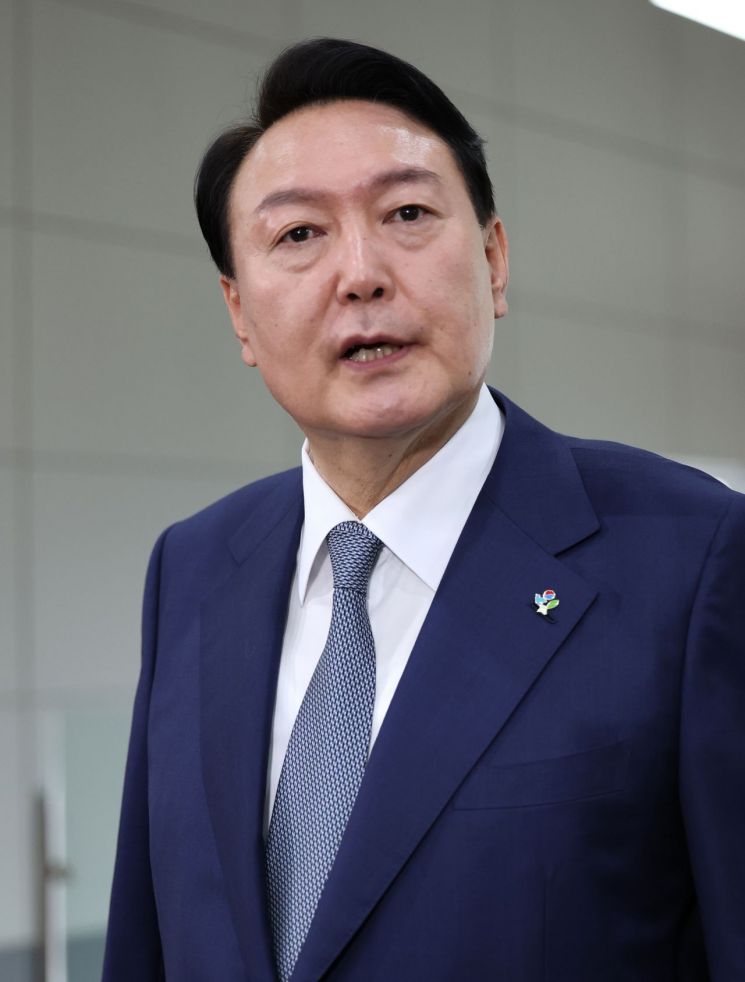
According to diplomatic sources on the 25th, the South Korean and Japanese governments have not coordinated any agenda related to a South Korea-Japan summit at the NATO summit scheduled for the 29th-30th. Considering this, the likelihood of the meeting being held is becoming increasingly uncertain.
Japanese Prime Minister Fumio Kishida stated on the 25th that there are no plans to hold a South Korea-Japan summit during the NATO summit.
At the Prime Minister’s Office in Tokyo, when asked by reporters whether a South Korea-Japan summit would be held during the NATO summit, Prime Minister Kishida said, “At this point, there is no plan for a bilateral meeting,” adding, “We will consider what to do based on Japan’s consistent position.”
President Yoon Suk-yeol and Prime Minister Kishida will attend the NATO summit held in Madrid, Spain, on the 29th-30th. They are coordinating multilateral meetings such as the relatively less burdensome South Korea-U.S.-Japan summit and a four-nation summit including South Korea, Japan, Australia, and New Zealand during the NATO summit.
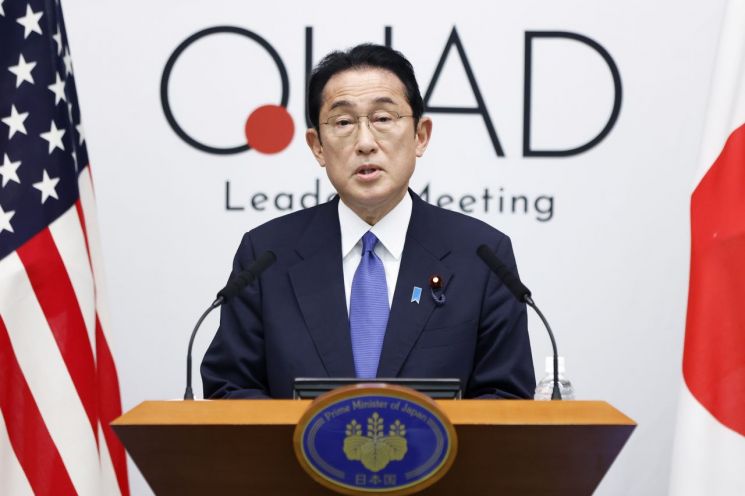
In political circles, there is speculation that President Yoon and Prime Minister Kishida might meet in a 'pull aside' format.
Although South Korea and Japan will not hold a formal summit, they may use opportunities to encounter each other inside and outside the meeting venue over the course of one or two days to broaden mutual understanding and possibly arrange side multilateral meetings involving South Korea, Japan, and several other countries.
If the two countries cannot allocate separate time during the multilateral meetings, there is also a possibility of informal 'pull aside' talks around the meeting venue. This is considered a relatively low-level summit meeting.
If such informal talks take place, both sides are expected to confirm their willingness to improve South Korea-Japan relations and agree on the need for continuous communication to resolve issues such as historical disputes, confirming these as 'principled matters.'
The uncertainty surrounding the South Korea-Japan summit is due to the strong conservative hardline public opinion in Japan ahead of the House of Councillors election scheduled for the 10th of next month.
They insist that no meeting should take place unless South Korea first proposes solutions to issues such as the forced labor problem during the Japanese colonial period.
In this situation, it is interpreted that the South Korean government also calculated that there is no need to impose political burdens on Prime Minister Kishida, who is about to embark on an overseas trip just ten days before the election. This House of Councillors election serves as a midterm evaluation of the Kishida Cabinet, with no elections scheduled for the next two years.
© The Asia Business Daily(www.asiae.co.kr). All rights reserved.
![Clutching a Stolen Dior Bag, Saying "I Hate Being Poor but Real"... The Grotesque Con of a "Human Knockoff" [Slate]](https://cwcontent.asiae.co.kr/asiaresize/183/2026021902243444107_1771435474.jpg)
















