Mercedes-Benz Concept Car EQXX
1202 km Drive from Germany to France to the UK
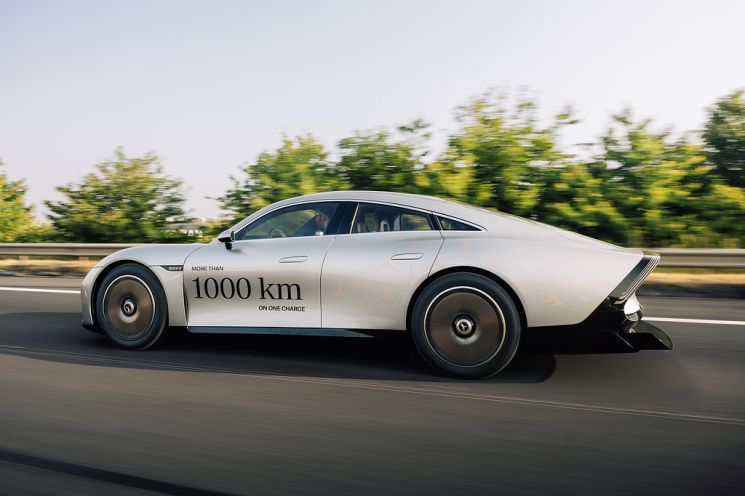 Mercedes-Benz's electric concept car EQXX. From the morning of June 21 local time to the evening of the next day, it drove 1,202 km in 14 hours and 30 minutes on a single charge.
 [Asia Economy Reporter Choi Dae-yeol] Mercedes-Benz's electric concept car Vision EQXX traveled 1,200 km on a single charge. Previously, after its first appearance in January this year, it drove 1,008 km on actual roads in April, but it broke its own record within two months. By minimizing air resistance and refining thermal management technology, it maximized efficiency.
According to the company on the 26th, the Vision EQXX drove 1,202 km without charging from its headquarters in Stuttgart, Germany, passing through Strasbourg, France, to Silverstone, UK. The actual route distance was just over 1,000 km, and upon arrival in the UK, it ran 11 laps at high speed (140 km/h) on a dedicated track.
The total time taken was 14 hours and 30 minutes. The average speed was 83 km/h, and the average energy consumption was calculated at 8.3 kWh per 100 km. Expressed in our terms, the driving distance per 1 kWh slightly exceeded 12 km. For comparison, the Tesla Model 3 Standard’s combined efficiency is about 6.1 km per 1 kWh, and the basic model of the Ioniq 5 is about 5.1 km, so this is more than double.
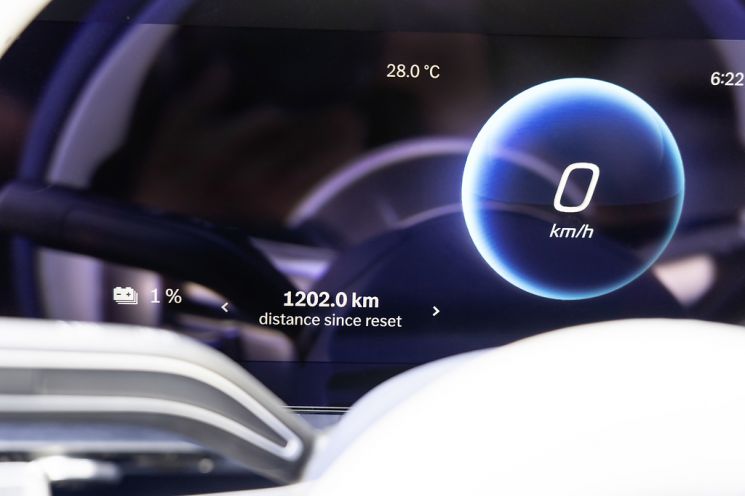 Mercedes-Benz's electric concept car EQXX recently completed a 1202 km drive, with information displayed on the dashboard
 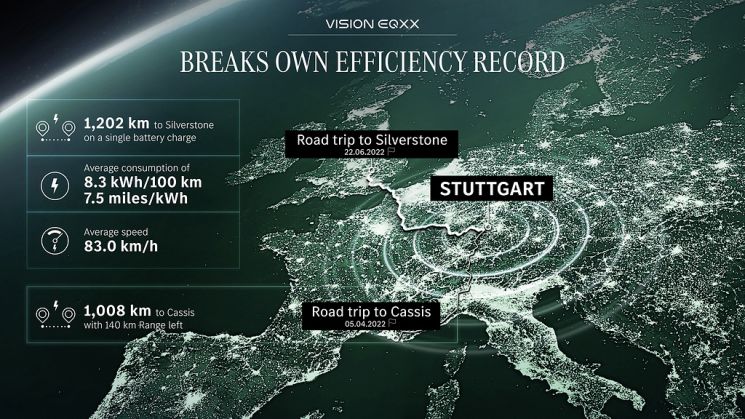 Driving information of Mercedes-Benz's electric concept car EQXX. It broke its own record set in April and established a new one.
 In the first run last April, it traveled about 11.5 km per 1 kWh (8.7 kWh/100 km). At that time, it drove 1,008 km and still had about 140 km of range remaining after arrival. That route included crossing the Alps, and the low temperatures likely affected energy efficiency.
This car is a concept car, not a mass-produced model, equipped with solar cells on the roof and a battery capacity of 100 kWh, yet the vehicle weight is only 1,755 kg. The drag coefficient is an unusually low 0.17 Cd, rarely seen in regular production models. For reference, Mercedes-Benz’s electric sedan EQS has a drag coefficient of about 0.2, which is among the lowest in current production models. The EQS uses a battery of about 108 kWh and weighs approximately 2,590 kg, which is over 800 kg heavier than the EQXX.
While Mercedes-Benz focused on the vehicle and waste heat management to increase driving range, Li Xiang, one of China’s top three electric vehicle startups, plans to release an electric car that can travel 1,000 km on a single charge using the latest battery. It has been named the first customer of the latest battery called ‘Qilin,’ recently announced by the world’s largest battery company CATL, attracting attention.
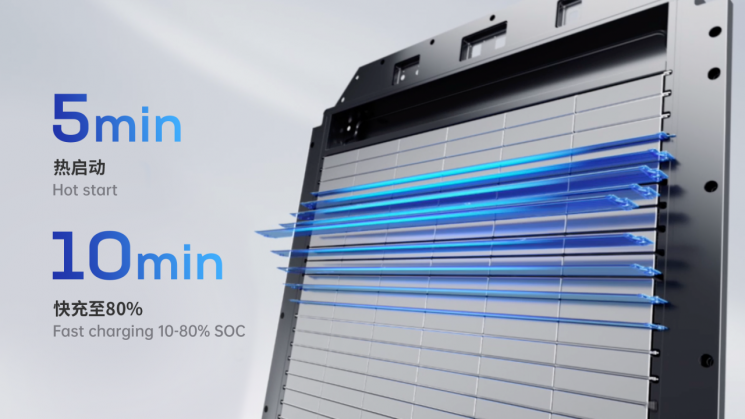 CATL, a Chinese battery company ranked number one in the world by supply volume, recently unveiled a new product applying its 3rd generation cell-to-pack technology.
 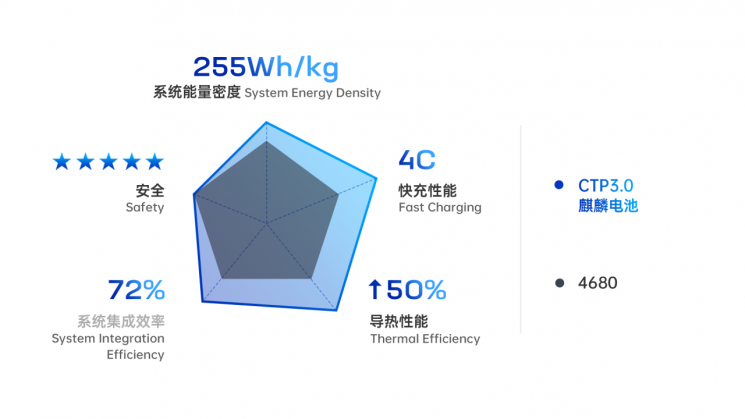 Performance Difference Between the Latest Battery Developed by CATL and the 4680 Battery Supplied to Tesla
 CATL applied its proprietary Cell-to-Pack (CTP) technology’s latest version to this battery, reportedly improving efficiency by more than 13% compared to the volume previously supplied to Tesla. Li Xiang plans to use this battery in a pure electric vehicle to be released as early as August next year. One of the reasons the American electric vehicle startup Lucid was once considered the ‘second Tesla’ was its significantly longer driving range compared to existing electric vehicles.
Driving range is considered a key factor in expanding electric vehicle adoption. Although charging infrastructure is increasing, it still falls short compared to conventional internal combustion engines. Especially, despite improvements in charging technologies such as ultra-fast charging, it inevitably takes a certain amount of time, so active technological development is underway to extend driving range on a single charge.
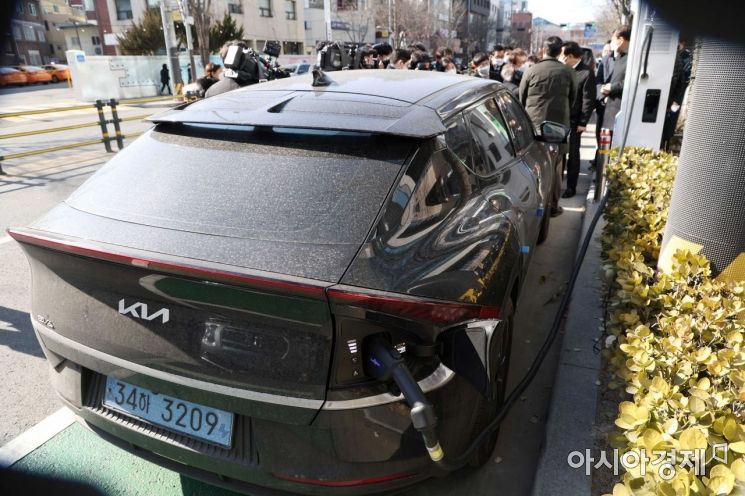 Seoul Mayor Oh Se-hoon is inspecting an electric vehicle streetlight-type charging facility installed in a public roadside parking lot in Mapo-gu, Seoul, last February. Photo by Moon Ho-nam munonam@
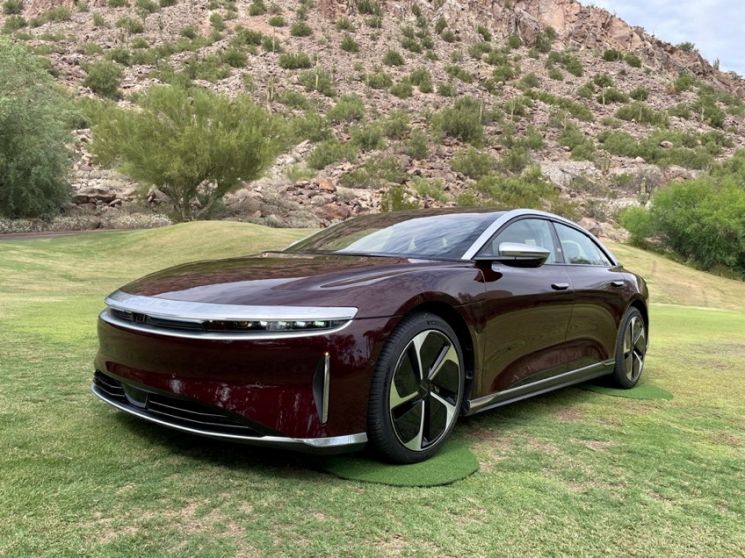
As in the case of Mercedes-Benz, while some focus on refining vehicle performance and energy and thermal management technologies, research and development are also being conducted to improve the efficiency and management systems of the battery itself. Solid-state batteries, which are gaining attention as next-generation batteries, fit this context. By replacing liquid with solid to enhance safety while reducing weight and volume, the industry expects they will significantly increase driving range compared to current batteries.
Currently, the driving range of internal combustion engine passenger cars sold domestically ranges from the low 700 km to the high 800 km per full fuel tank. Although it is difficult to directly compare electric vehicles and internal combustion engine vehicles on the same level, as electric vehicle driving ranges surpass those of internal combustion engines by a wide margin, the psychological burden related to charging is also expected to decrease significantly.
© The Asia Business Daily(www.asiae.co.kr). All rights reserved.
![Clutching a Stolen Dior Bag, Saying "I Hate Being Poor but Real"... The Grotesque Con of a "Human Knockoff" [Slate]](https://cwcontent.asiae.co.kr/asiaresize/183/2026021902243444107_1771435474.jpg)

















